
Top Energy Efficient Booster Pumps for Global Buyers

Time:2026-11-11 Author:Amelia
0%

Choosing a booster pump is not just a matter of comparing flow rates or buying the highest-rated motor. The right unit must match a real operating point: required flow, pressure rise, pipe losses, and hours of use. An Energy-Efficient Booster can reduce wasted power, especially in systems with changing demand. Variable-speed control may help maintain steady pressure without running at full speed all day. But performance depends on proper sizing and installation. Small details matter. A narrow pipe, clogged strainer, or poorly set pressure sensor can undermine expected savings.

This guide looks at options for global buyers, including pump construction, control features, service access, and published efficiency data. Compare manufacturer curves at your actual duty point, not only headline figures. Check supply voltage, frequency, connection sizes, materials, and local certification requirements before ordering. A pump that fits one market may need different specifications elsewhere. Ask suppliers about spare parts and warranty support, too. Practical evidence counts. A polished brochure is not the same as verified operating data. Even careful selection cannot erase every uncertainty; water quality, installation quality, and changing demand all affect results. That is worth admitting. The best choice is usually the model that meets the system’s needs reliably, with measurable efficiency and support you can reach.
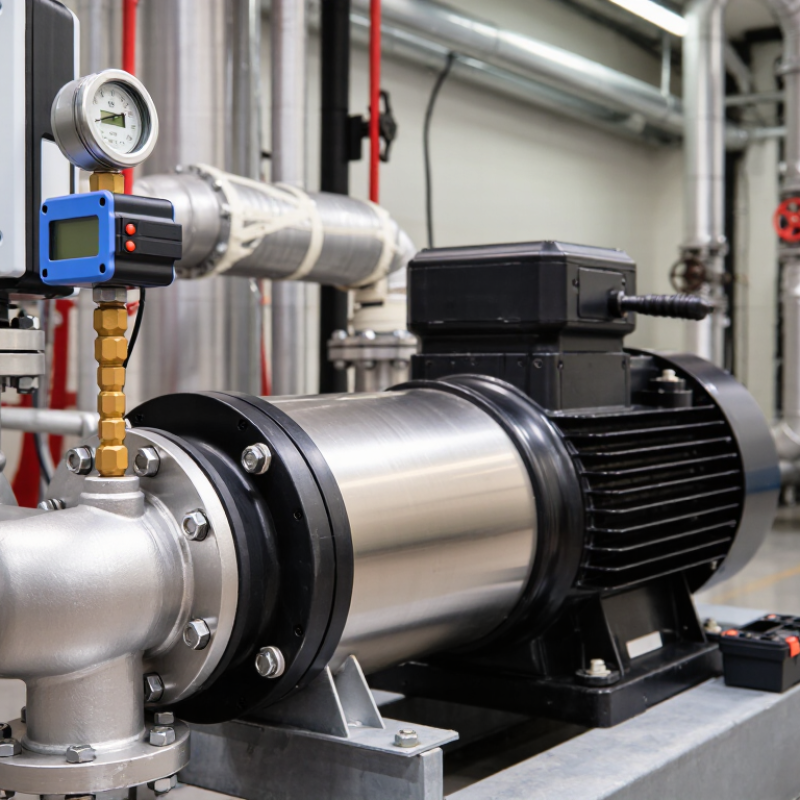
Top Energy Efficient Booster Pumps for Global Buyers

What Energy-Efficient Booster Pumps Do and Where They Are Used

An energy-efficient booster pump raises water pressure when the incoming supply cannot meet demand. It draws water from a storage tank, well, or municipal line and moves it through a building’s pipes. In systems with changing demand, variable-speed controls can adjust motor output instead of running at full speed constantly.

That matters.

These pumps serve apartment buildings, hotels, hospitals, farms, and industrial sites. A hotel may need steady pressure during busy morning hours, while a small irrigation system may operate in shorter cycles. In practice, installers check pressure gauges, pipe size, and peak flow before selecting a pump. A unit that is too large may cycle frequently and waste energy; one that is too small may struggle at upper floors.

Efficiency depends on more than the motor. Pressure sensors, correctly sized pipes, and sensible control settings all affect performance. Regular checks can reveal leaks, clogged filters, or unusual vibration before they become costly problems. The numbers on a product sheet are useful, but site conditions can be less tidy than expected. A pump may still use excess power if its settings do not match the building’s actual demand.

How Pump Design and Controls Reduce Energy Consumption

Top Energy Efficient Booster Pumps for Global Buyers
How Pump Design and Controls Reduce Energy Consumption

Booster-pump efficiency starts with matching the pump to real demand. An oversized unit may throttle flow all day, wasting power and creating excess pressure. Select pumps near their best-efficiency point for typical—not peak—conditions. The U.S. Department of Energy’s Improving Pumping System Performance sourcebook reports that optimized pumping systems can offer energy savings of 20–50 percent. Actual results depend on the system, operating hours, and maintenance.

Good controls make that design work. Variable-speed drives can adjust motor speed as demand changes, while pressure sensors help prevent unnecessary over-pressurization. For buildings with fluctuating use, lead-lag sequencing can run one pump at low demand and add another during peaks. A properly sized pressure tank can also reduce short cycling. Small details matter. A control panel can look advanced and still waste power if its sensor is poorly placed or its setpoint is too high.

Tips: Ask suppliers for pump curves, input-power data, and efficiency at your expected operating points. Check whether the quoted performance includes the motor and drive. Log pressure and power during quiet and busy periods after installation; readings may expose an awkward setpoint or an unexpected leak. Variable speed is not automatically efficient: systems with steady demand may gain little, so compare measured operating conditions before choosing controls.

Main Booster Pump Types and Their Best-Fit Applications

Top Energy Efficient Booster Pumps for Global Buyers

Single-stage centrifugal pumps suit buildings and irrigation systems needing steady flow at moderate pressure. They are straightforward to maintain, but may waste energy when oversized or throttled. For taller buildings, reverse-osmosis pretreatment, or long pipe runs, multistage centrifugal pumps build higher pressure through several impellers. Compact vertical models fit tight plant rooms. Variable-speed booster sets adjust output as taps open and close, reducing pressure swings. Positive-displacement pumps handle viscous liquids or accurate, low-flow dosing; they are usually a poor fit for ordinary clean-water boosting.

The U.S. Department of Energy’s Improving Pumping System Performance sourcebook reports that pumping systems account for nearly 20% of global electrical energy demand. That figure makes system matching important. A pump’s rated flow alone can mislead: real demand changes, and friction losses rise with flow. Check the system curve, operating range, motor efficiency, and minimum inlet pressure before selecting equipment. A high-efficiency pump can still perform poorly in the wrong system.

Tips: For variable demand, compare a variable-speed set with a fixed-speed pump and pressure tank. Confirm the pump operates near its best-efficiency point across typical loads. Leave room for maintenance access. One detail is easy to miss: low-noise operation does not prove efficient operation. Recheck assumptions against measured site demand where possible.

Top Energy Efficient Booster Pumps for Global Buyers - Main Booster Pump Types and Their Best-Fit Applications
Booster Pump Type How It Works Best-Fit Applications Energy-Efficiency Strengths Key Selection Considerations
Vertical Multistage Centrifugal Several impellers arranged in series add pressure stage by stage. The vertical design keeps the installation footprint relatively small. Building water-pressure boosting, hotels, hospitals, commercial facilities, water treatment, and other applications needing higher pressure from a compact installation. A correctly sized pump can operate efficiently near its best-efficiency point. Variable-speed control can match output to changing demand and reduce unnecessary throttling. Check required flow and total head, minimum inlet pressure, water quality, motor control, and whether the pump materials suit the fluid and operating conditions.
Horizontal Multistage Centrifugal Multiple impellers in a horizontal casing generate higher discharge pressure than a single-stage design. Pressure boosting for industrial processes, water treatment, boiler-feed systems within the pump’s rated limits, and installations where floor access is convenient. Multiple stages provide pressure without relying on a single high-speed impeller. A properly selected motor and variable-speed drive can improve performance under variable demand. Allow adequate floor space and service access. Confirm suction conditions, temperature and pressure limits, and the manufacturer’s operating range.
End-Suction Centrifugal with Variable-Speed Drive A single impeller draws fluid through the pump inlet and discharges it through the casing. A variable-speed drive adjusts motor speed to system demand. Commercial water supply, irrigation, light industrial services, and general-purpose pressure boosting where required flow is moderate or varies over time. Speed control can reduce energy use when demand varies, particularly compared with maintaining excess pressure through continuous throttling. Savings depend on the system curve and operating profile. Check the pump’s flow and head range, suction piping, motor-drive compatibility, and whether the required duty point is close to the pump’s best-efficiency point.
In-Line Centrifugal The inlet and outlet are aligned, allowing the pump to be installed directly in a pipeline. Designs may be single-stage or multistage. Building services, heating and cooling water systems, and compact pipeline pressure-boosting installations with suitable fluid and pressure conditions. Direct pipeline installation can simplify the layout and reduce the need for additional floor space. Variable-speed operation can help match circulation or pressure output to demand. Verify system pressure, fluid temperature, pipe loads, vibration requirements, and service access. In closed-loop systems, select for the system’s flow and head losses.
Split-Case Centrifugal A horizontally split casing houses a centrifugal impeller and allows access to internal components without disconnecting major pipework. Large-flow water supply, municipal and industrial systems, and large building or campus installations where high capacity and maintainability are priorities. These pumps can be efficient at suitable large-flow operating points. Parallel operation and appropriate controls can accommodate changing demand without running every pump continuously. They generally require more installation space than compact inline designs. Check flow range, foundation and alignment needs, suction conditions, and part-load operation.
Parallel Variable-Speed Booster Set Two or more pumps operate together or in sequence under a controller. The arrangement may use variable-speed pumps to maintain a target system pressure. Buildings, campuses, hotels, and facilities with wide or fluctuating water demand, where standby capacity or continued service during maintenance is important. Pump staging can keep operating pumps closer to suitable duty points as demand changes. Variable-speed control can maintain pressure without routinely running all pumps at full speed. Confirm peak and minimum demand, control sequence, standby requirements, pressure-vessel sizing, and how the set handles low-flow periods.

How Global Buyers Compare Efficiency, Standards, and Total Cost

Global buyers should compare booster pumps at the actual duty point, not just the highest efficiency listed on a product sheet. Check the required flow and pressure against the pump curve. A unit operating far from its best-efficiency point may consume more power and wear faster. A tidy efficiency figure can still mislead. Ask whether test results follow a recognized method, such as ISO 9906, and whether motor efficiency data cites the relevant IEC classification. Standards and accepted test practices can vary by market, so request the full test conditions rather than relying on a label alone.

Total cost includes more than the purchase price. Estimate annual energy use from the expected operating hours, local electricity rates, and measured input power. Then consider installation, seals, bearings, controls, and access to replacement parts. A variable-speed drive may reduce energy use when demand changes, but it adds cost and needs correct setup. Check voltage, frequency, water temperature, and connection dimensions before ordering. Small mismatches can mean delays. Global shipping and service coverage also affect downtime, though buyers sometimes give these factors too little weight. Compare written warranty terms and maintenance intervals, and keep assumptions visible; real operating schedules are rarely as neat as spreadsheets suggest.

Top Energy-Efficient Booster Pumps: Comparing Motor Efficiency and Energy Cost

Illustrative annual electricity cost for 7.5 kW, 4-pole motor efficiency classes under a consistent operating scenario.

Estimates use nominal 50 Hz efficiency values for 7.5 kW, 4-pole motors: IE2 89.6%, IE3 91.7%, and IE4 92.6%, aligned with IEC 60034-30-1 class values. Costs assume a 5 kW shaft load, 4,000 operating hours per year, and electricity at $0.15/kWh. This motor-only comparison excludes pump efficiency, purchase price, installation, and maintenance; actual system performance and total cost vary by application and location.

How to Size, Install, and Maintain a Booster Pump System

Sizing an energy-efficient booster pump starts with measured demand, not the largest flow number on a fixture list. Record the required flow rate and pressure at the most demanding outlet, then account for elevation and friction losses through pipes, filters, and valves. A 10-metre rise adds about 1 bar of pressure demand. Measure, do not guess. Compare the resulting duty point with the pump curve; a unit operating far from its efficient range may waste energy or struggle during peak use. Variable-speed control can match changing demand, but it cannot correct an undersized pipe or poor source supply. Real buildings rarely behave exactly like a spreadsheet.

Install the pump on a firm, level base, close to the water source where practical. Keep the suction line short, adequately sized, and free of sharp bends. Poor inlet conditions can cause noise, vibration, and premature wear. Fit suitable isolation valves and a check valve, and provide pressure gauges so readings can be checked during commissioning. Flush the pipework before startup, confirm rotation and electrical supply, and inspect joints for leaks. Follow the equipment instructions and use a qualified installer where required. After startup, record pressure and current draw; those figures help identify changes later. Clean strainers regularly, check seals and connections, and investigate new noise promptly. Maintenance intervals may need adjustment in dusty or hard-water conditions. That part is easy to overlook.

FAQS

What does an energy-efficient booster pump do?

It raises water pressure when the incoming supply cannot meet demand. It may draw water from a tank, well, or municipal line.

Where are booster pumps commonly used?

They serve apartment buildings, hotels, hospitals, farms, and industrial sites. A hotel may need stronger pressure during busy morning hours.

How does variable-speed control help?

It adjusts motor output as water demand changes, rather than running constantly at full speed. Pressure can feel steadier. Settings still matter.

Which pump type suits a tall building?

A multistage centrifugal pump can build higher pressure through several impellers. Compact vertical models may fit a tight plant room.

How should a booster pump be sized?

Measure flow and pressure at the most demanding outlet. Include elevation and friction losses from pipes, filters, and valves. Measure, don’t guess.

How much pressure does elevation add?

A rise of 10 metres adds about 1 bar of pressure demand. Pipe friction adds more, and actual site conditions can complicate the estimate.

What installation details help prevent problems?

Use a firm, level base and keep the suction line short and adequately sized. Avoid sharp bends. Check valves, gauges, and joints for leaks.

What should be checked during maintenance?

Clean strainers regularly and inspect seals, connections, pressure readings, and current draw. Investigate new noise or vibration promptly. Don’t ignore small changes.

Conclusion

Energy-Efficient Booster pumps help maintain reliable water pressure in homes, commercial buildings, farms, and industrial facilities while limiting unnecessary power use. Their performance depends on more than the pump itself: efficient motors, well-matched hydraulic components, variable-speed controls, and pressure sensors can adjust output to changing demand and reduce energy waste. Different configurations suit different needs, from compact systems for smaller buildings to multi-pump arrangements for larger or fluctuating water demands.

For global buyers, comparing options means looking beyond a single efficiency figure. Check applicable regional standards, operating conditions, material suitability, noise levels, service requirements, and total lifetime cost. Correct sizing is essential: a system that is too large may cycle inefficiently, while an undersized one may fail to meet demand. Careful installation, proper commissioning, and routine inspection help preserve performance and extend equipment life. Selecting an Energy-Efficient Booster system that matches the application can support dependable pressure with more controlled energy consumption.

Amelia

Amelia

Amelia is a seasoned marketing professional with a wealth of expertise in our company’s core offerings. With an unwavering passion for driving growth and innovation, she plays a pivotal role in shaping our marketing strategies and enhancing brand visibility. A key aspect of her responsibilities......