
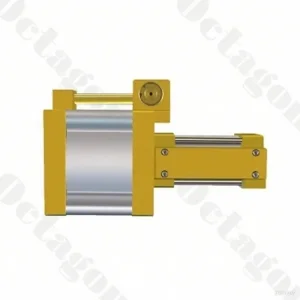
Featured Production Batch
Precision Mold Assemblies & Industrial Pneumatic Hardware
Engineered for high-duty continuous cycle manufacturing, die casting, stamping, and automated tooling systems.
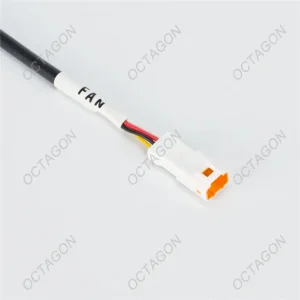
CE Certification Waterproof Series Harnesses (IP68 Rating)
Explore Specs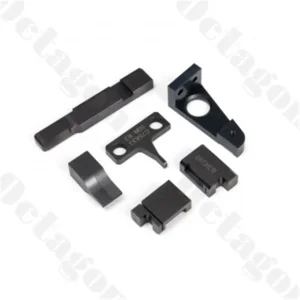
CE Certification High-Precision Stamping Die Components
Explore Specs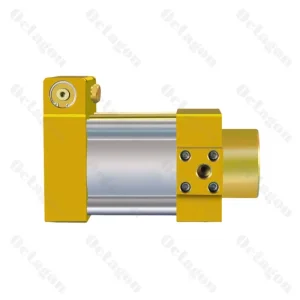
OEM SWB-100S Series Pump Manufacturers, Factories
Explore Specs
CE Certification High-Efficiency SWB-100S Series Pump
Explore Specs
OEM Waterproof Series Harnesses (IP68) - Factory Solutions
Explore Specs
High-Quality Waterproof Series Harnesses (IP68 Rating)
Explore Specs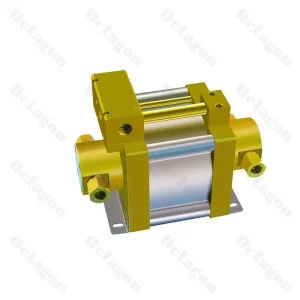
OEM Octagon Gas-Liquid Intensifier Pump SWB - 160D
Explore Specs
Global Manufacturing Landscape
The Evolution of Precision Tooling: Global Supply Chain Reconfiguration
In today's highly competitive industrial manufacturing ecosystem, tooling integrity defines production velocity, yield stability, and end-product viability. Global mold parts suppliers are no longer viewed merely as suppliers of standard pins and bushings; they have transitioned into strategic partners driving structural efficiency across automotive lightweighting, consumer electronics miniaturization, medical instrument sanitation, and industrial automation.
As tool-and-die complexity escalates—dictated by tighter dimensional thresholds, exotic metallurgical requirements, and zero-defect mandates—the sourcing landscape has shifted decisively toward vertically integrated manufacturing ecosystems. Contemporary injection molds, progressive stamping dies, and high-pressure die casting tooling demand sub-micron tolerances (±0.002 mm) and superior surface finishes (Ra 0.05–0.2 μm) capable of withstanding millions of high-tonnage thermal cycles without operational degradation.
Micron-Grade Dimensional Tolerance
Multi-axis high-speed CNC milling and wire-EDM technology enable mold cores, cavities, ejector sleeves, and slide components to achieve repeated ±0.002 mm precision, eliminating line adjustments during assembly.
Advanced Metallurgy & Surface Physics
From SKD11, SKD61, and DC53 to premium tungsten carbides and ASP23 powder steels, rigorous vacuum heat treatment delivers 58–62 HRC hardness while maintaining impact ductility under severe shock loads.
In-Mold Process Integration
Tooling has evolved beyond static shaping. The integration of pneumatic-hydraulic boost systems and in-mold degating automation eliminates secondary trimming, radically compressing overall cycle times.
Manufacturing Advantage
Bridging Taiwanese Process Engineering with Mainland Production Velocity
A synergistic operating model delivering unmatched production speed, volume scalability, and rigorous quality control for enterprise supply chains.
±0.002 mm
Tolerance Precision
45+
Patented Technologies
190+
Technical Specialists
60+
Global Export Markets
Complete Industrial Cluster Density
Our facilities benefit from an exhaustive regional supply cluster. Specialized raw alloy procurement, precision Swiss grinding, multi-axis machining, and advanced PVD coating partners operate within a 30-mile radius, drastically compressing standard lead times.
Taiwanese Quality Governance
Headquartered in Taoyuan, Taiwan, our core engineering and metrology protocols maintain strict ISO compliance. Every component undergo full optical comparator verification, coordinate measuring machine (CMM) mapping, and material spectrometry.
Rapid Prototyping to High-Volume Runs
Whether producing bespoke replacement inserts for an active automotive production line or scaling custom harness and booster pump configurations to tens of thousands of units, our dual-base production infrastructure guarantees agility.
Real-World Deployment
Mission-Critical Application Scenarios
Engineered to mitigate risk in operating environments where component failure entails catastrophic production line downtime.
Automotive Stamping & Die Casting
Heavy-duty guide pillars, wear plates, core pins, and nitrogen cylinder boost systems deployed in structural battery enclosure molds, chassis stamping lines, and high-pressure aluminum engine block casting.
Medical Diagnostics & Cleanroom Injection
Micro-ejector pins, precision optical mold inserts, and biocompatible hermetic wire harnesses fabricated for surgical equipment, microfluidic chips, and diagnostic analysis enclosures requiring Ra 0.05 mirror finishes.
Industrial Automation & Control Cabinets
Pre-engineered cabinet wiring harnesses, gas-liquid intensifier pumps, and in-mold automation controllers driving automated degating operations inside high-speed press systems with zero manual trimming.
BESS Energy Storage Infrastructure
High-voltage battery collection lines, heavy-gauge interconnection assemblies, and environmental protection seals built to resist thermal expansion and prolonged exposure in utility-scale energy storage systems.
Marine & Harsh Environment Machinery
IP68 waterproof cabling assemblies and anti-corrosive stainless mold components treated with specialized surface passivations to resist salt spray, high humidity, and continuous hydraulic cycling.
Continuous Food & Beverage Packaging
Sanitary pneumatic booster systems ensuring uniform sealing pressure, bottle blow-mold inserts with complex conformal cooling channels, and high-frequency valve components engineered for food processing machinery.
Strategic Sourcing Analysis
Global Procurement Trends: What Enterprise Buyers Require in 2025–2030
1. Total Cost of Tooling (TCO) vs. Initial Unit Price
Procurement teams at Tier-1 automotive and global OEM suppliers have moved away from basic unit price comparisons. The actual cost of a mold component is measured in shot life, downtime mitigation, and dimensional consistency. A substandard ejector pin or core slide that seizes during an automated run causes tens of thousands of dollars in lost production time. Modern procurement models emphasize wear coatings (TiN, DLC, CrN), premium base steels with verifiable metallurgical certificates, and precision tolerances that guarantee drop-in interchangeability without hand fitting.
2. Multi-Category Sourcing Consolidation
Enterprise buyers are actively consolidating their vendor registers. Sourcing mold parts from one supplier, booster pumps from another, and control harnesses from a third creates supply chain fragmentation and administrative friction. Companies like Octagon Precision Mold bridge this divide by delivering an integrated tooling suite—providing precision mold components, auxiliary pneumatic boosters, and custom wiring infrastructure under a single unified engineering standard.
3. Conformal Cooling & Thermal Management
As cycle time reduction remains the chief metric in injection molding economics, the demand for precision mold parts with internal vacuum-brazed or direct metal laser sintered (DMLS) conformal cooling channels has skyrocketed. Mold inserts capable of maintaining uniform thermal dissipation decrease cycle times by up to 35% while eliminating warping in thin-walled technical components.
4. Digital Traceability & Material Certification
Reliable aerospace, medical, and defense contracts now mandate granular supply chain transparency. Every critical component must be traceable back to the raw billet melt batch, complete with optical spectrometer analysis, hardness testing reports, and coordinate measuring machine (CMM) point cloud data. Octagon's end-to-end quality control protocols ensure that every production run ships with comprehensive verification documentation.
Technical Q&A
Frequently Asked Sourcing & Engineering Questions
Detailed insights into capabilities, tolerances, materials, lead times, and global logistics.
What specific dimensional tolerances and surface finishes can your facility achieve?
Octagon Precision Mold operates advanced multi-axis CNC machining centers, Sodick/Makino wire-EDM systems, and high-precision cylindrical/surface grinding equipment. For custom die casting, stamping, and plastic mold parts, we reliably maintain dimensional tolerances down to ±0.002 mm (±2 microns). Surface finishes can be refined to optical mirror polish levels between Ra 0.05 μm and Ra 0.2 μm, depending on the metallurgical grade and application requirements.
How does Octagon control quality across cross-border facilities in Taiwan and Mainland China?
Our governance framework combines Taiwanese management discipline and engineering oversight with scalable manufacturing facilities in mainland China. Quality management is unified under ISO protocols: raw materials undergo PMI spectrometer verification before entering the floor; critical machining passes undergo in-process inspection; and 100% of finished parts are inspected via CMM, 2.5D optical projectors, and surface roughness testers before vacuum packing and export dispatch.
Can you manufacture non-standard mold components directly from customer CAD models?
Yes, non-standard OEM/ODM manufacturing accounts for a significant portion of our tooling operations. We accept native CAD formats including STEP, IGES, Parasolid (x_t), and DWG/DXF. Prior to machining, our senior engineering team conducts a thorough Design for Manufacturability (DFM) review to identify potential stress risers, thermal expansion concerns, or tight tolerance stack-ups, proposing optimal tooling paths and material selections.
What is the integration advantage of in-mold degating systems and pneumatic booster pumps?
Traditional injection molding requires manual or robotic gate removal after ejection, creating uneven gate vestiges and extending overall cycle times. Our patented in-mold cutting automation systems leverage our SWP/SWB series gas-liquid booster pumps to deliver 1,000–7,000 kgf of cutting force inside the closed mold before part opening. This ensures clean, uniform vestige finishes, eliminates secondary post-processing work stations, and accelerates machine turnaround by 15–30%.
What testing certifications and compliance documentation accompany shipments?
Every shipment can be bundled with mill test certificates (MTC) verifying raw alloy chemical and physical properties, heat treatment hardness logs, full dimensional CMM inspection sheets, and CE certification for our powered booster pumps and automation cabinets. Waterproof wiring harness assemblies are tested for continuity, insulation resistance, and IP68 submergence compliance prior to release.
What are standard production lead times, and how do you handle expedited spare parts?
Standard prototype and custom mold insert lead times range from 7 to 15 business days depending on complexity and surface coating specifications. For critical line-down scenarios at partner facilities, we offer expedited 72-hour turnaround machining via dedicated rapid-response cells. Standard booster pumps and catalog cable assemblies are regularly inventoried for fast worldwide dispatch via DHL, FedEx, or air freight.
Precision Tooling & Fluid Control
High-Performance Mold Hardware & Intensifier Systems
Specialized non-standard components, custom booster pumps, and industrial cabinet wiring solutions.
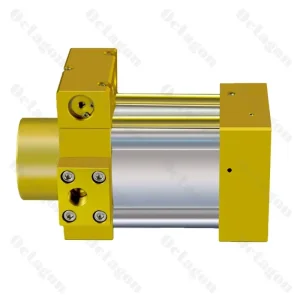
High-Quality Octagon SWB-80S Series Gas-Liquid Booster Pump
Explore Specs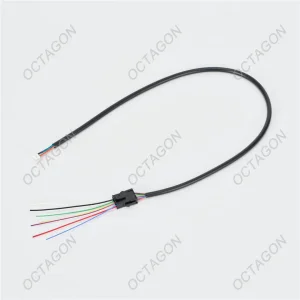
High-Quality Equipment Cabinet Wiring Harness Manufacturers
Explore Specs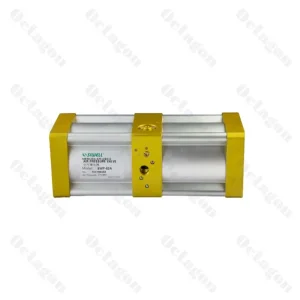
ODM OCTAGON SWP-02A Air Pressure Booster Pump
Explore Specs
OEM Waterproof Series Harnesses (IP68 Rating) - Top Factory
Explore Specs
CE Certification China Equipment Cabinet Wiring Harness
Explore Specs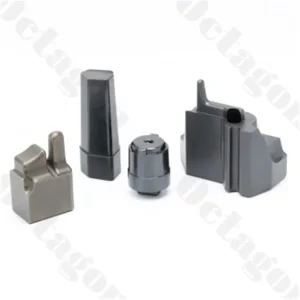
Custom China Die Casting Mold Parts Supplier - Non-Standard
Explore Specs
High-Quality Octagon SWP-7.5 Air Booster Pump Solutions
Explore Specs
Custom Die Casting Mold Non-Standard Parts Processing
Explore SpecsInitiate Your Engineering Review
Upload your STEP, DWG, or PDF drawings for a thorough DFM and quotation review. Our senior engineers respond with comprehensive feasibility and tolerance feedback within 24 hours.