
Primary Engineering Series
Featured Fluid Power & High-Pressure Boosting Systems
Integrated with high-pressure booster technology, our multi-stage linear setups deliver optimal power density for automated manufacturing cells worldwide.
Efficiency Redefined
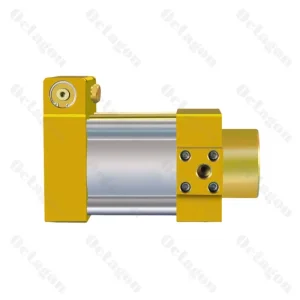
CE Certification SWP-05 Air Booster Pump from China Suppliers
Explore Specification
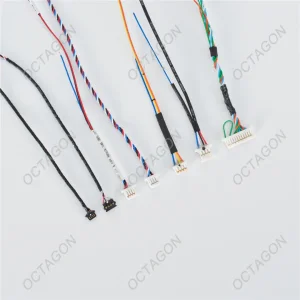
Durable Audio
OEM China Octagon Speaker Wire Harness - Durable Audio Solutions
Explore Specification
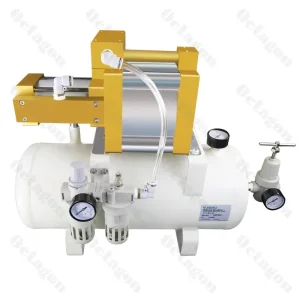
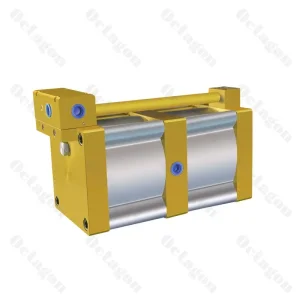
High Ratio Booster
High-Quality Octagon SWP-7.5-G Air Booster Pump Pressure Enhancer
Explore Specification
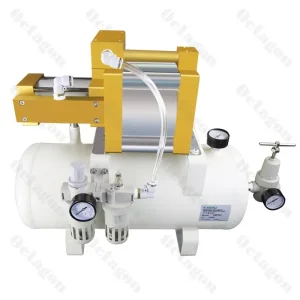
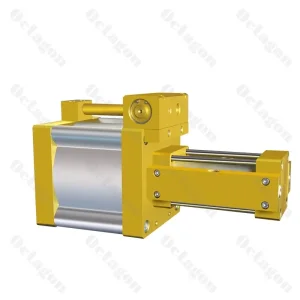
Compressed Air Solution
CE Certification China SWP-05-G Air Booster Pump Solution
Explore Specification
Engineering White Paper • Macro Solutions
Physics of Multi-Stage Linear Pneumatics: Telescopic Mechanics
Addressing the critical physical limitations of stroke-to-retracted length ratios in space-constrained industrial automation.
In modern industrial automation, the engineering mandate to reduce machine footprint while expanding operational envelope has positioned telescopic air cylinders at the center of mechanical motion architecture. A conventional pneumatic cylinder requires an overall envelope length exceeding twice its stroke. When machine designers face axial spatial restrictions—such as in deep core-pulling injection molds, vertical automated warehousing elevators, or automated end-of-arm tooling (EOAT)—single-stage pneumatic cylinders become geometrically non-viable.
Telescopic air cylinders resolve this structural bottleneck through nested tubular stages (typically two to five stages) where concentric sleeves extend sequentially. However, multi-stage pneumatic actuation introduces complex fluid mechanical phenomena. Unlike hydraulic fluids which are virtually incompressible, air is highly compressible. The dynamic extension force $F$ of stage $n$ varies directly with the effective internal cross-sectional area $A_n$ and the operating line pressure $P$:
Dynamic Multi-Stage Stage Force Formula:
$$F_n = P \cdot A_n - F_{friction} = P \cdot \left(\frac{\pi \cdot D_n^2}{4}\right) - \sum \mu_i N_i$$ where stage 1 (largest diameter $D_1$) exerts maximum thrust, decreasing progressively as secondary and tertiary stages extend. Octagon’s pneumatic circuitry couples our SWP series air booster pumps to automatically modulate pressure and prevent jerky speed variations or kinetic shock at stage transitions.
Progressive Force Regulation
Eliminates the abrupt acceleration drop when stepping down from outer barrels to inner stages through differential orifice metering and internal back-pressure dampeners.
Torsional & Deflection Stability
Precision-engineered keyed guide bushings and low-friction bronze/PTFE composite wear rings keep concentricity within ±0.015 mm under high side-load moments.
In-Mold Space Optimization
Directly pairs with Octagon’s proprietary in-mold cutting systems and precision mold inserts to execute stroke actions within limited tooling bolster plates.
Market Dynamics • Comparative Analysis
Global Actuator Landscape: Pneumatic vs. Alternate Technologies
Rigorous quantitative comparison across high-duty cycle automation, explosive safety, maintenance overhead, and total cost of ownership (TCO).
Across the European Union, North America, and high-precision Asian manufacturing hubs, plant operators are balancing cleanroom compliance, energy intensity, and rapid cycle times. While electromechanical telescopic actuators offer deterministic digital position loops, their internal planetary gearings and lead screws suffer catastrophic wear in harsh abrasive or washdown environments, alongside extreme capital cost. Conversely, hydraulic systems present unacceptable contamination hazards in clean molding, packaging, and battery manufacturing facilities.
| Evaluation Parameter | Octagon CE Telescopic Air Cylinder | Hydraulic Telescopic Actuator | Electric Telescopic Linear Actuator |
|---|---|---|---|
| Power-to-Envelope Ratio | Very High (Air driven, zero onboard motor) | Extreme (Requires massive hydraulic pump unit) | Moderate (Bulky servomotor and gearing) |
| Cleanliness & Contamination | Clean (ISO 8573-1 air compliant) | High Risk (Hydraulic oil leaks/misting) | Clean (Greased lead screws, seal wear) |
| Cycle Frequency / Speed | Up to 1.5 m/s | Slow to Moderate (< 0.4 m/s) | Moderate (Thermally limited by motor duty) |
| ATEX / Explosive Suitability | Inherently Safe (Directive 2014/34/EU) | Requires spark-proof valving | High expense flameproof encasements |
| Total Cost of Ownership (5 Yrs) | Lowest (Seal rebuilds, minimal energy) | High (Fluid filtration, pump maintenance) | High (Lead screw backlash, motor wear) |
2008
Founded Year
±0.002mm
Tooling Precision
45+
Global Patents
60+
Export Countries
20k+
Industrial Clients
Precision Engineering Standards
Metallurgy, Precision Machining & Sealing Integrity
Constructed with mirror-finish honing and military-grade seal composites to guarantee millions of cycles without pressure bleed-down.
Drawing from Octagon’s 15+ years of precision toolmaking heritage in Taoyuan, Taiwan, our telescopic pneumatic cylinders leverage state-of-the-art CNC wire EDM, CNC turning centers, and internal mirror polishing. Standard commercial actuators tolerate bore surface finishes of Ra 0.4–0.8 μm. In contrast, Octagon micro-hones cylinder bores to Ra 0.05–0.2 μm, dramatically slashing dynamic friction coefficients and doubling the operational life of primary elastomeric lip seals.
Cylinder Barrels
Hard-anodized seamless aluminum alloy (6061-T6 / 7075) with 50 μm oxide coating depth, exhibiting surface hardness reaching HV 450–550 for extreme scratch resistance.
Piston Rod Sleeves
High-tensile C45 steel or 316 stainless steel ground and hard chrome-plated (25–35 μm layer thickness) with corrosion resistance certified over 120 hours neutral salt spray testing.
Advanced Polyurethane Seals
Custom German Parker/Freudenberg profile polyurethanes, HNBR, and fluorocarbon (FKM/Viton) compounds engineered for continuous operating thermal windows from -20°C to +120°C.
Pneumatic Cushioning
Patented adjustable end-position cushioning cams that progressively throttle exhaust air volumes, mitigating kinetic deceleration spikes and acoustic decibel emissions.
Regulatory Conformance • EEAT Authority
CE Certification & European Safety Directives
Exhaustive technical documentation, conformity assessment procedures, and harmonized safety standard execution.
Procuring pneumatic hardware for European or international assembly lines requires transparent compliance. Octagon’s CE-certified telescopic air cylinders comply with the essential health and safety requirements of the European Union. Unlike distributors who provide self-declarations without underlying test regimes, Octagon implements rigorous third-party audited Factory Production Control (FPC) under ISO 9001 and CE directives.
2006/42/EC Machinery Directive
Adheres strictly to Annex I essential health & safety design guidelines, including fail-safe mechanical locking and decompression prevention.
EN ISO 4414:2010 Standard
Pneumatic fluid power general safety requirements governing hazard reduction, burst safety margins (minimum 4:1 safety factor), and pressure trapping prevention.
2014/68/EU (PED Directive)
Conformity evaluation for pressure vessels and fluid volume containment, ensuring barrel tube fatigue integrity under continuous cycled pressure loops.
ATEX Directive 2014/34/EU
Optional non-sparking execution with electrostatic grounding paths for Zone 1/21 hazardous dust and volatile gaseous factory deployments.
Engineering Deployment Scenarios
Localized Application Scenarios: Field Implementations
Real-world case studies detailing how leading global Tier-1 suppliers eliminate cycle latency and boost tool life.
In-Mold Degating & Core Pulling
Context: Large automotive bumper and medical syringe barrel multi-cavity injection molds.
Execution: Integrated Octagon dual-stage telescopic cylinders inside mold ejector plates, powered by our SWP-7.5-G Booster Pump. Enables gate trimming and core extraction while mold plates remain closed, slashing total mold open/close cycle time by 3.8 seconds per shot.
Execution: Integrated Octagon dual-stage telescopic cylinders inside mold ejector plates, powered by our SWP-7.5-G Booster Pump. Enables gate trimming and core extraction while mold plates remain closed, slashing total mold open/close cycle time by 3.8 seconds per shot.
Automated Telescopic EOAT Gantries
Context: High-speed vertical palletizers and cleanroom carton packaging cells.
Execution: Three-stage telescopic cylinders extend downward 1,400 mm from overhead low-clearance ceiling beams. Precision guided rods prevent gripper rotation, transferring fragile electronics without electrical servo vibration or oil misting.
Execution: Three-stage telescopic cylinders extend downward 1,400 mm from overhead low-clearance ceiling beams. Precision guided rods prevent gripper rotation, transferring fragile electronics without electrical servo vibration or oil misting.
Automotive BIW Clamping Fixtures
Context: Body-in-white (BIW) robotic welding cells demanding tight access clearances.
Execution: Compact telescopic cylinders fitted with high-temperature weld-spatter scrapers and insulated wire harnesses lock curved sheet metal panels securely, maintaining 7,000 kgf clamping force via synchronized gas-liquid boosters.
Execution: Compact telescopic cylinders fitted with high-temperature weld-spatter scrapers and insulated wire harnesses lock curved sheet metal panels securely, maintaining 7,000 kgf clamping force via synchronized gas-liquid boosters.
Future Engineering Trends
Technology Roadmap: Smart Pneumatics & IIoT
Integrating micro-transducers, condition monitoring, and digital predictive algorithms into pneumatic motion systems.
The convergence of pneumatic fluid mechanics with Industry 4.0 digitizes performance parameters previously unmonitored in traditional cylinders. Octagon is actively developing smart telescopic architectures equipped with non-contact magnetostrictive and Hall-effect sensor arrays embedded directly within the concentric rod channels. This enables real-time millimetric position feedback across every individual extending stage over an IO-Link or Industrial Ethernet fieldbus.
IO-Link Continuous Monitoring
Real-time pressure drop, acceleration profile, and cycle frequency tracking, reporting dynamic seal wear and micro-leaks before unexpected production downtime occurs.
Nano-Composite Self-Lubrication
Incorporating solid PTFE and molybdenum disulfide (MoS2) nanoparticle matrices into synthetic guide sleeves, allowing completely oil-free ISO Class 1 cleanroom compliance.
Eco-Energy Recycling Chambers
Regenerative back-circuitry captures compressed exhaust air from large primary stages to drive smaller extension sleeves, cutting overall cubic feet per minute (CFM) air consumption by up to 28%.
Direct Engineer FAQ
Frequently Asked Questions: Technical Procurement
Clear engineering answers addressing sizing calculations, sequence control, CE paperwork, and custom OEM adaptation.
How do you calculate required air pressure when telescopic cylinder thrust drops per stage?
Because effective piston area decreases progressively with each smaller nested stage, the final inner stage yields the minimum thrust. To ensure constant force throughout the entire stroke, engineers must size the actuator based on the smallest inner stage diameter or install an inline pressure amplifier. Octagon specializes in integrating our SWP series air booster pumps, which automatically boost primary plant line pressure (e.g., from 6 bar up to 12 or 16 bar) as smaller stages deploy, keeping end-effector thrust completely uniform.
What documentation accompanies Octagon CE-certified telescopic cylinders?
Every shipment destined for Europe or global regulatory jurisdictions includes a comprehensive technical file: an EU Declaration of Conformity referencing the 2006/42/EC Machinery Directive and EN ISO 4414:2010; factory pressure-decay test reports; 3.1 material certificates for barrel alloys and rod metallurgy; and an operations & safety manual covering pneumatic filtration, maximum kinetic velocity curves, and recommended seal replacement schedules.
Can telescopic air cylinders resist side loads without external linear guides?
Standard concentric telescopic cylinders have long cantilevered overhangs when fully extended, making them vulnerable to seal pinching under high bending moments. Octagon manufactures specialized non-rotating telescopic designs featuring internal dual spline keys or integrated external linear guide shafts with recirculating ball bushings, accommodating substantial side moments up to 120 Nm without inducing rod deflection.
How does Octagon maintain precision tolerances across high-volume OEM/ODM production?
Leveraging our toolmaking foundation established in 2008, our manufacturing facilities operate under strict ISO 9001 protocols. All critical internal sleeve mating tolerances are machined to ±0.002 mm with mirror surface polishes of Ra 0.05–0.2 μm. 100% of finished cylinders undergo dual automated pressure decay testing (1.5x nominal operating pressure) and multi-stroke cycle validation prior to packing.
What custom configurations can Octagon build for harsh environments?
We provide full custom ODM design: ATEX-compliant non-sparking brass or bronze components; 316L stainless steel assemblies for corrosive washdown or marine environments; high-temperature Viton/PTFE seal kits resilient to +150°C; metallic scrapers for weld slag protection; and matched custom industrial wiring harnesses engineered directly into end-cap assemblies.
Precision Engineering & Tooling Components
High-Precision Mold Parts & Gas-Liquid Intensifiers
Certified OEM/ODM components manufactured to ±0.002 mm tolerances for die casting, stamping, and automated fluid amplification systems.
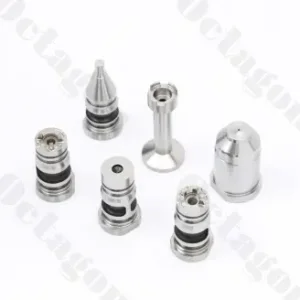
Tooling Precision
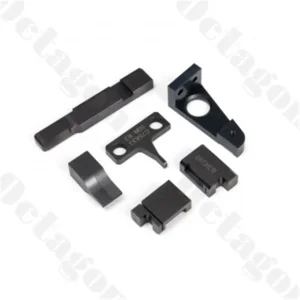
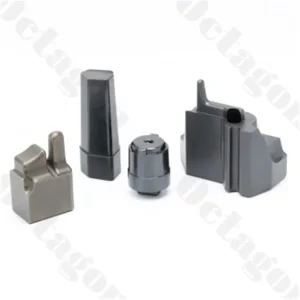
OEM Mold Inserts from China Key Injection Molding Components
Explore Specification
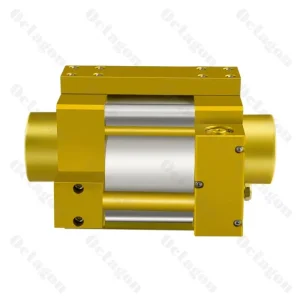
Intensifier Unit
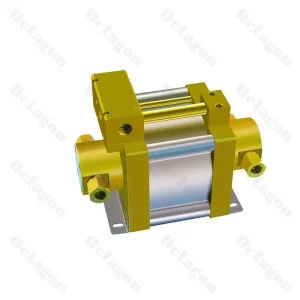
ODM SWB-160D Octagon Gas-Liquid Intensifier Pump for Pressure Amplification
Explore Specification
Factory Operations
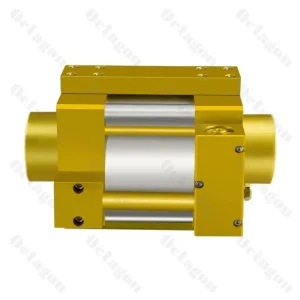
ODM SWP-05 Air Booster Pump User-Friendly Enhanced Efficiency
Explore Specification
Flagship Booster
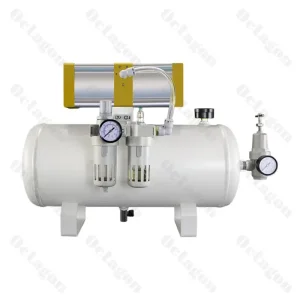
CE Certification Octagon SWP-02A-G Air Booster System Premium Quality
Explore Specification