
Featured Industrial Components & Pulling Assemblies
Export-grade mechanical assemblies, pneumatic boosters, and precision wire systems manufactured under rigorous dimensional tolerances and ISO-certified protocols.
-
OEM Mold Inserts from China: Key Components for Precision Injection Molding by Leading Suppliers and Factories Manufacturer, Suppliers Explore Configuration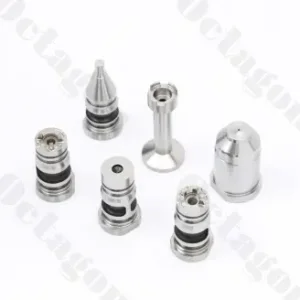
-
CE Certification China SWP-02A-G-T Air Booster Pump - High-Pressure Gas Solutions from Reliable Suppliers for Factory Use Manufacturers, Supplier Explore Configuration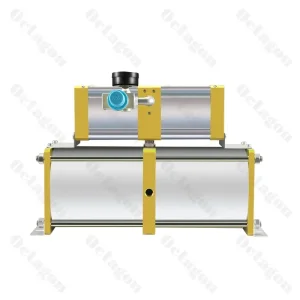
-
ODM China Cooling Fan Cable Harness for Heat Dissipation - Reliable Suppliers and Factory Direct Solutions Manufacturer, Service Explore Configuration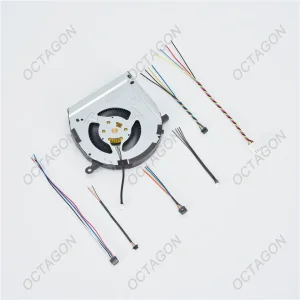
-
CE Certification High-Performance Equipment Cabinet Wiring Harness - Reliable Connectivity from China Suppliers & Factory Suppliers, Factories Explore Configuration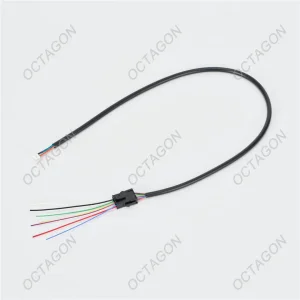
-
Custom China Suppliers Factory Octagon SWP-02B-G Pneumatic Pump - Quality Aluminum Alloy and Stainless Steel Design Factories, Service Explore Configuration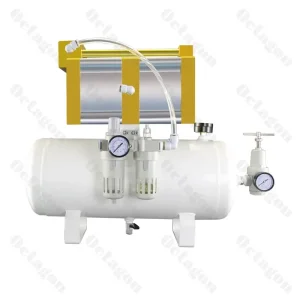
-
OEM Octagon SWP-7.5-G Air Booster Pump - Efficient China Suppliers & Factory for Enhanced Pressure Applications Factories, Service Explore Configuration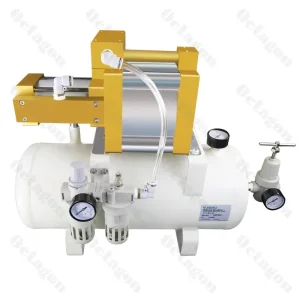
-
Custom High-Definition Screen Connection Cable Harness – Quality Products from China Suppliers & Factory for Monitors, TVs, and Automotive Displays Suppliers, Service Explore Configuration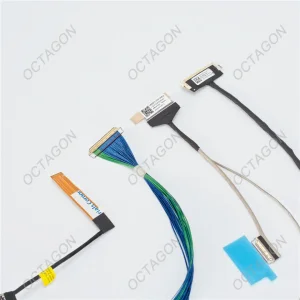
-
ODM High-Performance Octagon SWB - 125D Pump from China Suppliers | Reliable Factory Solutions Manufacturer, Exporters Explore Configuration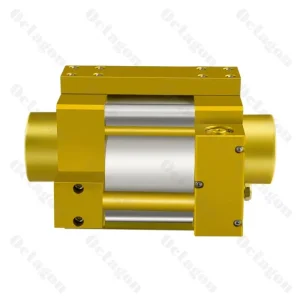
Engineering Next-Generation Conduit Navigation Dynamics
Electrical wire pulling springs, flexible pilot leaders, and fish tape springs represent the critical physical link in modern low-voltage and medium-voltage electrical installations. Navigating multiple 90-degree conduit bends without permanent plastic deformation requires uncompromising metallurgical precision, controlled elastic modulus, and surface coefficient optimization.
High-Carbon Spring Metallurgy
Utilizing high-tensile SWP-A/B music wire, oil-tempered chrome-silicon alloys, and SUS304/SUS316 austenite stainless steel to achieve tensile resilience exceeding 2,100 N/mm² while preventing catastrophic brittle fractures during multi-turn conduit sweeps.
Multi-Stage Deflection Control
Tapered outer pitch windings paired with double-wound inner cores engineered for variable directional stiffness. This delivers the axial column strength required for forward thrust while maintaining multi-axis radial flexibility across 1/2-inch to 4-inch electrical metallic tubing (EMT).
Electro-Tribological Coatings
Specialized low-friction surface treatments including black oxide passivated matrices, electrophoretic resin envelopes, and specialized PTFE dry-lubrication coatings designed to slash pulling tension friction coefficients below μ = 0.12 in harsh runs.
Evolving Demands in Worldwide Electrification
As commercial smart grids, hyperscale AI data centers, and gigawatt-scale battery energy storage systems (BESS) accelerate globally, the complexity of cable raceway containment has expanded exponentially. Cable installers face longer duct continuous spans, extreme bend radii, and severe thermal environments.
Our engineering protocols bridge the historical gap between commodity manual fish tape leaders and high-speed automated pulling equipment, providing custom wire pulling springs designed to withstand mechanized winch torque without coil bird-caging or structural pitch uncoiling.
| Critical Parameter | Standard Utility Grade | Octagon Industrial Precision |
|---|---|---|
| Material Tensile Range | 1,400 - 1,650 N/mm² | 1,950 - 2,300 N/mm² (Alloy Spec) |
| Yield Deformation Angle | < 90° Permanent Set | Up to 180° Elastic Recovery |
| Surface Coefficient (μ) | 0.30 - 0.45 Standard Zinc | 0.08 - 0.14 PTFE / Polymer Shield |
| Tensile Pull Rating | 150 kgf - 300 kgf Limit | Up to 1,200 kgf High-Capacity Run |
Localized Compliance & Standard Assurance
Cross-border electrical construction projects demand verified compliance with rigorous national and international electrical safety codes, preventing site shutdowns and mechanical line failures.
North America (NEC & UL/CSA)
Engineered to comply with NFPA 70 (National Electrical Code) Article 300 raceway requirements. Leaders and tension springs prevent internal conduit wall scoring across PVC, EMT, and rigid metallic conduits (RMC), mitigating cable insulation jacket rupture risks.
European Union (CE & CENELEC)
Fully compliant with EN 61386 conduit system safety guidelines and the EU RoHS/REACH environmental framework. Completely free of hexavalent chromium and restricted heavy metals, facilitating effortless customs clearance across all 27 EU member states.
Asia-Pacific & Middle East (JIS/SASO)
Built to withstand extreme ambient temperatures up to 85°C without annealing or loss of hook tension, fulfilling SASO industrial requirements in Saudi Arabia and JIS C 8461 industrial performance specifications across Asian infrastructure projects.
Industrial Implementation Case Applications
Engineered for uncompromising reliability across high-stakes industrial cabling ecosystems where standard pulling leaders fail.
Hyperscale Data Center Raceways
Navigating dense overhead basket trays and fiber optic sub-ducts without exerting micro-bend damage on sensitive multi-mode optical lines.
Grid-Scale BESS Enclosures
Threading high-amperage, flame-retardant DC bus cabling through confined modular containerized battery racks with tight bend tolerances.
Commercial Factory Automation
Routing complex multi-axis servo feedback and robotic harness lines directly into control cabinet raceways and in-machine guides.
Underground Heavy Utility Vaults
Navigating heavy-duty, mud-fouled subterranean PVC conduits across street crossings and high-voltage substation feeds.
Engineering Roadmap: Next-Gen Conduit Propulsion
Continuous investment in smart telemetry, multi-material composites, and friction minimization technologies.
Graphene Composite Hybrids
Developing micro-thin graphene oxide exterior barriers on spring coils to achieve unmatched abrasion resistance across sharp conduit burrs.
Integrated Tension Sensors
Embedding micro-strain sensor heads within industrial pilot springs to provide real-time wireless pulling load metrics, preventing cable necking.
High-Efficiency Anti-Snag Heads
AI-optimized hydro-formed multi-radii spherical dynamic heads designed to automatically bounce off offset conduit misalignments.
Zero-Carbon Eco Metallurgy
Adopting scrap-recycled, hydrogen-annealed aerospace alloy matrices yielding an 80% reduction in production carbon footprints.
Frequently Asked Engineering Questions
Direct answers addressing technical parameters, manufacturing specifications, and international export processes.
What defines an optimal electrical wire pulling spring for complex conduit paths?
How does Octagon handle custom OEM/ODM drawing specifications?
What surface treatments are offered to resist chemical corrosion and friction?
What quality control protocols are applied to spring pull eyelets?
Industrial Booster Pumps & Pneumatic Systems
Complete line of gas-liquid booster pumps, high-pressure air amplification units, and precision tooling accessories engineered for continuous industrial duty.
-
OEM China Octagon SWP-02A-G Air Booster System - Reliable Suppliers for High-Precision Factory Solutions Factory, Exporter Explore Configuration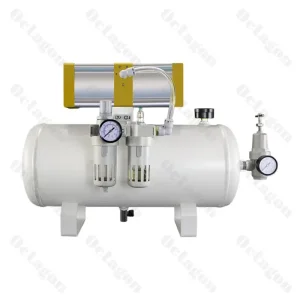
-
ODM Octagon SWP-02A-G Air Booster System - Advanced Pneumatic Technology from China Suppliers and Factory Factories, Exporter Explore Configuration -
High-Quality SWB-125S Single-Drive Gas-Liquid Booster Pump - Reliable China Suppliers & Factory Solutions Factories, Products Explore Configuration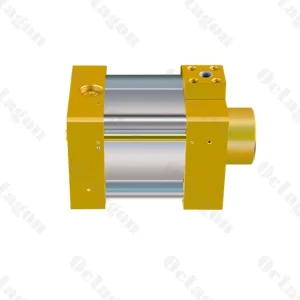
-
CE Certification SWP-05-G Air Booster Pump - High Efficiency Solution for Compressed Air Systems from China Suppliers and Factory Factory, Products Explore Configuration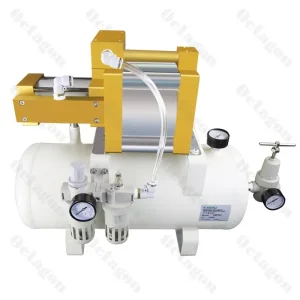
-
OEM China SWP-02A-G-T Air Booster Pump - Reliable Suppliers for Factory High-Pressure Gas Solutions Exporters, Product Explore Configuration -
High-Quality SWP-05-G Air Booster Pump Factory, Products Explore Configuration -
High-Quality SWB-125S Single-Drive Gas-Liquid Booster Pump Supplier, Factory Explore Configuration -
CE Certification China SWP-05-G Air Booster Pump - Efficient Compressed Air Solution from Leading Suppliers and Factory Suppliers, Product Explore Configuration