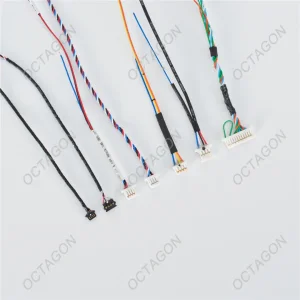
⚙️ Engineered Tooling & Pressure Amplification Solutions
Direct manufacturer supply chain solutions: CE-certified pneumatic pumps, booster stations, and bespoke tooling assemblies designed to eliminate cycle drag and optimize clamp force consistency.
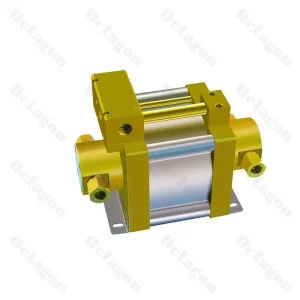
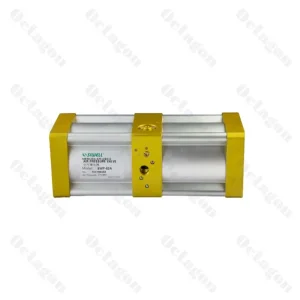
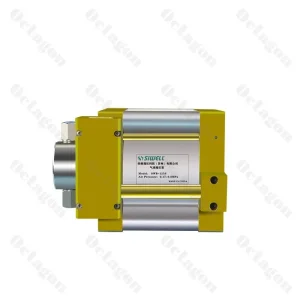
Industrial Engineering Whitepaper: Precision Tooling and Injection Molding Architecture
In modern high-speed injection molding and component tooling, production efficiency hinges on two critical engineering criteria: micron-level mechanical repeatability and dynamic thermal stability. Tooling failures frequently occur not from raw material shortcomings, but from inconsistent thermal regulation, micro-vibrations in non-standard mold cores, and insufficient pneumatic amplification during automated in-mold degating.
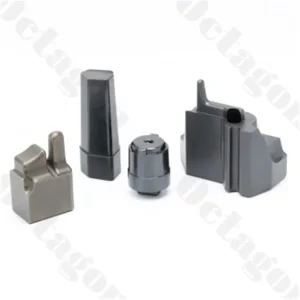
Leading tier-1 manufacturing requires high-grade mold steel (including DIN 1.2343 ESR, H13, S136, and premium Beryllium Copper inserts) coupled with CNC hard milling, slow-feeding wire EDM, and sub-micron surface polishing. By maintaining tighter thermal balance and structural rigidity, custom tooling suppliers mitigate residual stresses in polymer melts, eliminate sink marks, and minimize parting-line flash even in complex multi-cavity hot runner systems.
Material Metallurgy
Strict selection of degassing steels, advanced cryo-treatments, and specialized PVD/DLC anti-wear surface coatings to resist abrasive glass-filled resins.
Sub-Micron Tolerances
State-of-the-art Japanese CNC machining centers yielding core-to-cavity interchangeability of ±0.002 mm, preventing flashing on thin-wall designs.
In-Mold Degating
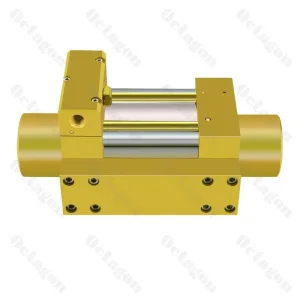
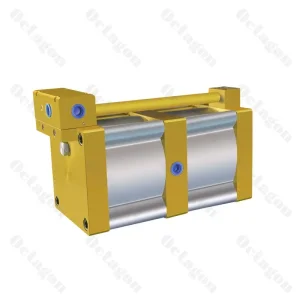
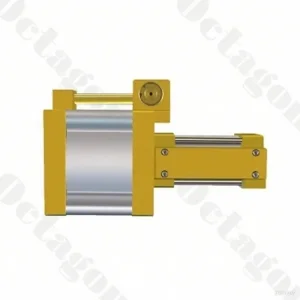
Integrated pneumatic cutting systems delivering 1,000 to 7,000 kgf of localized force to slice gates while molds remain closed, cutting cycle time by 15-30%.
🏭 China Factory Supply Chain & Cost-Efficiency Ecosystem
How the synergy of Taiwanese precision engineering oversight combined with Guangdong and Jiangsu industrial manufacturing clusters provides an unassailable global procurement advantage.
Complete Ancillary Ecosystem
Immediate regional access to specialized heat treatment facilities, mold-base standard components, hot-runner suppliers, and masterbatch compounders minimizes production bottlenecks and ensures rapid design iteration cycles.
Rapid T0 Sampling Turnaround
Fully integrated CAD/CAM/CAE workflows coupled with round-the-clock electrical discharge machining allow production of prototype tooling and T0 samples in as few as 14 to 21 working days.
Elastic Production Scaling
Whether handling low-volume bridge tooling (500–5,000 shots) or million-shot Class 101 high-cavitation production molds, factories scale hydraulic and all-electric press capacities (50T to 2,500T) on demand.
🛡️ Localization Support, Cross-Border Logistics & Compliance
Ensuring global original equipment manufacturers receive full regulatory clearance, transparent traceability, and local technical assistance.
Stringent Regulatory Clearances
Full conformance with CE Machinery Directives, RoHS 2.0, REACH SVHC, and ISO 9001:2015 quality standards. Complete CMM dimension inspection reports and steel certificate dossiers accompany every export delivery.
Ocean & Air Anti-Corrosion Protection
Tooling and critical pneumatic components undergo vacuum packing with moisture barriers, nitrogen purging, and corrosion-inhibiting coatings, preventing oxidation during maritime shipping.
Localized Maintenance Support
Standardized tool interfaces (DME, HASCO, MISUMI standard compatibility) ensure that local toolrooms in North America and Europe can easily service, re-polish, or swap core pins without downtime.
🔍 Global Enterprise Procurement Requirements Analysis
We solve the critical pain points that global procurement teams, chief tooling engineers, and vendor managers face when managing contract manufacturing.
Engineering Traceability & Risk Mitigation
Enterprise procurement demands end-to-end traceability. We supply complete Moldflow analyses detailing gate shear, weld lines, venting layouts, and cooling circuit Reynolds numbers prior to steel cutting, significantly derisking capital tooling investments.
IP Protection & Design Security
Strict NDAs, siloed CAD server networks, and segmented tooling production ensure that proprietary automotive Class-A surfaces, medical drug-delivery device tooling, and electronics housing designs remain completely secure.
🚀 Industry Trends Shaping Precision Injection Tooling
Emerging manufacturing technologies and sustainability mandates redefining modern custom tooling supply chains.
In-Mold Smart Sensor Integration
Embedding piezo-electric cavity pressure transducers and dynamic thermocouple sensors directly into tool cavities allows closed-loop feedback, automatically compensating for machine hydraulic drift and ambient heat changes.
Processing PCR & Bio-Polymers
High post-consumer resin (PCR) fractions introduce viscosity variance. Advanced tooling utilizes variable gate orifices and specialized venting channels to process biodegradable and recycled materials without flow hesitation.
Conformal Cooling Inserts
Additive metal 3D printing (SLM) for core inserts allows curved cooling lines that trace exact part contours, slashing mold temperatures evenly and cutting cycle cooling times by up to 40%.
🎯 Localized Industrial Application Scenarios
Engineered components and specialized tooling serving zero-defect manufacturing sectors across 60+ countries.
Automotive Systems
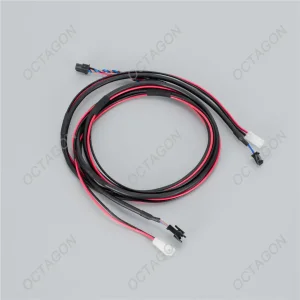
High-tolerance functional powertrain brackets, light guides, HVAC ducting, and complex under-the-hood wiring harnesses demanding harsh-environment durability.
Medical Diagnostics
Cleanroom-compliant micro-fluidic chips, biocompatible syringe bodies, and high-purity medical wiring harnesses built in monitored cleanroom facilities.
Precision Consumer Electronics
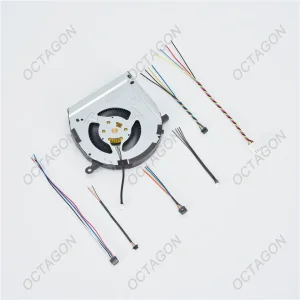
Ultra-thin acoustic speaker mesh, heat dissipation cooling fan wire harnesses, and tight-tolerance snap-fit housing assemblies with mirror Ra 0.05 surface finishes.
New Energy & Battery Storage
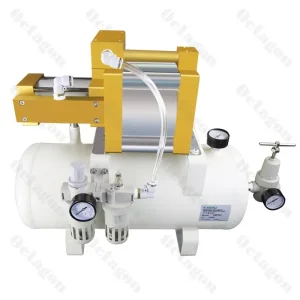
Heavy-duty power collection lines, flame-retardant battery module brackets, and pressurized air-liquid testing systems for energy storage cabinets.
💬 Frequently Asked Questions (Buyer Qualification)
Key technical and commercial inquiries asked by procurement officers and tooling engineers prior to supplier onboarding.
What engineering tolerances do your custom tooling and injection molds achieve?
Our tooling production achieves core and cavity tolerances up to ±0.002 mm, with surface roughness capabilities reaching Ra 0.05 to 0.2 μm mirror finishes using high-precision wire EDM and Swiss-grade CNC machine tools.
How does in-mold degating improve injection molding profitability?
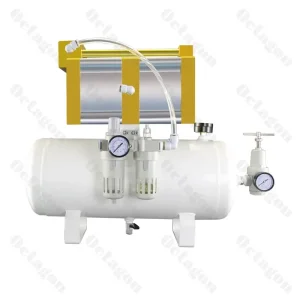
Our pneumatic high-pressure in-mold cutting automation systems cut part gates while the mold is still locked closed. This completely eliminates manual secondary trimming, produces consistent gate remnants, and cuts total cycle time by 2 to 5 seconds per shot.
What mold life expectancy standards (SPI Class) do you build to?
We engineer tooling ranging from SPI Class 104 prototype tools (up to 5,000 shots) up to SPI Class 101 production molds constructed from hardened H13/S136 stainless steel rated for over 1,000,000 continuous shots.
Do you accommodate international tooling standards for North America and Europe?
Yes. All mold base footprints, guide pins, ejector pins, cooling nipples, and hot runner manifolds are fully compatible with DME, HASCO, MISUMI, or Staubli standards based upon your local plant specifications.
What is the typical lead time from CAD sign-off to First Article Inspection (FAI)?
Standard lead times for precision injection molds are 3 to 4 weeks for rapid prototypes and 5 to 7 weeks for production tooling, inclusive of full CMM dimensional validation and CPK statistical inspection reports.
How is intellectual property and proprietary tooling designs protected?
We execute legally binding bilateral NDAs. CAD files are managed inside encrypted, permission-isolated servers, ensuring that your proprietary 3D geometry and manufacturing data are never exposed or reused.
⚡ Advanced Booster Systems & Custom Cable Harnesses
Reliable components engineered to withstand high-vibration, elevated pneumatic pressures, and harsh industrial operating environments.