
Core Mold Automation, Boosting Systems & Harness Assemblies
Explore our field-proven production components engineered for continuous operation, micron-level repeatability, and integrated in-mold degating automation.
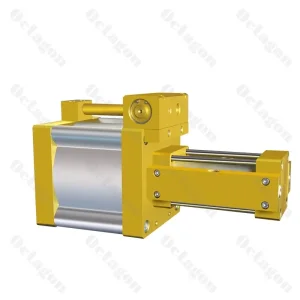
CE Certification China SWP-05 Air Booster Pump
View Product Specs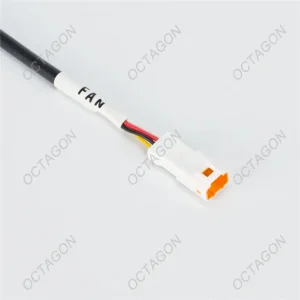
OEM Waterproof Series Harnesses (IP68 Rating)
View Product Specs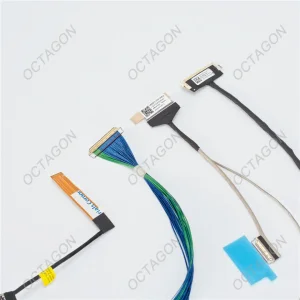
Custom High-Definition Screen Connection Cable Harness
View Product Specs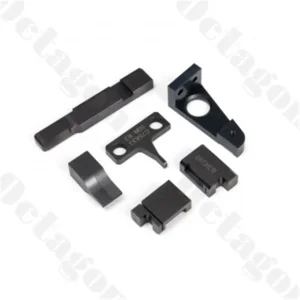
High-Quality Precision Stamping Die Components
View Product Specs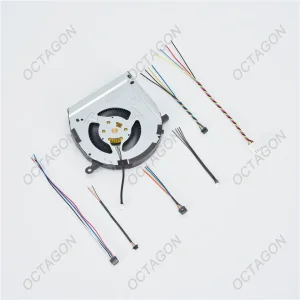
CE Certification Cooling Fan Cable Harness
View Product Specs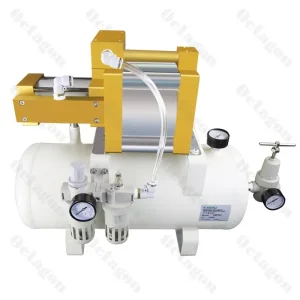
High-Quality SWP-05-G Air Booster Pump
View Product Specs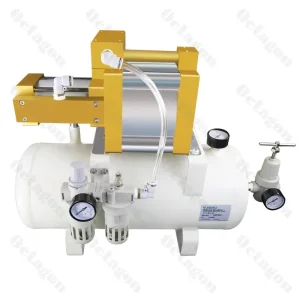
CE Certification China Octagon SWP-7.5-G Air Booster Pump
View Product Specs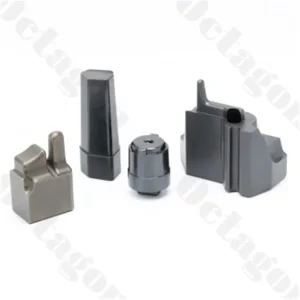
Custom Die Casting Mold Non-Standard Parts Processing
View Product SpecsPrecision Engineering in ABS Injection Tooling: Rheology, Thermal Dynamics & Shrinkage Control
Acrylonitrile Butadiene Styrene (ABS) serves as the engineering thermoplastic backbone across consumer electronics, medical diagnostics, automotive cockpits, and industrial automation housings. As an amorphous terpolymer, ABS combines the chemical resistance and thermal stability of acrylonitrile, the high impact strength and ductility of butadiene, and the surface rigidity, gloss, and machinability of styrene. However, converting complex ABS formulations into Class-A cosmetic, dimensionally stable components requires precision tooling built to strict engineering tolerances.
The primary tooling challenge in ABS injection molding stems from its amorphous nature: unlike semi-crystalline resins (such as PA66 or POM) that display sharp volumetric transition curves, ABS exhibits a gradual, continuous transition through its Glass Transition Temperature (Tg ≈ 105°C). Its volumetric shrinkage rate ranges reliably between 0.4% and 0.7%, yet differential wall thickness, localized shear heating, and non-uniform thermal dissipation can induce localized warpage, residual internal stress, and sink defects. High-tier suppliers mitigate these physical challenges through comprehensive Moldflow rheological simulation, conformal cooling channel placement, and balanced multi-cavity runner manifolds.
ABS Tooling & Rheology Parameters
International Sourcing Trends & Vendor Qualification Benchmarks
Procurement leadership in North America, Europe, and Asia-Pacific has shifted away from pure piece-part pricing toward total lifecycle tool longevity, carbon accounting, and digital engineering transparency.
Stringent Tool Steel Traceability
Global automotive and medical OEMs require mill test certificates (MTC) according to EN 10204 3.1. Verification of ESR (Electro-Slag Remelted) steels like Assab Stavax, Bohler M310, or Daido NAK80 prevents microporosity, ensuring uniform heat conductivity and defect-free mirror polishing.
Thermal Rheology & Conformal Cooling
Cycle time dictates profitability. Integrating Direct Metal Laser Sintering (DMLS) 3D-printed tool inserts with conformal cooling lines allows coolant to follow intricate cavity profiles, reducing ABS cycle times by 20% to 35% while eliminating localized warpage and thermal sinks.
Multi-Cavity Hot Runner Balance
For high-volume ABS production runs (exceeding 1 million shots), procurement demands balanced hot runner manifolds (Husky, Mold-Masters, or Synventive valve gate architectures). Precise needle valve timing eliminates witness marks and flash on visible cosmetic surfaces.
PPAP Level 3 & Statistical Process Capability
Global suppliers must deliver comprehensive AIAG PPAP packages, including Full Dimensional Layout reports using Coordinate Measuring Machines (CMM), Gage R&R studies, Failure Mode and Effects Analysis (DFMEA/PFMEA), and Cpk > 1.67 process capabilities on critical dimensions.
In-Mold Degating & Secondary Operation Reduction
Manual post-mold trimming introduces human error and part variation. Global procurement prioritizes toolmakers who integrate pneumatic and hydraulic in-mold gate cutting automation, severing pin-point and edge gates inside the tool prior to mold opening for pristine aesthetic finishes.
China Industry 4.0: Precision Tooling, Scale & Supply Chain Resilience
How Octagon Precision Mold unites Taiwanese engineering governance with the world's most agile precision industrial manufacturing ecosystem.
Dual-Hub Synergy: Taoyuan R&D Governance & Mainland Scalable Production
Founded in 2008 in Taoyuan, Taiwan, Octagon Precision Mold Co., Ltd. established its operational philosophy around zero-defect tolerance (±0.002 mm) and comprehensive DFM (Design for Manufacturability) engineering reviews. To serve more than 60 countries and over 20,000 global partners, Octagon combined its Taiwanese engineering leadership with high-capacity smart factories across mainland China's advanced industrial corridors.
Under China's Industry 4.0 manufacturing transformation, our production facilities utilize synchronized 5-axis Makino and GF Machining Solutions CNC centers, Sodick mirror-surface wire-cut EDM systems, and computerized high-pressure booster systems. This unified ecosystem reduces standard injection mold fabrication lead times from the Western industry average of 12–16 weeks down to 4–6 weeks for complex T1 samples, while maintaining complete batch-to-batch repeatability.
Machining & Inspection Technology Matrix
| Evaluation Parameter | Conventional Tooling Suppliers | Octagon Precision Industry 4.0 Platform | Engineering Benefit to Client |
|---|---|---|---|
| Machining Precision | ±0.015 mm to ±0.025 mm | ±0.002 mm | Zero flashing, absolute inter-cavity interchangeability |
| Gate Trimming Process | Manual robotic trim or post-op shearing | Automated In-Mold High-Pressure Cutting | Eliminates labor overhead, zero gate vestige, <0.02 mm burr |
| Pneumatic Amplification | Standard plant air (0.6 MPa) | SWP Air-Driven Booster Systems (up to 7,000 kgf) | High-pressure holding, rapid slide activation, stable cycle |
| Electrical Harness Integration | Outsourced third-party cable assemblies | In-House Custom IP68 Wire Harness Manufacturing | Unified one-stop electromechanical quality liability |
| T0/T1 Prototyping Lead Time | 10 – 14 Weeks | 3 – 5 Weeks | Rapid time-to-market advantage for competitive product launches |
Localized Application Scenarios & Defect Mitigation Protocols
Systematic engineering countermeasures deployed during mold design to overcome common thermoplastic injection defects in mission-critical applications.
Automotive Cockpit & Interior CMF
HVAC louvers, dashboard bezels, and infotainment frames require high-gloss or fine-texture SPI/VDI finishes. Defect mitigation involves Moldflow fiber orientation analysis to prevent visible weld lines and differential gloss across complex geometry.
Medical Diagnostics & Portable Devices
Handheld blood analyzers, monitor casings, and lab-on-chip enclosures demand biocompatible, flame-retardant (UL94 V-0) ABS grades. Tool design incorporates multi-zone hot runner manifolds and mirror-polished cores to eliminate particulate entrapment.
Energy Storage & Industrial Control
Battery management module (BMS) covers, DIN rail housings, and control panel enclosures require robust structural integrity, snap-fit resilience, and vibration endurance. Tooling emphasizes balanced draft angles (>1.5°) and reinforced rib geometries.
Smart Consumer Electronics & Displays
Smart home interfaces, security camera housings, and high-definition screen frames require tight snap-locks and ultrasonic welding perimeters. Tool designs incorporate sub-micron EDM processing to ensure hermetic sealing and gap-free assembly.
Frequently Asked Questions: ABS Injection Tooling & Sourcing
Direct technical responses addressing tooling life, shrinkage compensation, gate architecture, and supplier qualification standards.
How does mold shrinkage compensation differ for standard ABS versus PC-ABS blends?
What tool steel is optimal for high-volume, flame-retardant (FR) ABS injection molding?
Why is in-mold gate cutting preferred over traditional robot-side trimming for ABS components?
How does Octagon maintain quality consistency across Taiwan and China facilities?
Can Octagon provide turnkey manufacturing combining molds, wire harnesses, and booster pumps?
Engineered Booster Pumps, Medical Harnesses & Industrial Solutions
Complement your tooling projects with high-reliability gas-liquid booster pumps, precision cable harnesses, and industrial tooling components.
OEM Octagon SWP-7.5-G Air Booster Pump
View Product Specs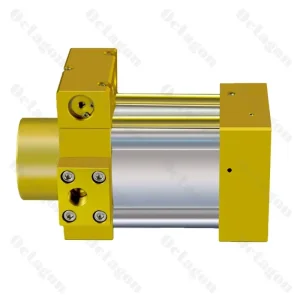
CE Certification Octagon SWB-80S Gas-Liquid Booster Pump
View Product Specs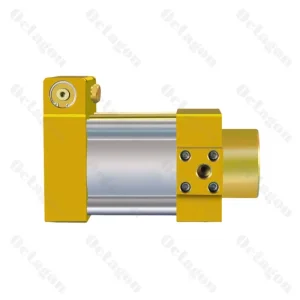
CE Certification High-Efficiency SWB-100S Booster Pump
View Product Specs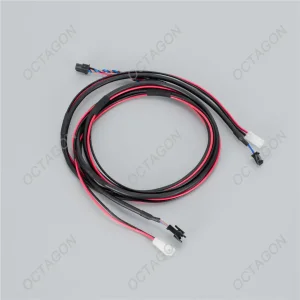
Custom China Medical Wiring Harnesses Suppliers
View Product Specs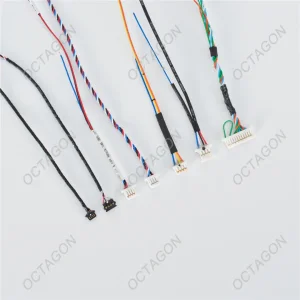
ODM Octagon Speaker Wire Harness
View Product Specs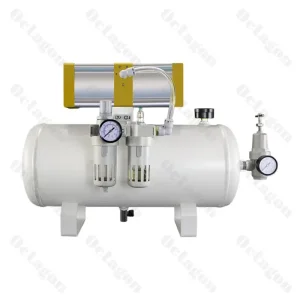
CE Certification Octagon SWP-02A-G Air Booster System
View Product Specs
ODM China Octagon SWP-7.5-G Air Booster Pump
View Product Specs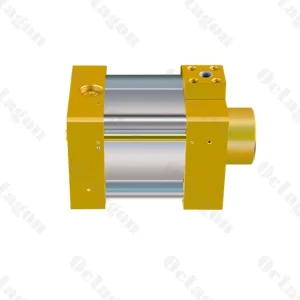
OEM China SWB-125S Gas-Liquid Booster Pump
View Product SpecsInitiate Your Technical Sourcing Assessment
Collaborate directly with our senior tooling engineers and system architects. Send your 3D CAD files (STEP, IGES, X_T) and application parameters for a comprehensive DFM and moldflow evaluation within 24 hours.