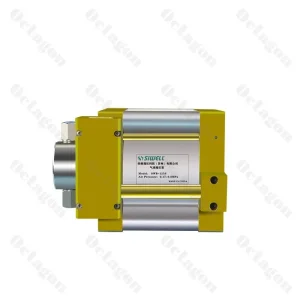
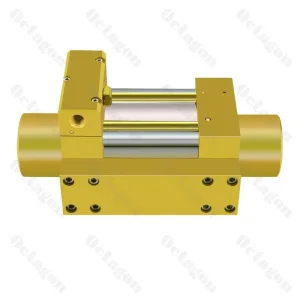
High-Performance Booster Systems & Electromechanical Components
Engineered for seamless pneumatic-hydraulic intensifier conversions, ultra-stable air boosting, and heavy-duty industrial interconnection.
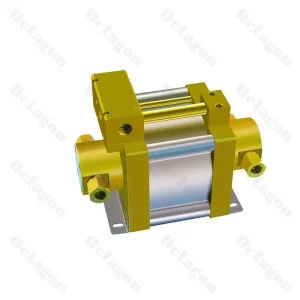
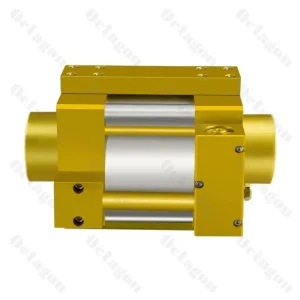
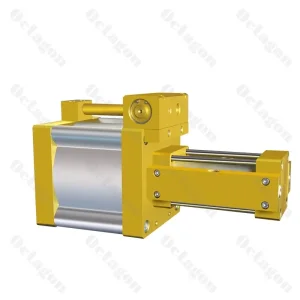
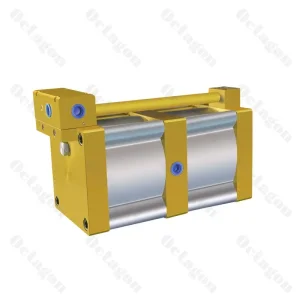
The Architecture of Modern Hydro-Pneumatic Intensification
In modern high-speed industrial manufacturing, the mechanical dilemma between the rapid cycling of pneumatics and the raw tonnage of hydraulics has traditionally forced process engineers into painful trade-offs. Standard pneumatic actuators lack the incompressible fluid dynamics required for controlled, high-force coining, punching, and clamping. Conversely, conventional pure hydraulic power units (HPUs) impose massive continuous electrical overheads, persistent thermal degradation of mineral oils, expensive proportional valving, high maintenance downtime, and severe environmental leak hazards.
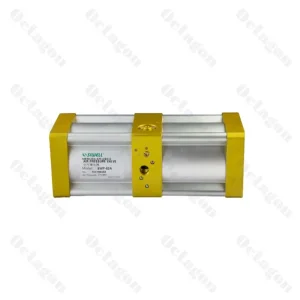
The Hydro-Pneumatic Cylinder (Air-Over-Oil Booster Cylinder) solves this operational friction entirely. By harnessing standard factory pneumatic compressed air (typically 0.4 to 0.7 MPa) to drive an internal dual-piston differential area ratio, the cylinder achieves an approach stroke at pneumatic velocities, automatically transitions to a closed-loop hydraulic power stroke generating upwards of 1,000 to 70,000 kgf (10 kN to 700 kN), and subsequently executes a rapid pneumatic return stroke. Because hydraulic fluid remains sealed in an internal hermetic reservoir, zero external hydraulic pump units or circulating hoses are required.
Kinematic Phase Analysis: Tri-Stage Stroke Transition
Understanding the internal dynamics of an export-grade hydro-pneumatic cylinder requires evaluating the three distinct thermodynamic and mechanical phases occurring in every machine cycle:
- Phase 1: Rapid Approach (Pre-Stroke): Low-pressure compressed air acts upon the primary pneumatic piston and the integral oil accumulator reservoir. Hydraulic fluid bypasses freely through a high-flow poppet check valve directly into the high-pressure working chamber, moving the working rod smoothly to the workpiece interface at speeds reaching 300 to 500 mm/sec with minimal kinetic impact.
- Phase 2: High-Pressure Power Stroke (Intensification): Once resistance is encountered or a mechanical/pneumatic pilot signal triggers the control valve, a hardened intensifier plunger penetrates through a dynamic seal cartridge, completely isolating the working hydraulic chamber. The pneumatic surface area ratio ($A_{pneumatic} / A_{hydraulic plunger}$) intensifies the internal hydraulic oil pressure instantaneously up to 35 MPa to 70 MPa. This produces immense pressing force across a calibrated stroke (typically 5 mm to 25 mm) with zero hydraulic pulsation.
- Phase 3: Fast Retract & Reset: Solenoid actuation reverses the pneumatic differential, retracting the intensifier plunger and opening the hydraulic bypass channel. Air pressure returns the main ram to top dead center while oil seamlessly flows back to the pre-fill chamber, dissipating thermal accumulation across the hard-anodized aluminum or chrome-molybdenum barrel walls.
China's Manufacturing Ecosystem: Manufacturing Excellence & Export Scale
Why Tier-1 international automation OEMs and stamping integrators source hydro-pneumatic boost cylinders and gas-liquid intensifiers directly from China's specialized production hubs.
Ultra-Precision Multiaxis CNC Clusters
China's specialized precision manufacturing clusters integrate multi-axis Japanese Mazak, Makino, and Swiss GF machining centers. Cylindrical honing achieves bore micro-tolerances of ±0.002 mm with internal surface roughness Ra 0.05–0.1 μm, preventing micro-bypass leakage across tens of millions of continuous pressure cycles.
Surface Metallurgy & Vacuum Heat Treatment
Piston rods undergo multi-pass frequency induction hardening (HRC 60–64), precision diamond grinding, and hard chrome electroplating (thickness ≥30 μm) or QPQ (Quench-Polish-Quench) liquid salt bath nitriding. This delivers unmatched corrosion resistance against moist compressed air and abrasive mechanical debris.
Dense Upstream Component Clusters
Within a 50 km logistics radius, Chinese precision manufacturers leverage immediate access to custom fluoroelastomer (FKM/Viton), polyurethane (PU) seal profiles from global leaders (NOK, Parker, Busak+Shamban), aircraft-grade 7075-T6 aluminum alloys, and custom sensor integrations, slashing prototype development cycles from months to days.
Rigorous Full-Process Quality Assurance
Production facilities operate under rigid ISO 9001:2015 frameworks. Every hydro-pneumatic cylinder undergoes multi-stage automated helium mass spectrometer leak detection, continuous 1.5x proof pressure testing, and real-time transducer stroke profile validation before export packaging.
Unmatched Total Cost of Ownership (TCO)
By coupling lean Taiwanese engineering discipline with scalable production infrastructure in mainland China, manufacturers deliver high-tonnage precision actuators at 40% to 60% lower capital expenditure than European or American counterparts, accompanied by worldwide OEM/ODM engineering customization.
Integrated Electromechanical Assemblies
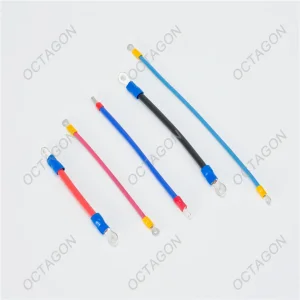
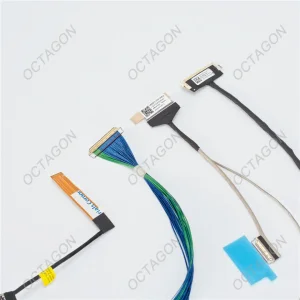
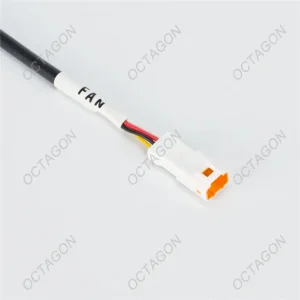
Chinese factories excel in comprehensive integration: combining the hydro-pneumatic intensifier unit with custom IP68 industrial wire harnesses, sensor suites, and high-pressure timing control cabinets into plug-and-play machine sub-assemblies for global export.
Emerging Technology Trends in Hydro-Pneumatic Actuation
Discover how edge sensing, digital displacement tracking, and decarbonization mandates are shaping the next generation of booster cylinders.
| Technological Vector | Traditional Booster Cylinder Design | Next-Gen Smart Hydro-Pneumatic Cylinder | Impact on Production Line Efficiency |
|---|---|---|---|
| Displacement & Force Feedback | External limit switches; blind force control without verification. | Embedded magnetostrictive LVDT linear encoders and piezoelectric force transducers. | 100% Traceability Real-time force-displacement (F-s) signature curve recording for zero-defect automotive validation. |
| Sealing Material Formulation | Standard NBR (Nitrile) seals vulnerable to frictional wear and high-temperature breakdown. | Self-lubricating PTFE/carbon-bronze composites backed with high-grade FKM elastomeric energizers. | >15 Million Cycles Friction drag reduced by 65%; eliminates stick-slip micro-chatter at low approach speeds. |
| Energy Consumption & Decarbonization | Continuous motor idle on central hydraulic pumps (65% power dissipated as thermal loss). | On-demand pneumatic drive utilizing compressed air solely during actuation; 0W power idle. | Up to 90% Savings Massive decrease in facility kWh consumption and complete compliance with ISO 50001 energy standards. |
| Cleanroom & Environmental Safety | External oil circulation with potential pipe burst risk, oil vapor mist, and hazardous waste disposal. | Hermetically enclosed oil chamber with zero oil vapor venting; food-grade synthetic ester hydraulic fluids. | Cleanroom Ready Qualified for ISO Class 6/7 cleanrooms, medical device manufacturing, and food packaging machinery. |
| Intelligent Cycle Diagnostics | Reactive maintenance following oil weeping, pressure decay, or erratic stroke slowdown. | Integrated IO-Link digital communication nodes logging seal friction, cycle times, and thermal gradients. | Predictive Health Alerts automated lines to seal degradation 500,000 cycles prior to catastrophic pressure loss. |
Localized Application Scenarios & Macro-Industry Solutions
Hydro-pneumatic booster cylinders bridge the performance envelope where pure pneumatic cylinders stall out and where hydraulic systems are economically and environmentally excessive. Across global precision manufacturing sectors, specific tooling requirements highlight their unique functional strengths:
Automotive Clinching & SPR Riveting
Self-piercing riveting (SPR) of high-strength steel and lightweight aluminum vehicle chassis components requires instantaneous, smooth, non-pulsating force from 40 kN to 80 kN. Booster cylinders eliminate shock loading, extending punch tool life by over 300% compared to pneumatic toggles.
Automated In-Mold Degating Systems
During injection molding, separating runners and gates inside closed mold tooling prevents secondary cutting costs and cosmetic blemishes. Compact hydro-pneumatic intensifier systems deliver 1,000 to 7,000 kgf of shearing force within millisecond windows before mold ejection.
EV Battery Pack & Cell Assembly
Lithium-ion prismatic battery casing crimping, busbar cold-welding, and tab precision coining require dry, contaminant-free assembly environments. Hydro-pneumatic cylinders eliminate toxic hydraulic mist risks while ensuring high-tonnage precision repeatability.
Electronics & PCB Precision Punching
Micro-hole punching, connector pin press-fitting, and PCB depaneling require soft touch-down to prevent micro-cracking of FR4 fiberglass and silicon layers, followed immediately by high-tonnage shear force. Hydro-pneumatic transition kinetics fulfill this exact requirement.
Precision Deep Drawing & Embossing
Forming metallic medical shells, consumer audio enclosures, and cosmetic tins demands uniform pressure without the velocity spike common in pneumatic presses. The oil-cushioned hydraulic power stroke prevents tearing, wrinkling, and wall thinning.
High-Pressure Hydrostatic Leak Testing
Pneumatic-driven gas-liquid intensifiers (such as the SWB and SWP series) serve as portable, ultra-reliable hydrostatic pressure generators for testing fire suppression vessels, aerospace tubing, and valves at pressures up to 100 MPa.
Macro Economic & Factory Decarbonization Value
From an enterprise ESG and Total Cost of Ownership (TCO) perspective, converting a plant section from traditional hydraulic power packs to hydro-pneumatic booster cylinders generates substantial, quantifiable financial returns:
- Zero Standby Electric Power: A standard 7.5 kW hydraulic power pack running continuous idle consumes approximately 15,000 kWh annually per workstation solely keeping mineral oil under bypass circulation. A hydro-pneumatic cylinder draws zero energy during workpiece loading and clamping intervals.
- Thermal Plant Elimination: Conventional hydraulics dump thousands of BTUs into factory environments, requiring secondary chilled water circuits and central air conditioning. Hydro-pneumatic cylinders operate at ambient temperatures with no cooling utilities required.
- Maintenance and Contamination Reduction: Eliminating 50+ hydraulic fittings, return filters, and suction manifolds abolishes accidental oil leaks, OSHA slip hazards, and expensive hazardous fluid disposal routines.
Global Enterprise Sourcing & Engineering Checklist
Critical engineering parameters every mechanical designer and procurement specialist must quantify prior to issuing an RFQ to an international cylinder exporter.
1. Stroke Split Configuration
Explicitly define the Total Stroke (e.g., 100 mm) versus the Power Stroke (e.g., 15 mm). Over-specifying the power stroke increases cycle duration and pneumatic air volume requirements unnecessarily.
2. Available Inlet Air Pressure
Calculate dynamic pressing force based on the lowest operating shop air pressure (typically 0.5 MPa / 5 bar), rather than nominal compressor rating (0.8 MPa), incorporating an engineering safety margin ≥ 1.25.
3. Mounting Geometry & Rigidity
Select mechanical interface configurations: Flange (front/rear), Foot bracket, Trunnion, or Clevis mount. Ensure structural mounting plates are sized to resist cyclic high-tonnage reaction moments without elastic deflection.
4. Environmental Compliance
Specify ambient thermal ranges, cleanroom classifications, washdown exposure (demanding IP67/IP68 stainless construction or nickel electroplating), and required export directives (CE Machinery Directive 2006/42/EC, ATEX, RoHS).
Frequently Asked Questions on Hydro-Pneumatic Intensifiers
Direct engineering answers addressing fluid containment, cycle speed optimization, seal maintenance, and system selection.
How does a hydro-pneumatic cylinder prevent air contamination of internal hydraulic oil?
High-grade cylinders incorporate dual dynamic seal cartridges separated by an atmospheric isolation weep vent. This physical air gap ensures that pneumatic drive pressure can never migrate across the seal lip into the hydraulic reservoir, and any micro-weepage of oil is vented externally rather than aerating the hydraulic column, preventing soft, spongy stroke strokes.
What is the typical cycle frequency achievable by booster cylinders?
Cycle times depend directly on stroke length and air port sizing. Compact in-mold degating and clinching cylinders operate smoothly at 20 to 45 cycles per minute. For high-cadence applications, oversized quick-exhaust valves and direct manifold-mounted solenoid valves ensure rapid air evacuation and instantaneous fluid decompression.
How often must hydraulic oil be replenished in the sealed reservoir?
Because the hydraulic system is hermetically sealed within precision-honed chambers with zero external pump circuits, oil degradation and evaporation are virtually non-existent. Under standard clean operating conditions, the factory fluid fill (ISO VG 32 or 46 anti-wear hydraulic oil) lasts between 5,000,000 to 10,000,000 cycles before requiring inspection or replenishment via the integrated visual level indicator.
Can the transition point from approach to power stroke be adjusted?
Yes. Depending on model selection, transition can be actuated mechanically (contact sensing), pneumatically (sequence back-pressure valve), or electro-pneumatically via a high-speed solenoid commanded by an optical sensor or linear encoder input, allowing dynamic software-defined stroke optimization.
How does temperature fluctuation affect cylinder positioning accuracy?
Thermal expansion of enclosed oil can cause minor datum shifts over continuous shift operations. Industrial-grade cylinders feature integrated compensating pre-fill volume accumulators with spring-loaded reservoirs that absorb thermal expansion up to 80°C without altering the mechanical home position.
What documentation accompanies export shipments from China?
Export-ready shipments are accompanied by comprehensive factory inspection certificates (QC dimensional sheets with CMM micro-tolerance verifications), material test reports (MTRs) for steel and aluminum barrels, CE declaration of conformity, pressure vessel compliance certificates, and detailed English installation/maintenance manuals.
High-Pressure Gas-Liquid Intensifiers & Custom Cable Harnesses
Comprehensive catalog solutions engineered for automated industrial control cabinets, high-pressure boosting, and harsh operating environments.