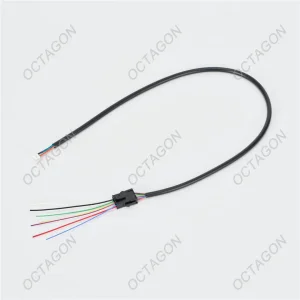
Featured Precision Prototype & Automation Components
Directly integrated with mold cavities, automated degating circuits, and high-performance testing manifolds to accelerate product verification cycles.
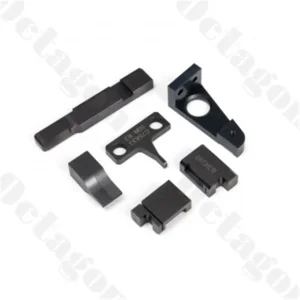
Custom Stamping Die Components: The Core Support of Precision Manufacturing
Explore Specs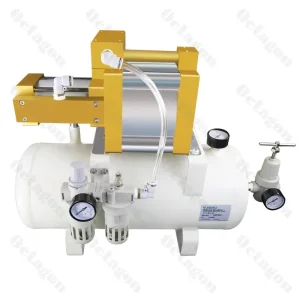
High-Quality Octagon SWP-7.5-G Air Booster Pump - High Efficiency Pressure Enhancement
Explore Specs
ODM Octagon SWP-7.5-G Air Booster Pump - High-Efficiency Pneumatic Device
Explore Specs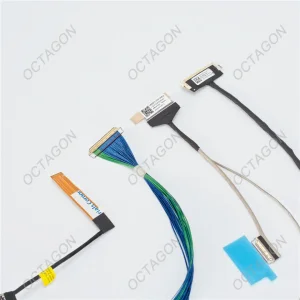
Custom High-Definition Screen Connection Cable Harness for Monitors & Automotive
Explore Specs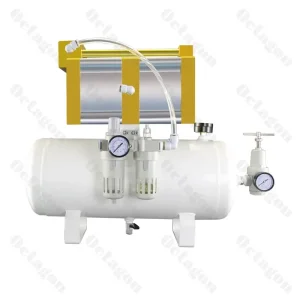
High-Quality Octagon SWP-02B-G Pneumatic Pump Manufacturers & Exporters
Explore Specs
OEM Octagon SWP-7.5-G Air Booster Pump - Enhanced Pressure Applications
Explore Specs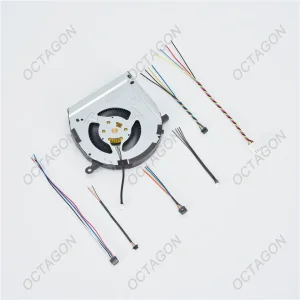
ODM Cooling Fan Cable Harness Solutions for Thermal Dissipation Systems
Explore Specs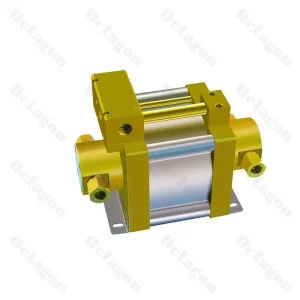
OEM SWB-160D Octagon Power Boost Gas-Liquid Intensifier Pump Systems
Explore SpecsState of Global Industrial Plastic Molding & Prototyping
The commercial demands for plastic molding prototypes have shifted from simple cosmetic mock-ups to functional engineering validation under rigorous thermodynamic, dielectric, and mechanical stress.
Compression of Development Windows
Global original equipment manufacturers face acute pressure to shorten product development lifecycles from 18 months down to sub-120-day sprints. High-fidelity plastic molding prototypes provide first-shot tooling verification, preventing millions in tooling re-spins and gate redesigns.
Engineering-Grade Polymer Demand
Modern applications require rigorous testing of functional resins such as PEEK, PPS, PVDF, and long-glass-fiber reinforced polyamides. Prototypes must replicate exact molecular chain alignment, weld line strength, and anisotropic shrinkage behavior found in commercial production batches.
Convergence of In-Mold Automation
Modern prototyping now validates mechanical tooling alongside automation mechanisms, including in-mold hydraulic shearing, degating cylinders, and integrated sensor cabling, guaranteeing factory compatibility from initial prototype run-off to final mass deployment.
Specialized Deployment Environments for Functional Prototypes
Engineered prototype tooling serves as the critical validation bridge across highly regulated industrial and consumer markets.
Automotive & EV Battery Systems
Validation of flame-retardant (UL94-V0) battery module trays, busbar holders, and high-voltage connectors requiring extreme dimensional fidelity and dielectric properties under thermal stress.
Medical Diagnostics & Fluidics
Micro-fluidic cartridges and drug delivery housings demanding sub-micron surface finish (Ra 0.05 μm) to maintain laminar fluid flow, zero particulate shedding, and ISO 13485 biocompatibility.
Data Center & High-Density Electronics
Thin-walled server rack components, liquid-cooling shrouds, and fiber-optic guide arrays that maintain dimensional stability between -40°C and 125°C without warpage or sink marks.
Extreme Industrial Fluid Handling
Pneumatic intensifier valves, high-pressure booster casing prototypes, and chemically inert seal housings subjected to continuous cyclic fatigue up to 7,000 kgf working force.
The China Manufacturing Ecosystem: Agility & Efficiency
Combining Taiwanese engineering management with China's dense industrial supply cluster delivers rapid iterations, tooling scalability, and cost efficiency without compromising precision.
Aggregated Raw Material Clustering
Direct proximity to prime raw-material suppliers ensures instant access to specialized pre-hardened tooling steels (NAK80, S136, H13) and certified engineering polymers. Material verification happens via in-house spectrometer testing within hours, bypassing multi-week logistics delays.
Multi-Tiered Tooling Infrastructure
Prototype tooling often requires quick turnaround bridge molds. Our dual-track strategy pairs high-speed CNC milling, wire-EDM, and additive tooling inserts with master modular mold bases, dropping trial-shot T1 delivery times to under 7 to 10 working days.
Continuous 24/7 Precision Machining
Operated by over 190 veteran engineers and technicians averaging a decade of sector experience, our facilities run uninterrupted 5-axis machining cells, achieving reliable repeatability to ±0.002 mm across custom batches and high-mix low-volume orders.
Global Regulatory Assurance & Regional Support
International procurement requires full alignment with global material safety, environmental compliance, and quality verification standards.
Material Compliance Certifications
Every prototype shipment arrives with material inspection certificates (CoC, Mill Test Reports) verifying compliance with RoHS, REACH, and UL94 flammability ratings, accompanied by comprehensive resin lot traceability documentation.
CMM & Optical Metrology Inspection
We supply full-dimensional inspection records using automated Zeiss Coordinate Measuring Machines (CMM) and non-contact optical comparators. First Article Inspection (FAI) reports and PPAP Level 3 documentation are standard for automotive and medical builds.
Dedicated Engineering Windows
Bilingual project engineering leads maintain overlapping coverage across North American (EST/PST) and European (CET) working windows. DFM (Design for Manufacturability) analysis is completed within 24 hours of CAD receipt.
Technology Roadmap & Future Outlook
Where plastic prototype manufacturing is heading: from AI-driven mold filling predictions to micro-scale automated degating.
Digital Cavity Telemetry
Embedding piezo-electric pressure transducers and infrared thermal junctions directly inside prototype mold cavities. Real-time logging of melt front velocity and freeze behavior allows instant calibration of Moldflow analytical models.
Conformal Cooling Micro-Inserts
Direct Metal Laser Sintering (DMLS) integration within rapid tooling inserts. Conformal fluid channels eliminate hot spots in complex prototype geometries, reducing prototype cycle times by 35% and mitigating warpage in semi-crystalline polymers.
Autonomous In-Mold Servo Degating
Next-generation pneumatic-hydraulic boost systems with digital servo positioners that dynamically adjust cutting profiles during part packing, achieving burr-free microscopic gate shearing on optical and cosmetic surfaces.
Frequently Asked Technical Questions (FAQ)
Clear answers to core technical inquiries raised by tooling directors, sourcing specialists, and design engineers.
What tooling methods are used for prototype plastic molding?
We employ a hybrid approach depending on project volume and tolerance needs: aluminum alloy (QC-10 / 7075) rapid tooling for 50 to 2,000 shots, pre-hardened steel (NAK80, P20) modular bridge dies for 2,000 to 50,000 shots, and 3D printed additive inserts for ultra-rapid 24-hour form evaluation.
How does prototype molding differ from 3D printing or CNC machining?
3D printing and CNC machining cannot accurately recreate the anisotropic mechanical strength, gate-stress orientation, weld lines, or authentic surface skin formation inherent to injection-molded resins. Prototype molding produces parts with true production-grade molecular properties and realistic wall thickness behavior.
What dimensional tolerances can you hold on prototype components?
On core and cavity steel inserts, our high-speed CNC milling and slow-walk wire-EDM achieve machining tolerances down to ±0.002 mm. For finished molded plastic parts, tolerances adhere to DIN 16742 or ISO 20457 Grade TG4 to TG6 depending on the resin shrinkage coefficient.
How do booster pumps integrate with prototype molding systems?
Our air and gas-liquid booster pumps provide high-pressure fluid delivery (amplifying shop air up to 7,000 kgf) required for automated in-mold degating, hydraulic core-pulling, and high-pressure leak testing of cooling manifolds inside prototype tools without requiring large centralized hydraulic power units.
Additional Specialized Manufacturing & Harness Assemblies
Complete pneumatic intensification, specialized fluid-power systems, and custom wiring assemblies engineered alongside precision tooling platforms.
High-Quality SWB-160D Octagon Gas-Liquid Intensifier Pump for High Pressure
Explore Specs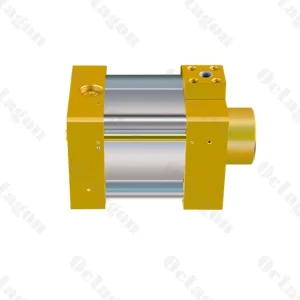
High-Quality SWB-125S Single-Drive Gas-Liquid Booster Pump Systems
Explore Specs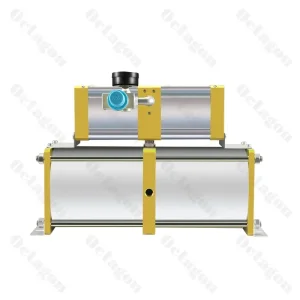
ODM China SWP-02A-G-T Air Booster Pump - High-Pressure Gas Solutions
Explore Specs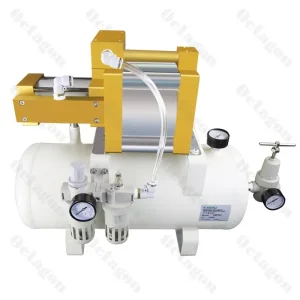
CE Certification SWP-05-G Air Booster Pump - Compressed Air Optimization
Explore Specs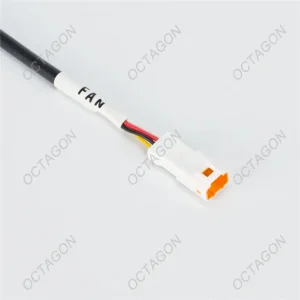
High-Quality Waterproof Series Harnesses IP68 Rated - Ruggedized Connectivity
Explore Specs
Custom Octagon SWP-02B-G Pneumatic Pump - Production Tooling Automation
Explore Specs
ODM High-Quality Octagon SWP-02B-G Pneumatic Booster Pump Units
Explore Specs