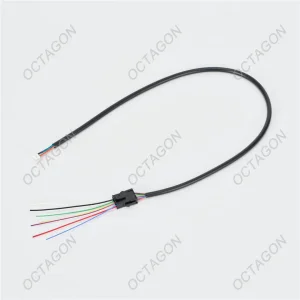
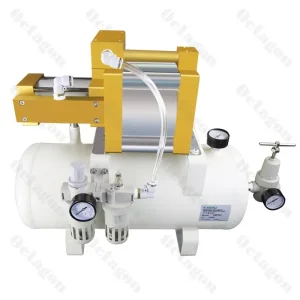
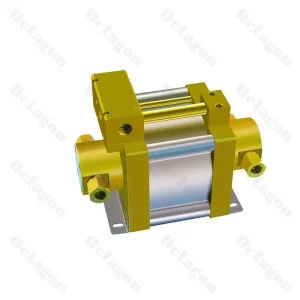
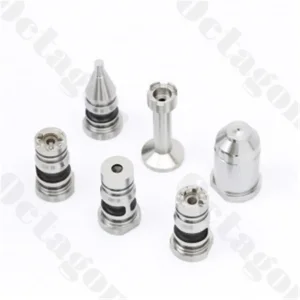
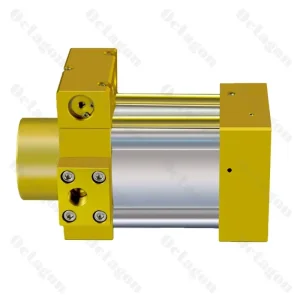
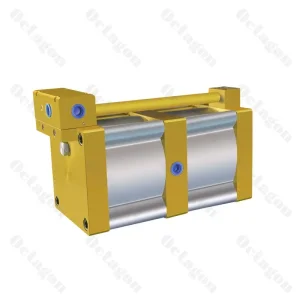
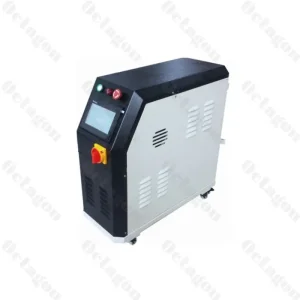
Integrated Equipment & High-Pressure Infrastructure (Batch 01)
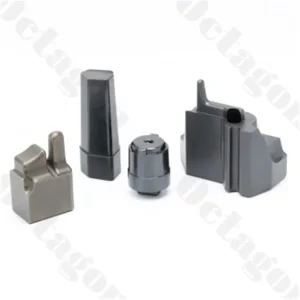
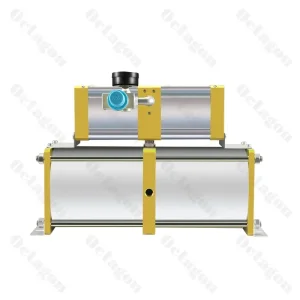
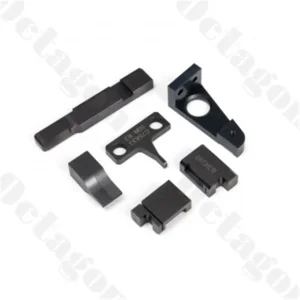
Direct-from-factory high-performance booster equipment, mold tooling, and power transmission units built to strict dimensional tolerances and export standards.
Engineering Superiority: The Metallurgical & Polymeric Anatomy of Welding Electrical Wire
Why modern pulsed MIG, TIG, robotic resistance welding, and high-frequency inverter systems require uncompromising electrical cable performance under dynamic cyclic stresses.
Class 6 Extra-Fine OFHC Stranding
Standard power cables suffer from severe skin effect and mechanical work hardening under pulsed current. Our welding electrical wire utilizes 99.99% Oxygen-Free High Conductivity (OFHC) electrolytic copper drawn into ultra-fine strands (0.10 mm to 0.20 mm diameter, Class 6 IEC 60228).
- Conductivity rating: ≥101% IACS
- Unmatched torsional & bending fatigue endurance
- Low contact resistance and thermal accumulation
Cross-Linked Elastomeric Armor (EPDM/CPE/PUR)
Welding shop floors subject cables to molten spatter, aggressive petrochemical lubricants, continuous abrasion, and ozone degradation. Our formulations combine chlorinated polyethylene (CPE) or cross-linked EPDM with fire-retardant additives to resist temperatures up to 105°C continuous and 250°C transient overload.
- Slag and hot weld spatter repellent jacket
- Low-temperature flexibility sustained to -45°C
- Hydrocarbon, ozone, and UV immersion stable
Inter-Layer Non-Woven Separator Tape
Frictional heating between copper strands and outer jacketing accelerates insulation failure. By introducing a heat-resistant synthetic polyester or non-woven separator tape between conductor and sheath, dynamic internal gliding is guaranteed during repetitive robotic twisting.
- Eliminates jacket-to-copper sticking under heat
- Streamlines rapid field stripping & lug crimping
- Prevents strand unraveling during dynamic flex
Information Gain Metric: Voltage Drop & Ampacity Optimization
In high-amperage welding (300A–800A), an undersized or high-resistance cable generates dramatic I²R heat losses, leading to arc instability, excessive porosity in weld beads, and premature thermal shutdown. Our factory calculates precise gauge matching based on total circuit loop length (lead + work return) and duty cycles (100%, 60%, and 35%), preserving high arc voltage stability even across 50-meter offshore feeder lengths.
Technical Roadmap & Future Outlook: Welding Cable Electrification (2025–2030)
The industrial landscape is evolving from manual arc welding toward autonomous robotic cells, ultra-high-frequency laser-hybrid processes, and lightweight mobility.
Phase 1: Graphene & Carbon Nano-Doping
To reduce cable mass on 6-axis articulated robot wrists without sacrificing current capacity, R&D is commercializing graphene-coated copper conductors. This decreases net mass by 14% while reducing Joule heating during 1,000A short-circuit spot welding sequences.
- Mass reduction prevents robot joint servomotor strain
- Enhanced thermal dissipation matrix
Phase 2: Smart Hybrid Sensor Integration
The convergence of welding cable and sensor harnesses: co-extruding micro-fiber optic distributed temperature sensors (DTS) and CAN-bus signal channels alongside primary heavy conductors enables real-time impedance tracking, automated thermal alarm triggering, and predictive maintenance.
- Predictive failure detection before burn-through
- Direct PLC integration into smart manufacturing cells
Phase 3: Halogen-Free Bio-Circular Elastomers
Aligning with EU ESG directives, upcoming cable series replace halogenated synthetic rubbers with bio-derived thermoplastic polyurethanes (TPU). Delivering zero toxic acidic gas emissions during flash fires while exceeding 15,000,000 dynamic drag-chain bend cycles.
- Zero halogen (IEC 60754-1/-2) & low smoke (IEC 61034)
- Fully compliant with future European circular directives
Macro Industry Solutions: Engineering Heavy Current for Critical Sectors
Custom cable assemblies and booster pump fluid-power integration engineered to solve acute industrial failure modes.
Automotive BIW Spot Welding
High-speed automotive body framing demands secondary cables that withstand constant multi-axis torsional acceleration without copper conductor shear or jacket splitting under hot dielectric weld sparks.
- Kickless low-reactance design
- Custom terminal lug geometry
Shipbuilding & Marine Yards
Harsh maritime dry-docks combine high humidity, saline fog, oil sumps, and abrasive steel grit. Heavy 70mm² to 120mm² cables ensure reliable manual MMA and submerged arc welding across immense yard expanses.
- Ozone & saltwater impervious jacket
- Extended 600V dielectric ratings
BESS & Utility Energy Storage
Industrial Battery Energy Storage Systems (BESS) require high-current DC jumper cables between battery rack modules and centralized inverter banks, demanding identical low-loss characteristics as heavy welding leads.
- UL 94 V-0 flammability compliance
- High continuous DC busbar ampacity
Mining & Heavy Earthmoving
Repair of dragline buckets, excavator booms, and crusher liners occurs outdoors under sub-zero rock dust and severe mechanical impact. Our ultra-rugged double-sheath design guarantees operator electrical safety.
- Double-layer wear indicator jacket
- Uncompromising crush & tear resistance
China Factory 4.0: Supply Chain Resilience, Automation & Process Precision
Operating from modern mainland production facilities with Taiwanese engineering leadership (established 2008), Octagon bridges high-precision micro-machining with massive cable extrusion capacity.
Vertically Integrated Smelting-to-Spool
We do not rely on third-party rod converters. Raw copper cathode is cast and drawn in-house under continuous protective argon atmospheres, maintaining tight grain boundaries, zero metallurgical voids, and maximum tensile ductility across every batch.
- Laser-guided concentricity monitoring
- In-line spark testing up to 15 kV AC
Copper Price Hedging & Buffer Security
Copper volatility poses severe supply chain risks for Tier-1 OEMs. Our enterprise hedging mechanisms and 6,000-metric-ton raw cathode reserves allow long-term fixed-price delivery agreements (6–18 months), shielding capital projects from LME/COMEX spikes.
- Predictable CAPEX budgeting for purchasers
- Zero delivery delays during raw metal pinches
MES-Driven Traceability & Tolerance
Every cable spool and customized wire harness carries a unique 2D Matrix code linking back to raw copper melt assay, stranding tension logs, extrusion melt temperature, and final dielectric breakdown test results.
- Full automotive-grade traceability (APQP/PPAP)
- Rigorous ISO 9001:2015 process compliance
Localization Support & International Compliance Assurance
Unrestricted international trade and workplace safety demand that secondary welding circuits satisfy the most stringent electrical, chemical, and fire safety directives across European, North American, and Asian jurisdictions.
Global Enterprise Procurement Specification Guide
Comprehensive conductor sizing, strand count distributions, nominal jacket wall dimensions, and ampacity ratings categorized by industrial operating duty cycles at 40°C ambient.
| Nominal Cross-Section | AWG Equivalent | Class 6 Strand Count × Wire Ø | Nominal Outer Diameter | Max DC Resistance @ 20°C | 100% Duty Cycle Ampacity | 60% Duty Cycle Ampacity | 35% Duty Cycle Ampacity |
|---|---|---|---|---|---|---|---|
| 16 mm² | 6 AWG | 512 × 0.20 mm | 8.8 mm | 1.210 Ω/km | 135 A | 175 A | 230 A |
| 25 mm² | 4 AWG | 800 × 0.20 mm | 10.1 mm | 0.780 Ω/km | 180 A | 230 A | 300 A |
| 35 mm² | 2 AWG | 1120 × 0.20 mm | 11.4 mm | 0.554 Ω/km | 225 A | 290 A | 380 A |
| 50 mm² | 1/0 AWG | 1600 × 0.20 mm | 13.2 mm | 0.386 Ω/km | 285 A | 370 A | 480 A |
| 70 mm² | 2/0 AWG | 2240 × 0.20 mm | 15.3 mm | 0.272 Ω/km | 355 A | 460 A | 600 A |
| 95 mm² | 3/0 AWG | 3040 × 0.20 mm | 17.1 mm | 0.206 Ω/km | 430 A | 560 A | 730 A |
| 120 mm² | 4/0 AWG | 3840 × 0.20 mm | 19.2 mm | 0.161 Ω/km | 500 A | 650 A | 850 A |
Frequently Asked Questions: Global Procurement & Engineering
Expert answers addressing electrical calculations, compound selection, robotic stress tolerances, and international export procedures.
What distinguishes authentic welding electrical wire from standard flexible power cable?
How does cable length correlate with voltage drop in automated welding cells?
Can Copper-Clad Aluminum (CCA) ever substitute for Pure OFHC Copper in welding cables?
What are the minimum bend radius requirements for drag-chain robotic welding applications?
What OEM/ODM customization capabilities does Octagon offer for specialized harnesses?
Integrated Equipment & High-Pressure Infrastructure (Batch 02)
Supplementary industrial booster systems, equipment cabinet wire harnesses, precision tooling bushings, and in-mold automation controllers engineered for high-duty production lines.