Specialized Tooling, Boost Systems & Components
High-precision manufactured assemblies engineered to sustain mission-critical industrial workflows, high-pressure cycles, and severe mechanical load.
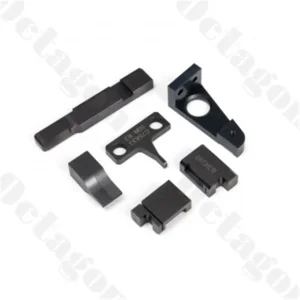
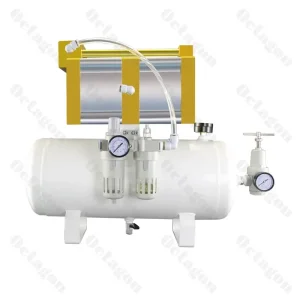
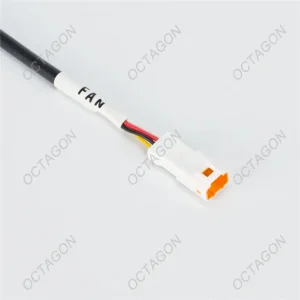
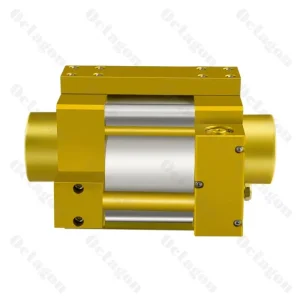
Industrial Supply Chain Architecture in Modern China
How modern Chinese smart fabrication ecosystems combine vertical process integration, sub-micron multiaxis milling, and dynamic supply resilience to unlock high-yield global production.
Vertical Clustering & Rapid Cycle Times
China's manufacturing corridors integrate raw material mills, multi-axis wire EDM centers, specialized PVD/DLC thermal surface treatments, and localized metallurgical testing within single regional clusters. This eliminates geographic latency, cutting design-to-prototype lead times from weeks to 48-72 hours.
Advanced Kinematics & Multi-Axis Tooling
Modern fabrication relies on 5-axis continuous CNC milling, mill-turn multi-tasking centers, and ultra-high-speed diamond grinding. Complex freeform geometries, undercut cavities, and intricate internal channels are machined in single clamping setups, ensuring geometric integrity and run-out accuracy.
Predictive AI Metrology & Quality Yield
By fusing closed-loop in-process probing with coordinate measuring machines (CMM) and laser profile analysis, our production maintains statistical process control (Cpk ≥ 1.67). Machine thermal drift and tool wear compensation occur autonomously during high-volume production.
Technological Trajectories in Sub-Micron Precision Machining
Emerging paradigms shifting CNC precision engineering from conventional subtractive machining toward hyper-automated, data-driven micro-manufacturing.
Micro-Milling and Nano-Scale Surface Morphologies
As microfluidics, minimally invasive surgical equipment, and high-frequency RF waveguides advance, conventional tolerances no longer suffice. Micro-machining utilizing ultra-fine micro-endmills down to 0.05 mm diameter combined with air-bearing spindles operating above 100,000 RPM allows for true optical surfaces and nanoscale profile definitions. These operations circumvent traditional micro-cracking and work-hardening issues across refractory alloys, medical-grade titanium, and specialized peek polymers.
The integration of IoT vibration sensors and real-time dynamometers inside CNC spindles provides deterministic feedrate adjustment. Tool deflection is calculated on the millisecond scale, neutralizing chatter vibrations and extending precision tool life while keeping tool deviation within ±0.001 mm.
Hybrid Subtractive-Additive Manufacturing Architectures
Future-focused factories are rapidly deploying directed energy deposition (DED) systems coupled with high-speed multi-axis CNC spindles in single working envelopes. Components with complex conformal cooling jackets—unattainable through conventional machining alone—are additively formed with fine cobalt-chrome or tool-steel powders, followed instantly by precision five-axis milling passes on sealing faces and bearing bores. This synergy minimizes mechanical interfaces and delivers maximum thermal dissipation for molding systems and turbine applications.
Macro-Sector Implementations & Tailored Engineering
From cleanrooms to extreme downhole environments, discover how our custom ODM components withstand thermal shock, cyclic dynamic fatigue, and aggressive chemical contact.
Automotive Powertrains & E-Mobility
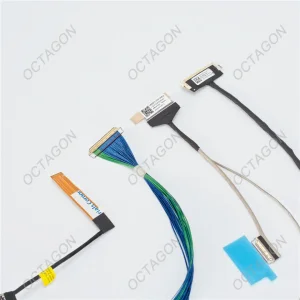
Lightweight aluminum alloys (6061-T6, 7075) machined into liquid-cooling cold plates, inverter chassis housings, and sensor interconnects. Our IP68 sealed wiring harnesses pair seamlessly with CNC die-cast components, eliminating EMI/RFI issues in 800V drive systems.
Medical Implants & Surgical Devices
Precision machined titanium grade 5 (Ti6Al4V ELI) and PEEK for orthopedic anchors, endoscopic articulation joints, and fluid-handling manifolds. Every unit is produced under cleanroom protocols, ensuring zero particulate contamination and Ra 0.05 μm polish.
High-Pressure Fluidics & Pneumatic Systems
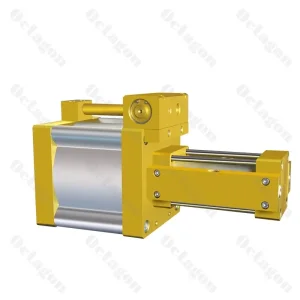
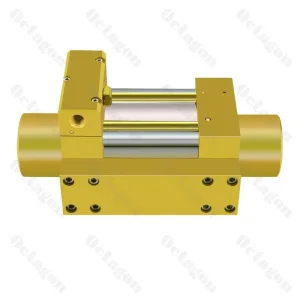
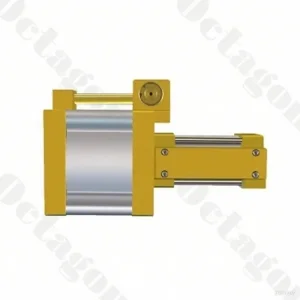
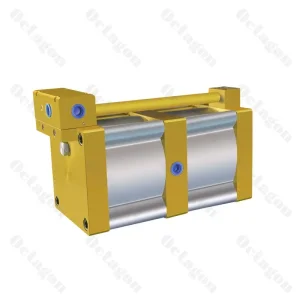
Precision-machined pistons, cylinders, and check valves designed to handle continuous cyclic pressures up to 7,000 kgf. Our SWP/SWB series booster assemblies demonstrate maximum seal lifetime due to mirror-burnished inner bores and zero-clearance tolerance fits.
Navigating Enterprise Sourcing Expectations
International engineering procurement demands more than competitive pricing; it requires certified process reliability, total IP security, and complete material traceability.
Full Material Traceability
Mill Test Reports (MTR), chemical composition spectrometry, and raw material heat certificates accompany every dispatch. Compliance with RoHS, REACH, and Conflict Minerals protocols is standard operating procedure.
Geometric Verification (FAI)
Production launches with full AS9102 First Article Inspection reports. Every critical characteristic (KC) is tracked using optical comparators, laser surface scanners, and CMM equipment to confirm drawing conformity.
Stringent IP Protection
Strict network isolation of CAD/CAM modeling pipelines, segmented factory workflows, and bilateral NDA protocols ensure that proprietary inventions, tooling schemes, and OEM patents are protected against disclosure.
Buffer Stock & Logistics
Consignment inventory programs, Vendor Managed Inventory (VMI) frameworks, and global sea-air distribution channels provide strategic buffer stocks, mitigating unpredictable trade lane swings.
Frequently Addressed Sourcing & Technical Queries
In-depth insights directly from our engineering team detailing production limits, metallurgic processing, quality thresholds, and turnkey execution.
What geometric tolerances can your CNC precision machining workflows reliably uphold?
How do you guarantee quality continuity between low-volume prototypes and high-volume runs?
Which exotic and high-performance materials are machined in-house?
Can you provide secondary surface treatments and full sub-assembly integration?
What documentation accompanies overseas air and ocean shipments?
Industrial Automation, Booster Pumps & Harness Assemblies
Discover our field-tested equipment line: specialized air boosters, durable electrical connections, and injection molding hardware designed for continuous operation.