Precision Industrial Portfolio (Part I)
Featured High-Pressure Boosters & Automotive Cabling Systems
Direct OEM & ODM assemblies engineered for automated manufacturing cells, high-cycle die testing, and extreme vehicular vibration environments.
Global Industrial Landscape
The Paradigm Shift in Automotive Mold Engineering
How modern powertrain electrification, structural lightweighting, and automated in-mold processing are redefining global OEM component manufacturing.
±0.002mm
Machining Tolerance Precision
Ra 0.05
Mirror Surface Finish (μm)
45+
Proprietary Tooling Patents
60+
Global Export Destinations
Lightweighting & Thin-Wall Rheology
The transformation toward Battery Electric Vehicles (BEVs) necessitates severe curb-weight reduction to maximize per-charge range. Automotive molders are forced to transition from heavy cast iron to thin-wall high-pressure aluminum die-casting and engineered thermoplastics (PA66-GF30, PBT, PEEK). Injection molding molds must now withstand cavitation pressures reaching 1,800 to 2,400 bar while maintaining thermal equilibrium across multi-cavity tools spanning over 2.5 meters.
In-Mold Automation & Cycle Compression
Secondary offline degating, trimming, and deflashing introduce unacceptable scrap rates and labor overhead. Modern automotive tooling incorporates internal hydraulic-pneumatic shearing systems. Utilizing proprietary high-pressure gas amplification, in-mold cutting units deliver up to 7,000 kgf of synchronized punch force inside the mold cavity during cooling, severing gates with sub-micron shear edge quality before part ejection.
Integrated Sensorics & Electrification
Automotive structural parts have morphed into smart electromechanical nodes. Instrument panels, lidar surrounds, and battery collection systems integrate insert-molded busbars, high-definition screen harnesses, and flexible printed circuits directly into structural resin. Molds must feature micro-tolerance core positioning to prevent conductor crushing while isolating delicate sensor pins from molten polymer jetting.
Comprehensive Engineering Architecture
Turnkey Macro Solutions for Tier-1 & OEM Programs
Bridging the gap between conceptual CAD design, rheological mold flow analysis, and high-volume mass production integrity.
Sub-Micron Tooling & Mold Component Fabrication
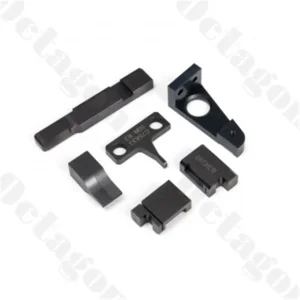
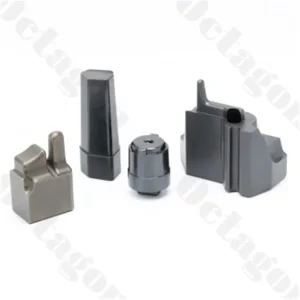
Founded in 2008 in Taoyuan, Taiwan, with manufacturing hubs across mainland China, Octagon Precision Mold pioneers multi-axis CNC high-speed hard milling, Makino wire-EDM, and coordinate jig grinding. We deliver standard and non-standard mold cores, core pins, ejector sleeves, and slide assemblies machined to absolute tolerances of ±0.002 mm with surface roughness Ra 0.05–0.2 μm. Every die casting and plastic tooling element is treated through vacuum quench furnaces and deep cryogenic stress-relief cycles (cryogenic tempering at -196°C) to prevent post-machining warping under cyclic thermal loads exceeding 650°C in high-pressure aluminum casting.
Air & Gas-Liquid Booster Systems for High-Pressure Cycling
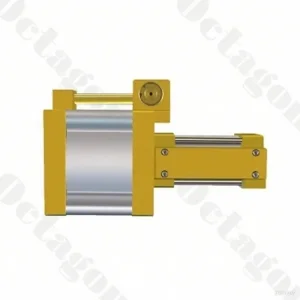
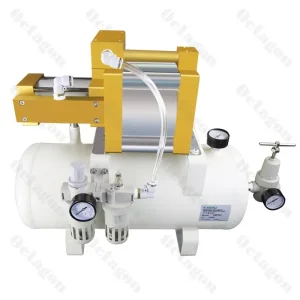
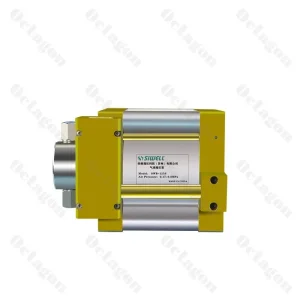
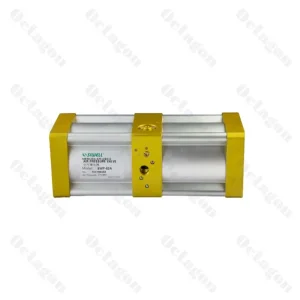
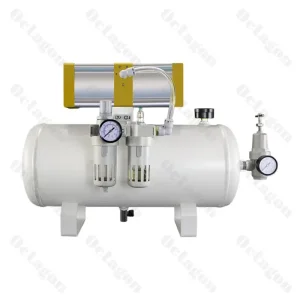
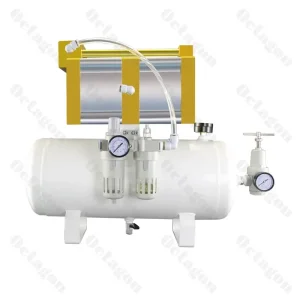
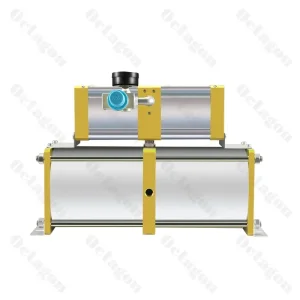
Plant shop-floor pneumatic grids routinely fluctuate between 4.5 and 6.0 bar—insufficient for fast hydraulic clamping, pressure decay helium leak testing, and rapid in-mold gate degating. Octagon's proprietary SWP and SWB series pneumatic booster pumps amplify compressed factory air by ratios up to 70:1, delivering gas and hydraulic media pressures reaching 350 to 700 bar. Built from aircraft-grade 7075 hard-anodized aluminum and 316 stainless steel, these pumps operate purely on air drive principles without electrical ignition hazards, ensuring intrinsic safety in vapor-heavy injection and painting cells.
In-Mold Cutting High-Pressure Timing Control Cabinets
Integrating cutting mechanisms directly into automotive mold tooling demands millisecond-precise control over hydraulic impulses. Octagon manufactures modular automated control cabinets featuring multi-channel Siemens/Mitsubishi touch HMI interfaces. With individual timing profiles adjustable down to 0.01 seconds, our systems synchronize hydraulic oil or high-pressure gas bursts perfectly with the injection molding machine's plastication, packing, and gate freezing sequence. Eliminating operator intervention reduces part blemishes, flash, and human injury risk while cutting 4 to 9 seconds from total cycle times.
Mission-Critical Automotive Wiring & Busbar Harnessing
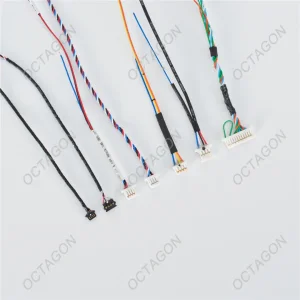
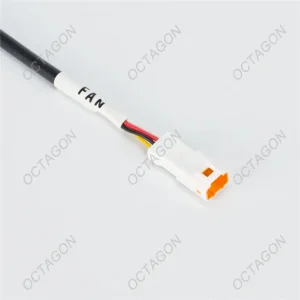
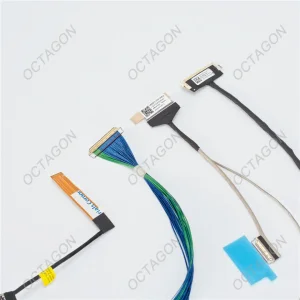
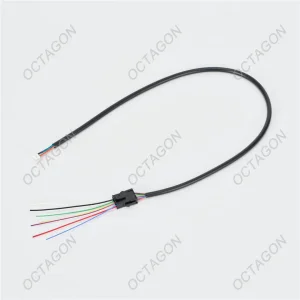
Modern automotive body-in-white (BIW), infotainment, and battery management systems (BMS) depend on fail-safe connectivity. Octagon engineers custom wire harnesses rated up to IP68/IP69K, including energy storage collection lines, LVDS/FPD-Link high-definition automotive display cables, cabinet interconnection loops, and acoustic harnesses. Automated terminal crimping with micrographic cross-section pull testing (satisfying USCAR-21 and IEC 60352) guarantees minimal contact resistance and maximum resistance against thermal shock from -40°C to +125°C.
Subsystem Application Matrix
Specialized Applications in Automotive Engineering
Engineered for extreme operating environments across ICE, Hybrid, and Battery Electric architectures.
EV Battery Enclosures & Modules
Large-format structural die casting mold components for cell-to-pack (CTP) battery frames. Octagon produces core inserts that accommodate thin-wall heat dissipation cooling fins while incorporating Octagon Energy Storage Collection Lines for real-time voltage/temperature cell sensing.
Cockpit Electronics & Curvature Displays
Optically clean injection tooling for pillar-to-pillar cockpit curved cover lenses. Precision tool finishing at Ra 0.05 eliminates birefringence and flow weld-lines, coupled directly with our Custom High-Definition Screen Connection Cable Harnesses.
Powertrain & Chassis Structural Castings
Heavy-duty die casting mold parts processing for subframes, transmission casings, and EV e-axle gear housing shells. Utilizing specialized H13 and DIEVAR tool steels heat-treated for maximum resistance against thermal stress fatigue and liquid alloy wash wear.
ADAS Sensor Radar & Camera Housings
Precision multi-cavity injection molds for millimeter-wave radar radomes and front LiDAR bezels. Demands exact volumetric shrinkage compensation and IP68 waterproof-rated connector harnessing to shield against electromagnetic interference (EMI).
Forward-Looking R&D Strategy
Technology Roadmap: 2025–2035 Automotive Horizon
Aligning mold manufacturing capabilities with upcoming gigacasting parameters, circular polymers, and Industry 4.0 IoT process monitoring.
Phase I: 2025–2027
Additive Conformal Cooling & Sensorization
- Laser Powder Bed Fusion (LPBF) 3D printed mold inserts with conformal cooling waterways, cutting cycle time by 28%.
- Embedded cavity pressure and ultrasonic melt-front velocity transducers inside mold cores for closed-loop tuning.
- Full migration to eco-friendly water-glycol hydraulic media in high-ratio air-driven booster systems.
Phase II: 2027–2030
Megacasting & Hybrid Composite Tooling
- Tooling architecture engineered for 9,000T to 16,000T gigapresses with segment-modular thermal expansion joints.
- Carbon-fiber reinforced thermoplastic (CFRTP) compression molds with localized induction heating platens.
- In-mold degating units delivering 10,000 kgf punching forces for ultra-thick structural gating geometries.
Phase III: 2030–2033
Digital Twin & Predictive Wear AI
- Real-time strain gauge telemetry in slide rails and ejector pins transmitting live friction data to factory MES.
- AI-assisted autonomous wear prediction calculating remaining life of core inserts to prevent catastrophic tooling failure.
- Zero-defect in-line laser profilometry directly checking gate shear edge quality upon mold opening.
Phase IV: 2033–2035
Autonomous Self-Balancing Molding
- Self-regulating valve gates actuated by miniature high-frequency servo-pneumatic booster modules.
- 100% bio-based resin rheology tool geometries accommodating non-Newtonian post-consumer recycled variations.
- Hyper-standardized plug-and-play modular tooling architectures allowing mold changes within 120 seconds.
Metallurgical & Quality Governance
Empirical Quality Control Built on ISO & IATF Standards
Over 190 engineering specialists rigorously validating raw materials, dimensional tolerances, and pneumatic performance.
Certified Tool Steels & Cryogenics
Every mold insert and stamping die component originates from verified premium European and Japanese steel suppliers (including Bohler, Uddeholm, Assab, and Daido). We strictly verify material certificates (EN 10204 3.1) via spectral optical emission spectrometry before machining. Controlled multi-stage vacuum heat treatments followed by liquid nitrogen cryogenic stabilization eliminate residual austenite, preventing dimensional drift over 1,000,000+ continuous production cycles.
Sub-Micron Metrology Verification
Our temperature-controlled inspection laboratories maintain a constant 20°C (±0.5°C) environment, housing Zeiss coordinate measuring machines (CMM) with scanning resolutions of 0.7 μm + L/400. Critical dimensional checks are executed via Mitutoyo non-contact optical projectors, Taylor Hobson surface roughness profilers, and pneumatic pressure decay testing apparatus capable of measuring 0.01 bar micro-leaks in assembled air booster pumps and harness seals.
Export Compliance & Traceability
Octagon Precision Mold exports tooling and high-precision components to Tier-1 automotive integrators across more than 60 countries across North America, Europe, and Asia-Pacific. Every shipment is accompanied by comprehensive documentation packages including Full Dimensional Inspection Reports (FDIR), Production Part Approval Process (PPAP Level 3) packages, salt spray test verifications (ASTM B117), and full steel heat-treatment lot traceability logs.
Procurement & Technical FAQ
Frequently Asked Questions by Automotive Buyers
Direct technical clarification on tooling tolerances, high-pressure booster integration, lead times, and global shipping policies.
What dimensional tolerances and surface finishes can Octagon achieve for custom mold components?
Octagon machines precision mold parts—including custom die casting inserts, plastic injection cores, and stamping punches—to standard tolerances of ±0.002 mm (sub-micron capability upon request). Our surface finishing processes span automated polishing, fluid honing, and mirror EDM yielding roughness levels from Ra 0.05 to Ra 0.2 μm, essential for optical-grade lens molds, zero-draft automotive bezels, and long-life stamping dies.
How do in-mold cutting systems operate, and what are the specific mechanical advantages over post-process degating?
Our automation solution systems within the mold utilize high-pressure pneumatic-hydraulic timing control cabinets connected directly to micro-cylinders integrated inside the mold base. When the plastic is injected and the packing phase begins, the system commands an instant high-pressure surge (producing 1,000 to 7,000 kgf of punch force). This drives internal shear pins to cleanly cut the gate while the mold is clamped shut and the polymer is still hot. This eliminates secondary manual degating, avoids cosmetic gate stress whitening, prevents robot extraction jams, and shortens the overall production cycle by 15% to 30%.
Can the SWP and SWB series air pressure booster pumps handle continuous duty in high-cycle automated assembly lines?
Yes. Octagon SWP and SWB booster pumps are designed specifically for heavy industrial continuous-duty applications. Unlike reciprocating electrical compressors that generate immense heat and require cool-down intervals, our booster pumps are air-driven without electrical motors. They utilize dual-piston self-reversing pneumatic valves, PTFE dynamic seals, and anodized aluminum heat dissipating bodies. The pump automatically cycles when pressure downstream drops and holds pressure dynamically at the target set-point without consuming energy or generating heat when idle.
What standards do your automotive wire harnesses meet, and how is signal integrity ensured for high-definition displays?
Our automotive and equipment cabinet harnesses comply fully with CE directives, UL94 V-0 flammability ratings, and USCAR/ISO 6722 automotive electrical specifications. For high-definition screen connection harnesses and ADAS sensor lines, we employ 100% shielded twisted-pair (STP) and coaxial cabling featuring aluminum foil plus tinned copper braiding with coverage exceeding 90%. Every harness undergoes 100% continuity testing, high-voltage insulation resistance testing (up to 1,000V DC), and characteristic impedance matching to completely eliminate high-frequency signal flicker, jitter, or EMI packet drops.
What is the standard lead time for OEM mold tooling and custom manufactured components?
For custom standard mold parts and booster pump units, lead times range between 5 and 12 business days depending on quantity and stock. Complex non-standard die-casting and stamping mold inserts generally require 15 to 25 business days from final 3D CAD/drawing approval, encompassing precision CNC machining, vacuum heat treatment, wire EDM, and CMM inspection. Turnkey injection tooling projects typically run 35 to 50 days from DFM sign-off to First Article Inspection (FAI / T1 sample delivery).
Where is Octagon headquartered, and what guarantees exist for international export shipments?
Octagon Precision Mold Co., Ltd. is headquartered in Taoyuan City, Taiwan, where our core R&D, quality assurance oversight, and customer engineering support operate. We run scalable production and machining facilities in mainland China to maximize capacity and cost efficiency. Serving clients across 60+ countries since 2008, all international shipments are packed in rust-preventative VCI vacuum heat-sealed bags and shock-absorbing wooden export crates conforming to ISPM-15, complete with full customs export declarations, commercial invoices, and metallurgical testing certificates.
Precision Industrial Portfolio (Part II)
Specialized Tooling Components & Fluid Amplification Units
Engineered for extreme wear resistance, continuous duty pressure maintenance, and fail-safe signal distribution.