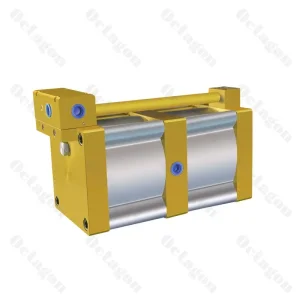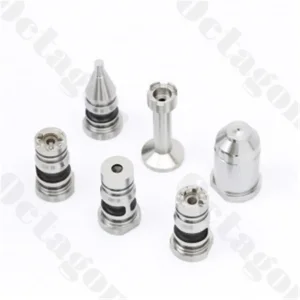
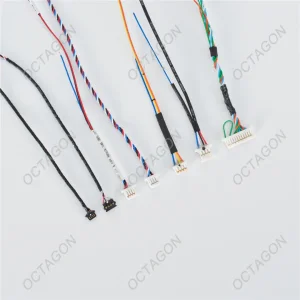
High-Velocity Catalog
High-Precision Pneumatic Booster Systems & Wire Assemblies
Explore our certified series of air pressure boosters, gas-liquid intensifying units, and mission-critical wire harness modules deployed in high-load industrial automation.
Industry Intelligence & Analysis
High Pressure Pneumatic Valve Technology: Global Evolution & Macro Driver Trends
A technical overview of modern high-pressure pneumatics, micro-channel directional routing, leak-free sealing thermodynamics, and shifting industrial paradigms.
Ultra-High Pressure Densification
Contemporary manufacturing demands pneumatic valve architectures capable of cycling continuously from 10 bar to over 700 bar. Designers prioritize zero mechanical deformation under fluid shear and micro-leak reduction across cycles.
Intelligent Digital Pneumatics
Valves are transitioning from passive throttling components to connected nodes. Integrated IO-Link protocols, real-time cycle tracking, dynamic piezo-actuation, and predictive spool-wear diagnostics minimize unplanned downtime.
Severe Environment Metallurgy
Exposure to dry hydrogen, corrosive cryogenic vapors, and explosive atmospheric dust drives the integration of 17-4PH stainless steel, Hastelloy spools, and DLC (Diamond-Like Carbon) coatings to reduce frictional wear.
Energy Recovery Efficiency
Pneumatic energy loss during venting has made energy recovery a core design requirement. Advanced regenerative spool designs redirect downstream pressure, decreasing compressor power loads by up to 28%.
Strategic Sourcing Priorities
What Global Procurement Leaders Demand in High Pressure Pneumatics
Enterprise sourcing metrics across North American, European, and Asian manufacturing networks prioritize multi-tier supply chain validation, traceable metallurgical testing, and low total cost of ownership (TCO).
1. Material Traceability & MTR Certification
Tier-1 automotive and aerospace buyers mandate EN 10204 3.1 inspection certificates. Raw billet chemistry, heat lot records, and ultrasonic flaw testing ensure internal core bodies withstand cyclic pneumatic shock without brittle fracture.
2. High-Yield MTBF Benchmarking
Mean Time Between Failures (MTBF) must exceed 10 million cycles under dry-air non-lubricated operation. Precision lapping tolerances of ±0.002 mm maintain dynamic pressure differentials without accelerated elastomer seal degradation.
3. Unified OEM / ODM Co-Engineering
Modern procurement looks beyond static off-the-shelf valve portfolios. Teams require flexible engineering capable of custom manifold geometries, specific port threading (BSPP, NPT, SAE), and integrated sensor mount interfaces.
±0.002mm
Machining Tolerance
7,000kgf
Peak Hydraulic Force
45+
Registered Patents
60+
Export Destinations
Turnkey Integration
Macro-Industry Solutions: High-Pressure Systems in Mission-Critical Sectors
From cleanroom automated injection lines to heavy automotive stamping cells, Octagon systems bridge raw pneumatic potential and calibrated dynamic execution.
Automotive Stamping & Hydroforming
Supplying fast-response high-pressure valves and gas-liquid booster pumps to drive rapid die clamping, nitrogen gas springs, and precise localized sheet-metal piercing without hydraulic fluid oil mist contamination.
In-Mold Degating & Precision Tooling
Our timing-controlled pneumatic valve architectures power in-mold gate cutting cylinders with forces from 1,000 to 7,000 kgf. Eliminates manual trimming, reduces post-mold cycle times, and keeps plastic parting lines clean.
Energy Storage (BESS) & Battery Production
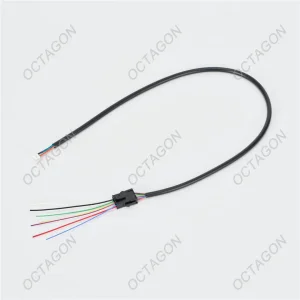
High-flow pneumatic valves and specialized sensor-collection wiring harnesses deliver coordinated pneumatic cell-clamping forces and millivolt-level temperature and voltage monitoring for lithium-ion battery modules.
Quality Assurance & Regulations
Localized Engineering Support, CE Certification & Regulatory Compliance
Supplying globally requires localized technical alignment. Octagon supports equipment builders across 60+ countries with full documentation and regulatory conformity.
CE Machinery & PED Directives
Our pneumatic valves and SWP/SWB series air boosters comply with Pressure Equipment Directive (PED 2014/68/EU) and Machinery Directive 2006/42/EC, providing full conformity documentation for European integration.
ISO 9001:2015 Traceability
Every manufacturing stage—from multi-axis CNC milling to cleanroom assembly and high-pressure burst testing—is governed by strict ISO-certified SOPs. Every unit carries a laser-etched traceability serial number.
Taiwan R&D + Mainland Factory
Engineered at our Taoyuan, Taiwan headquarters and manufactured across advanced facilities in mainland China, Octagon pairs Taiwanese design precision with scalable, cost-effective volume manufacturing.
Global Field Engineering
Our bilingual engineers support multi-regional OEMs with custom CAD (STEP/DWG) modeling, rapid prototyping, flow-rate calculations, and on-site fluid circuit commissioning.
R&D Blueprint
Engineering Roadmap: The Future of High-Pressure Fluid Control
Octagon's forward-looking technology initiatives balance next-generation automation demands with responsible energy management.
PHASE 01 // 2025
Piezo-Pneumatic Micro-Valves
Integrating solid-state piezoelectric actuation to achieve response times under 1 millisecond with near-zero heat generation in explosive test environments.
PHASE 02 // 2026
Predictive Edge Sensors
Embedding acoustic emission micro-sensors inside valve housings to monitor spool wear and dynamic seal degradation, streaming real-time status via wireless mesh networks.
PHASE 03 // 2027
Composite Lightweight Valve Bodies
Adopting carbon-fiber-reinforced polyether ether ketone (PEEK) manifolds to reduce total unit weight by 45% for robotic arm end-effectors.
PHASE 04 // 2028
Hydrogen & Cryogenic Gas Solutions
Developing zero-leakage metallic seal valves designed for 900-bar compressed hydrogen refueling infrastructure and clean-energy mobility systems.
Technical Support FAQ
High-Pressure Pneumatic Valve & Booster Procurement FAQ
Direct technical answers addressing the critical concerns of engineering and procurement professionals when qualifying Octagon as a long-term supplier.
What distinguishes Octagon's high-pressure booster systems?
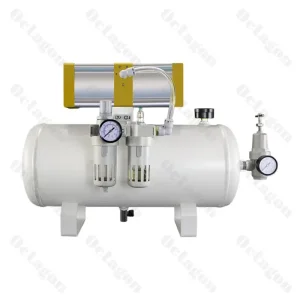
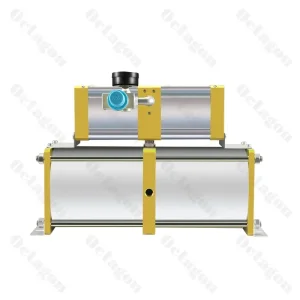
Octagon's SWP and SWB pneumatic boosters leverage a differential area design that converts standard shop air into high-pressure output without electric motors. With ±0.002 mm machining tolerances and mirror-finished spools (Ra 0.05–0.2 μm), our boosters operate with low friction and long seal lifespans.
Can you customize valves and harnesses to custom OEM specifications?
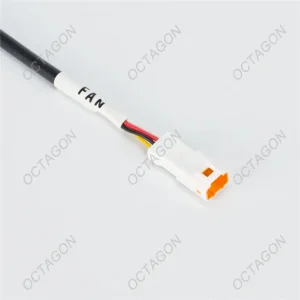
Yes. We deliver full OEM and ODM services. Our engineering team reviews customer 3D models (STEP/DWG), working pressures, port threads, fluid compatibility, and pinouts to configure customized valve manifolds and wire harness assemblies.
How does the in-mold cutting automation control system work?
The system combines a high-pressure timing control cabinet with high-force cutting cylinders inside the injection mold. It triggers during mold closure, delivering 1,000 to 7,000 kgf of force to sever gates cleanly before the part fully solidifies, removing the need for manual secondary trimming.
What quality control and inspection protocols are in place?
Quality control spans the complete production run: incoming raw material spectrometry, CMM dimensional verification, multi-stage pressure decay testing, and 100% electrical continuity testing on wiring harnesses prior to packaging and dispatch.
Complete Equipment Solutions
Precision Gas-Liquid Boosters, Mold Components & Industrial Cabling
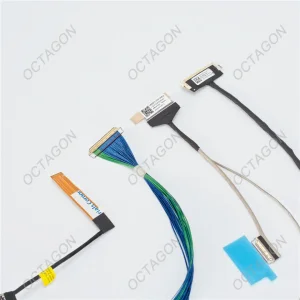
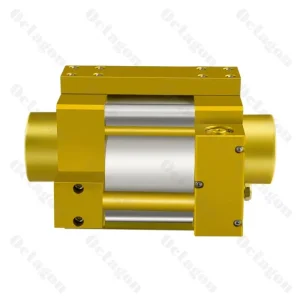
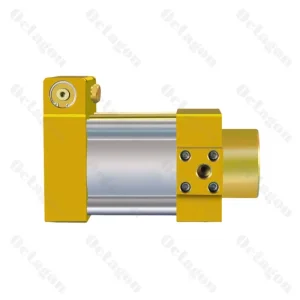
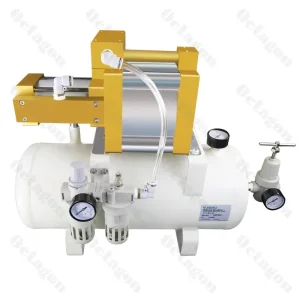
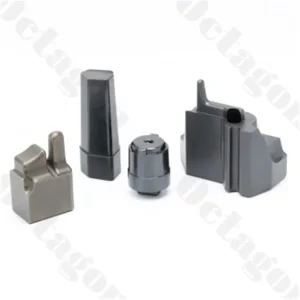
Explore our specialized range of air-pressurized pumps, high-definition screen harnesses, and injection tooling components for high-reliability manufacturing setups.