
Precision Engineered Assemblies & Tooling Units
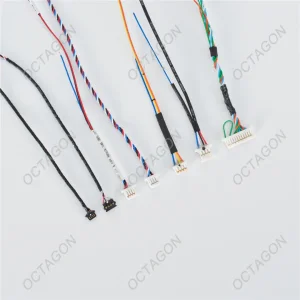
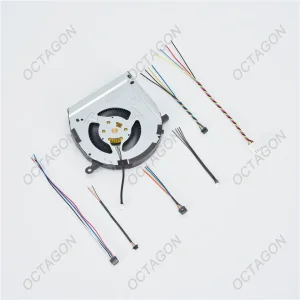
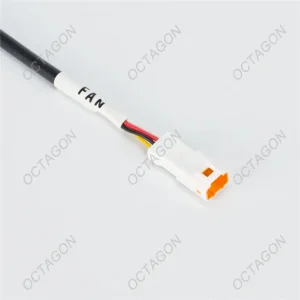
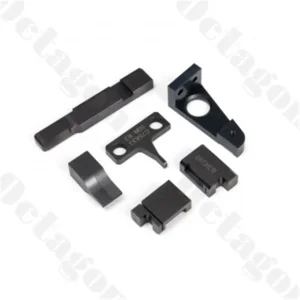
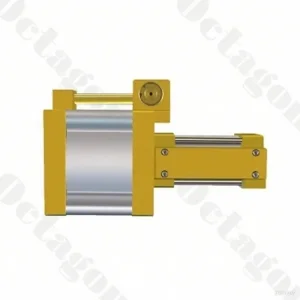
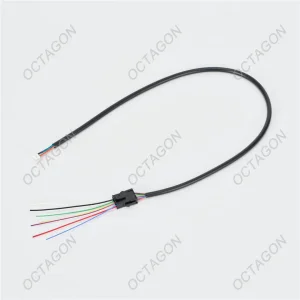
Explore our initial suite of precision-manufactured assemblies, boosting pumps, and electrical transmission modules certified for demanding industrial applications worldwide.
Engineering Fundamentals of the High-Precision OEM Injection Molding Process
In modern mission-critical manufacturing, the injection molding process extends far beyond standard polymer solidification. It is an exacting balance of non-Newtonian polymer melt rheology, mold cavity thermodynamics, micro-mechanical tolerances, and automated gate degating mechanics designed to eradicate structural internal stress and cosmetic imperfections.
Non-Newtonian Rheology & Gate Dynamics
Melt viscosity fluctuates non-linearly under shear stress and rapid injection velocity. In thin-wall automotive and electronic enclosures, miscalculated shear thinning yields high localized orientation stresses, anisotropic shrinkage, and severe warpage.
- Dynamic viscosity tracking for high-performance resins (PEEK, PPS, LCP)
- Direct side-gate, sub-gate, and valve-gate sequential hydraulic balancing
- Minimization of non-isothermal freeze layers during micro-injection stages
Sub-Micron Steel Tooling Metallurgy
The core and cavity inserts determine longevity and repeatability over multimillion-shot lifecycles. Utilizing premium ESR (Electro-Slag Remelted) tool steels guarantees structural stability against chemical abrasives and high packing pressures.
- ASSAB S136, H13, and NAK80 hardened up to 52-56 HRC
- Mirror polishing reaching Ra 0.05–0.2 μm for Class-A cosmetic lenses
- PVD DLC and TiAlN coatings preventing abrasive micro-pitting in filled resins
Conformal Cooling Circuit Optimization
Uneven cooling accounts for more than 70% of dimensional stability defects in complex geometry injection molds. Utilizing 3D laser metal deposition allows cooling channels to strictly follow complex internal contours.
- Reduction of injection cycle time by 20% to 45% via direct heat evacuation
- Suppression of localized thermal sinks and differential volumetric shrinkage
- Transient Moldflow thermal mapping matching real-time thermocouple feeds
The China Factory Supply Chain Advantage: Ecosystem Integration & Scalability
Global tier-one purchasing officers face escalating pressures to balance capital efficiency against aggressive delivery schedules. The Chinese precision tooling and injection molding industrial cluster represents an integrated supply ecosystem unparalleled in geographic density, raw material access, and rapid multi-tier coordination.
Concentrated Tooling Cluster Velocity
Within the Pearl River Delta and Yangtze River manufacturing corridors, toolmakers, 5-axis Makino/Sodick CNC milling centers, slow-wire EDM shops, and heat-treatment facilities operate within immediate trucking proximity. This micro-geographic density shortens T1 sample iteration cycles from months to under 14 days, drastically cutting development lead time for OEM product development.
Vertical Upstream Material Integration
Access to engineering-grade virgin polycarbonates, polyamides, and specialized fluoropolymers is safeguarded by domestic synthesizers along with authorized Tier-1 distributors of DuPont, BASF, Covestro, and Sabic. Complete lot-traceability, pre-drying documentation, and continuous spectrometer verification prevent degraded post-consumer scrap blending.
End-to-End Secondary Process Cohesion
Beyond part molding, modern procurement demands turnkey modular sub-assemblies. The ecosystem integrates in-line ultrasonic welding, robotic insert overmolding, cleanroom Class 100,000 pad printing, EMI/RFI vacuum metallization, and customized terminal wire harness potting directly under one roof, slashing third-party logistics latency and damage risk.
| Procurement & Technical Factor | Fragmented Western Sourcing | Standard Low-Cost Exporter | Octagon Precision Integrated Model |
|---|---|---|---|
| Tooling Steel Qualification | Certified, yet high cost & 16+ wk lead time | Uncertified local steel; risk of porosity | Spectrometer-Certified ASSAB / Daido Steel |
| In-Mold Degating & Trimming | Expensive external post-machining robotics | Manual manual-nipper trimming; burrs & stress | Automated In-Mold High-Pressure System (0.02s) |
| Dimensional Tolerance Limits | ±0.010 mm average capability | ±0.050 mm to ±0.080 mm with drifting | Precision Controlled to ±0.002 mm |
| Supply Chain Traceability | Full documentation; high overhead price | Inconsistent or missing material certs | Full Lot MTR, RoHS, REACH, UL94 Yellow Card |
Global Enterprise Procurement Requirements & Risk Mitigation Framework
Tier-1 OEM and ODM buyers cannot afford field failures, line disruptions, or dimensional variance. Sourcing injection-molded components requires a structured, multi-dimensional validation protocol spanning product development, tool manufacturing, and serial part release.
Comprehensive FEA and rheological simulation analyzing fill time, volumetric shrinkage, sink mark indices, weld line entrapment, and fiber alignment in reinforced composites before cutting tool steel.
Establishment of Process Failure Mode and Effects Analysis (PFMEA), dynamic tooling gauge R&R, and control plans setting statistical targets (Cpk ≥ 1.67) for critical-to-quality (CTQ) dimensions.
Complete Production Part Approval Process (PPAP Level 3) delivery encompassing 100% CMM optical dimensional verification, raw material yellow cards, capability studies, and master samples.
Real-time Statistical Process Control monitoring melt pressure transducers, closed-loop clamping force regulators, automated machine vision sorting, and climatic chamber endurance testing.
Cross-Industry Localized Application Scenarios & Technology Trends
As end-user assemblies demand higher functionality in tighter footprints, custom precision injection molding interfaces directly with multi-physics systems, including structural thermal management, electrical isolation, and microfluidics.
Automotive Electrification & Power Electronics
Under-the-hood EV architectures demand flame-retardant (UL94 V-0), high CTI (Comparative Tracking Index > 600V) technical polymers capable of continuous operation at 150°C. Octagon engineers precision molded battery module collector trays, cooling manifold channels, and integrated busbar encapsulation housings with zero flash tolerance.
Medical Diagnostics & Microfluidic Cartridges
Micro-structured lab-on-a-chip diagnostic devices require microscopic capillary channels free from flash, burrs, or hydrophobic molecular residues. Produced in ISO 13485 cleanroom conditions using medical-grade cyclic olefin copolymers (COC) and optical polycarbonate, our parts deliver optical clarity and bio-inert performance.
Data Infrastructure & Telecom Cabinet Enclosures
High-density server blades, fiber optic patch arrays, and edge telecommunication enclosures require EMI-shielded, high-modulus structural plastics. Our insert-molded connector blocks and thin-wall modular fan trays guarantee acoustic damping, dimensional retention under constant mechanical loads, and long-term dielectric performance.
In-Mold Degating Automation Technology Trends
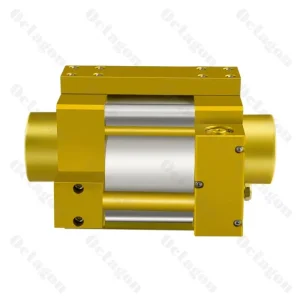
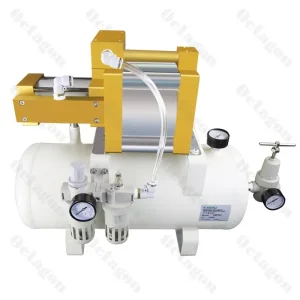
Traditional secondary degating creates stress fractures and cosmetic defects. Octagon’s patented in-mold cutting automation systems leverage high-pressure pneumatic-hydraulic booster pumps (generating 1,000 to 7,000 kgf of force) to cleanly trim gates inside the closed mold within 0.02 seconds, yielding a mirror finish and reducing cycle overhead.
Circular Economy & Bio-Polymer Processing
With tightening ESG mandates globally, processing post-industrial recycled (PIR) and bio-based plastics (PLA, PHA, bio-PA) requires adaptive temperature regulation and screw geometry. Our closed-loop adaptive pressure control compensates for melt-flow index (MFI) batch-to-batch fluctuations, ensuring reliable, high-volume green production.
Localized Regulatory Compliance & Traceability
To protect enterprise clients against regulatory embargoes, all components produced undergo comprehensive compliance screening. From RoHS, REACH, and California Proposition 65 testing to FDA food-contact master files, our Taiwan-led QA infrastructure maintains transparent, audit-ready chemical analysis records.
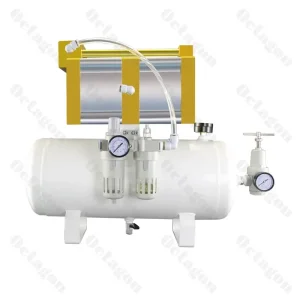
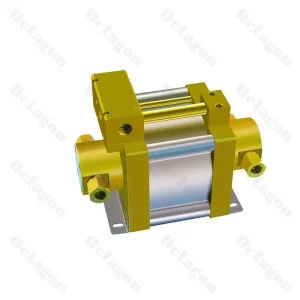
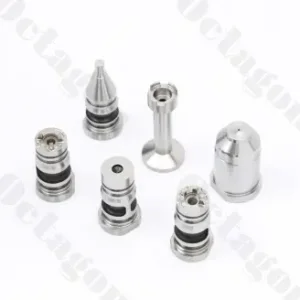
Specialized Booster Pumps, Tooling Inserts & Cabinets
Examine our heavy-duty intensifier pumps, custom stamping die components, and electrical cabinet systems designed to operate consistently in automated manufacturing lines.
Frequently Answered Strategic Sourcing Questions
Direct answers to the most rigorous technical, quality, and commercial inquiries submitted by procurement managers, tooling engineers, and manufacturing supply executives.