Featured Precision Tooling & Mold Subsystems
Engineered for extreme structural integrity, rapid cycle-time stabilization, and micro-tolerance performance under demanding high-tonnage production parameters.
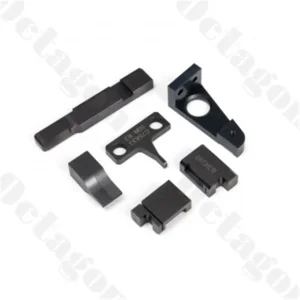
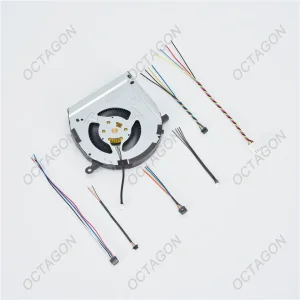
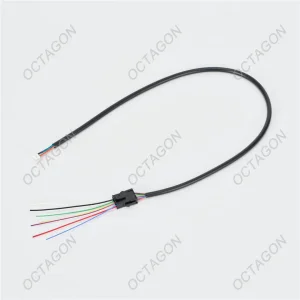
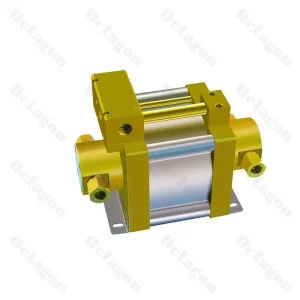
Macro Industry Solutions for High-Tonnage Thermoplastics
Large-format injection molding requires profound structural engineering, precise melt-front behavior modeling, and auxiliary system integration across mission-critical sectors.
Automotive & Commercial Vehicles
Engineering large-format exterior and interior assemblies, including bumpers, dashboards, front-end carriers, and instrument panels. Leveraging sequential valve gating (SVG) to eliminate weld lines on class-A visual surfaces and high-pressure booster systems for precise in-mold component trimming.
- Materials: PP+EPDM-TD20, PC/ABS blends, PA66-GF30
- Clamping Forces: 1,200T to 3,500T
- Cycle Time Reduction: 18–24% via conformal cooling
Renewable Energy & Battery Storage
Specialized structural casings, high-voltage battery module enclosures, and collection trays for utility-scale energy storage systems (BESS). Integrated high-temperature and flame-retardant requirements (UL94-V0) accompanied by dedicated wiring collection harnesses for cell-level sensor telemetry.
- Integrity: IP67/IP69K sealing readiness
- Compliance: UL94-V0, RoHS, REACH
- Structural Integration: Overmolded busbars and inserts
Medical Enclosures & Diagnostic Housings
Heavy-chassis housings for MRI consoles, dialysis assemblies, and surgical robot pedestals. Manufacturing in ISO-certified cleanroom conditions with biocompatible polymers, maintaining wall-thickness consistency up to 6.5 mm without thermal sink marks or geometric warpage.
- Tolerance: Structural envelope controlled within ±0.15 mm
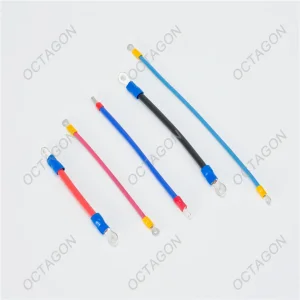
- Harnessing: Medical-grade shielded wiring solutions
- Traceability: Full material batch verification & PPAP Level 3
Technology Roadmap & Future Outlook
Pioneering tomorrow's heavy-tonnage plastic forming through intelligent algorithmic process control, thermodynamic cycle compression, and hybrid metal-polymer lightweighting.
Closed-Loop AI Process Control
Real-time viscosity adaptation and dynamic cavity pressure feedback. Piezoelectric sensors across large tool cavities capture micro-variations, dynamically adjusting screw backpressure and hydraulic booster outputs in milliseconds.
DMLS Conformal Cooling In Large Tooling
Transitioning large core inserts to direct metal laser sintering (DMLS) hybrid construction. Conformal water channels contour deep rib geometries, mitigating localized hot spots and cutting thick-section cooling times by up to 35%.
Circular & Bio-Based Polymeric Feedstocks
Engineering mold thermal maps to manage regrind and post-consumer recycled (PCR) resin batches (up to 60% PCR load) without loss of flexural modulus, drop-impact durability, or flame retardant verification.
Automated In-Mold Degating & Assembly
Integrating secondary operations inside the mold tool. Pneumatic-hydraulic intensifier stations deliver 1,000–7,000 kgf of punch force to shear sub-gates, punch complex apertures, and seat brass inserts before the tool separates.
| Performance Dimension | Legacy Large Part Molding | Octagon Factory 4.0 Standard | Procurement Advantage |
|---|---|---|---|
| Dimensional Tolerance | ISO 20457 Grade 5 (±0.45 mm) | Precision Standard (±0.002 mm on inserts, ±0.12 mm part) | Zero secondary post-machining required |
| Degating & Trimming | Manual deflashing & offline robotic cutters | In-Mold Automation System (1,000–7,000 kgf output) | Cycle reduced by 14s; zero visual gate vestige |
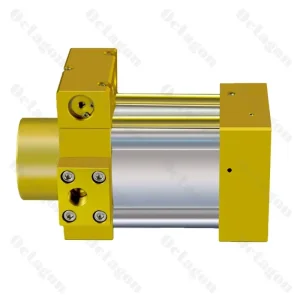
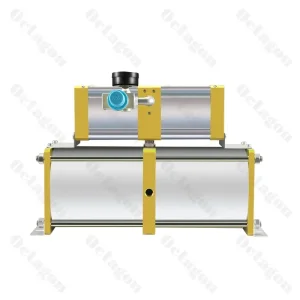
| Hydraulic Booster Pressurization | Central plant compressed air (inconsistent) | Decentralized SWB/SWP Intensifier Pumps | Stable 40–160 bar localized pressure amplification |
| Electromechanical Subsystems | Fragmented supplier sourcing | Unified harnesses, cabinet cabling & mold parts | Single-source accountability, synchronized lead times |
China Factory 4.0: Supply Chain Resilience & Efficiency
Headquartered in Taoyuan, Taiwan for design governance, combined with deep mainland manufacturing capacity. Delivering uncompromised tooling speed, massive tonnage reserves, and vertical supply ecosystem integration.
Taiwan Engineering Governance
Founded in 2008 in Taoyuan, Taiwan, Octagon enforces precision engineering discipline, micro-level DFM (Design for Manufacturability), and stringent gatekeeping across all CAD/CAE models before steel cut. Every tool is subjected to Moldflow filling, pack, warp, and cooling optimization.
Heavy-Tonnage Mainland Infrastructure
Sprawling production facilities in mainland China feature high-tonnage multi-component injection presses ranging from 800 to 4,000 metric tons. Supported by 5-axis Makino and DMG Mori high-speed machining centers capable of handling single mold bases up to 45 tons.
Subsystem Co-Location & Integration
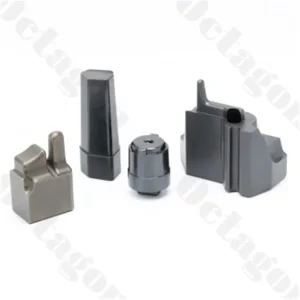
Unlike fragmented molders, Octagon builds the precision mold inserts (±0.002 mm), gas-liquid intensifier booster pumps, control cabinets, and custom electrical wiring harnesses in-house. This internal supply chain cohesion eliminates weeks of integration friction.
Global Enterprise Sourcing Demands & TCO Optimization
Addressing the rigorous scrutiny of tier-1 automotive, energy infrastructure, and industrial equipment sourcing leaders through data-backed qualification protocols.
Total Cost of Ownership (TCO)
Tooling amortization over massive production volumes demands premium tool steels (1.2343 ESR, 1.2738, ASSAB 718H). By reducing cooling phase duration by 20% and avoiding catastrophic tool failures, Octagon cuts lifetime unit part cost across multi-year programs.
Defect Elimination & Sink Control
Large structural components frequently suffer from differential shrinkage, flash, and warpage across broad spans. Our localized booster pumps and gas-liquid intensifiers sustain constant packing pressure on thick ribs without causing high internal residual stress.
Tooling Lead-Time Compression
Where competitors require 16–22 weeks for tooling of 2,000T+ class molds, Octagon accelerates delivery to 8–12 weeks from finalized DFM to T1 samples through concurrent 5-axis roughing, in-house wire-EDM, and automated coordinate measuring verification.
Localized Support, Global Compliance & Quality Governance
Bridging cross-border procurement gaps with localized engineering dialogue, comprehensive international certifications, and rigorous multi-stage inspection regimes.
ISO & CE Quality Management
Production adheres strictly to ISO 9001 and IATF 16949-aligned operational procedures. Our auxiliary control systems and industrial booster assemblies hold direct CE Certification, verifying high-pressure safety compliance for the European Union, North American, and Asian markets.
Engineering Communication in English
Direct access to senior bilingual mold designers and automation engineers eliminates intermediary sales friction. Technical reviews covering STEP, DWG, and mold kinematics are resolved within 24 hours, ensuring project milestones proceed without misunderstandings.
Export Logistics & Turnkey Spare Parts
Complete export seaworthy packaging, nitrogen-charged hydraulic protection for booster units, and mold core vacuum preservation. We supply critical wear components (ejector pins, gate cutting inserts, seals) packaged alongside tooling for seamless plant commissioning.
Frequently Asked Engineering & Sourcing Questions
Clear, technically grounded answers addressing mold mechanics, hydraulic booster integrations, and production capacities.
Our heavy-tonnage infrastructure supports clamping forces from 800 metric tons up to 4,000 metric tons, capable of handling single shot volumes up to 25,000 cm³. Tool dimensions up to 3,200 mm × 2,400 mm and total mold weights exceeding 40 metric tons can be handled on our high-capacity crane bays.
The system utilizes high-pressure timing control cabinets paired with hydraulic/pneumatic booster intensifiers capable of generating 1,000 to 7,000 kgf of localized force. While the mold remains clamped during cooling, the system actuates cutting blades directly at the gate, eliminating secondary deflashing and manual gate vestige grinding.
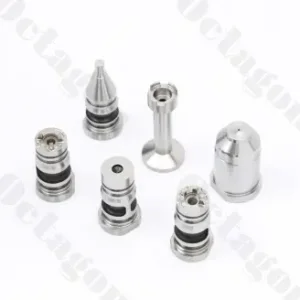
For precision mold tooling inserts, we maintain ±0.002 mm tolerance with mirror surface finishes between Ra 0.05 and 0.2 μm. For molded structural plastic parts across wide envelopes (over 1,000 mm), we routinely hold tight tolerances within ±0.15 mm to ±0.25 mm depending on polymer shrinkage behavior and fiber reinforcement orientations.
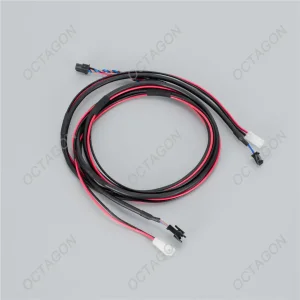
Modern automated molding requires seamless integration between the tool, high-pressure actuation modules (booster pumps), and diagnostic sensor cables. By manufacturing booster pumps and wiring harnesses in-house, we eliminate external component lead-times and guarantee plug-and-play electro-hydraulic compatibility on your factory floor.
We supply comprehensive T1 qualification packages: complete CMM 3D scan comparison reports against CAD nominals, full Moldflow correlation data, parameter sheets (injection velocity, cushion, hydraulic pack pressure profiles), and high-resolution video streams of actual tool cycling and in-mold cutting performance.
Our global headquarters is based at 5F, No. 31, Ln. 71, Zhengguang 2nd St., Taoyuan Dist., Taoyuan City, Taiwan, housing executive governance and core R&D. High-capacity production facilities and heavy assembly plants are strategically located in mainland China, serving over 60 countries across Europe, North America, and Asia.
High-Pressure Booster Pumps & Subsystem Electronics
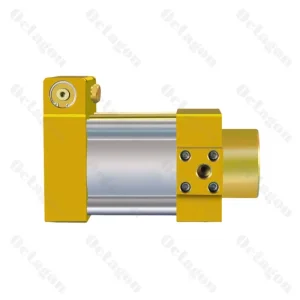
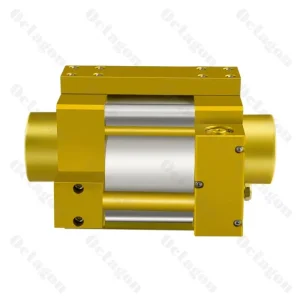
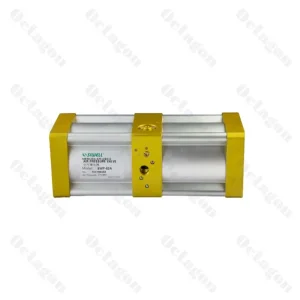
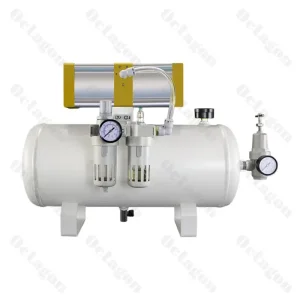
Field-proven pneumatic-hydraulic gas-liquid intensifiers, booster systems, and energy storage collection assemblies supporting automated manufacturing plants worldwide.