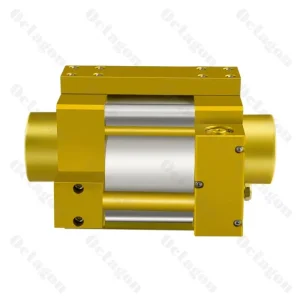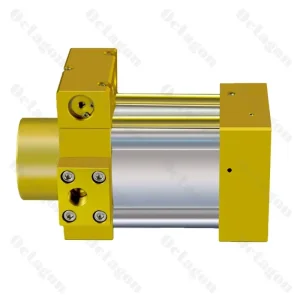
ODM Octagon SWB-80S Series Gas-Liquid Booster Pump - Efficient Solution from China Suppliers and Factory Manufacturer, Exporter
Technical Spec
Engineered for harsh industrial duty cycles requiring frictionless cycling, oil-free high-pressure air amplification, and zero pressure leakage.
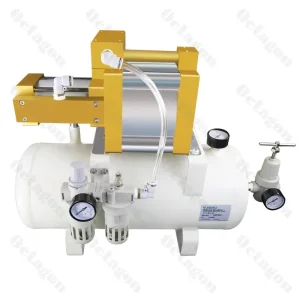
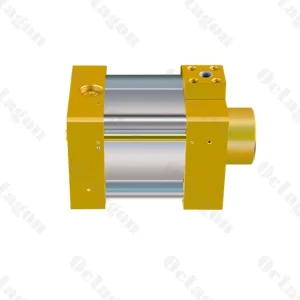
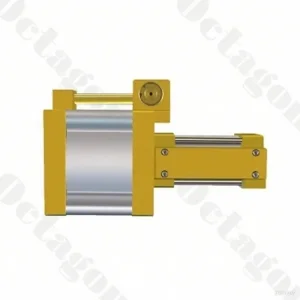
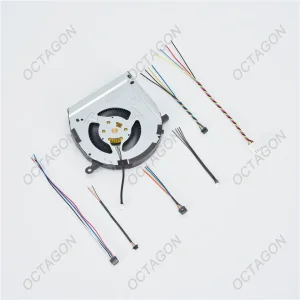
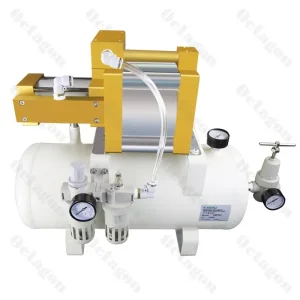
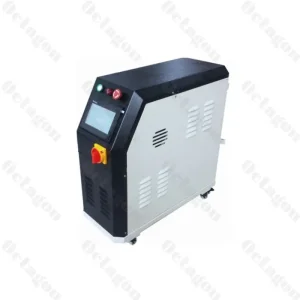
In modern automated factory ecosystems, compressed air is the most ubiquitous yet expensive utility. Standard shop floor compressors operate between 0.6 and 0.8 MPa, yet high-precision applications—such as clamping chucks, nitrogen spring charging, leak testing, and in-mold degating—require localized spikes up to 40 MPa without altering primary factory infrastructure.
Pneumatic booster valves function via Pascal’s law, pairing a large-diameter low-pressure air drive piston directly to a miniature high-pressure compression plunger. Achieving pressure escalation ratios from 2:1 up to 80:1 completely mechanically without electric sparks or flammable fluids.
Engineered with self-reversing spool valves. As the piston strikes stroke boundary sensors, directional control poppets switch pilot chambers dynamically, eliminating electromagnetic solenoids and ensuring non-stop continuous cycling under extreme humidity or volatile vapor atmospheres.
Every cylinder liner and valve plunger undergoes hard-anodized treatment and CNC diamond hone finishing to Ra 0.05–0.2 μm with dimensional tolerance within ±0.002 mm. This guarantees exceptional wear resistance, sub-zero friction seal interface, and maintenance intervals exceeding 12,000 continuous hours.
Pneumatic pressure amplification valves address specific regional manufacturing roadblocks, from tight factory floor footprints in Western Europe to high-throughput automation corridors across North America and East Asia.
Eliminating secondary manual deflashing of structural injection moldings. By integrating Octagon high-pressure timing valves directly into die-cast and plastic injection molds, high-velocity hydraulic pulses (1,000–7,000 kgf) sever gates flush inside the mold before cavity cooling, eliminating downstream robotic cutting stations.
Gas pipelines and high-spec aerospace manifolds necessitate non-destructive burst testing up to 100 bar using pure nitrogen or inert gases. Octagon gas-liquid booster pumps allow regional certification testing labs to cycle pressures accurately without introducing moisture or oil contamination.
Semiconductor handling systems and precision screen assembly fixtures demand spark-free actuation. Octagon’s pneumatic valves operate completely free of external electrical hookups, matching explosion-proof ATEX guidelines for microelectronics processing environments.
Comprehensive specifications matrix benchmarking Octagon’s proprietary booster platforms across pressure generation, flow rate dynamics, and interface architecture.
| Series Platform | Drive Ratio | Inlet Pressure | Max Output Pressure | Displacement / Cycle | Core Industrial Suitability |
|---|---|---|---|---|---|
| Octagon SWP-7.5-G | 2:1 / 5:1 Differential | 0.3 – 0.8 MPa | 4.0 MPa (Air Driven) | 1,200 Nl/min Peak | Plant air line drops, pneumatic clamping chucks, CNC tool changers |
| Octagon SWB-80S | 80:1 High Ratio | 0.2 – 0.8 MPa | 64.0 MPa (Gas-Liquid) | 18.5 cm³ / Stroke | Hydrostatic burst testing, nitrogen accumulator charging |
| Octagon SWB-125S/D | 125:1 Dual Stage | 0.3 – 0.8 MPa | 100.0 MPa (Liquid) | 32.0 cm³ / Stroke | Ultra-high pressure isostatic pressing, valve calibration beds |
| SWP-02A-G-T System | 2:1 Integrated Tank | 0.4 – 0.7 MPa | 1.6 MPa Regulated | 560 Nl/min Continuous | Dedicated robotic cells, laser welding assist gas boosting |
Transitioning to diamond-like carbon (DLC) coated plungers combined with carbon-doped PTFE seals, ensuring 100% dry operation without inline lubricators.
Embedded MEMS pressure transducers and cycle-rate tracking enabling continuous telemetry to central SCADA systems for predictive maintenance alarms.
Specialty electropolished 316L stainless booster lines qualified for ultra-pure gas (UPG) distribution without particulate shedding.
Dual-chamber regenerative exhaust feedback, redirecting spent drive air back to pre-charge cavities, slashing plant air consumption by up to 28%.
Octagon resolves the critical procurement trade-off between uncompromising quality control and aggressive cost-per-unit targets via a structured dual-hub production system.
Since 2008, our Taoyuan facility oversees comprehensive design architecture, patent strategy (45+ registered patents), and final tolerance sign-offs. Our senior engineering staff, averaging over 10 years in specialized pneumatic-hydraulic design, executes rigorous prototype verification using Zeiss 3D coordinate measuring machines (CMM) to certify sub-micron geometry.
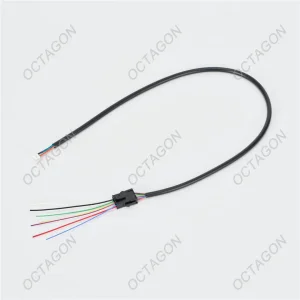
Our mainland China production base features 190 highly trained production specialists and automated CNC turning clusters. By tapping directly into the world’s most integrated supply ecosystem for specialty alloys, O-ring elastomers, and custom wiring harnesses, Octagon eliminates supply bottlenecks and ensures rapid batch turnarounds for global OEMs.
Supplying multinational equipment builders requires more than performance specs; it mandates rigorous adherence to electrical safety, pressure equipment directives, and international documentation standards.
Octagon booster units and timing control systems carry full CE conformity, complying with the EU Pressure Equipment Directive (PED 2014/68/EU) and Machinery Directive (2006/42/EC). Complete technical construction files (TCF) accompany all OEM shipments.
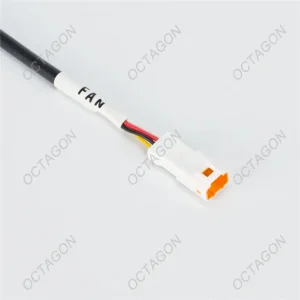
From equipment cabinet wire harnesses to high-pressure solenoids, Octagon products achieve IP68 ingress protection against fluid submersion and corrosive coolant mist, making them standard-spec across wet CNC and outdoor storage energy systems.
Direct engineering review within 24 hours. We evaluate fluid compatibility, duty frequency, ambient thermal dynamics, and mechanical mounting configurations to tailor custom manifold porting, stroke volumes, and cable terminations before steel is cut.
Clear, authoritative technical answers addressing common engineering inquiries regarding pressure limits, lifetime cycles, and custom OEM manufacturing parameters.
Air-driven booster pumps operate purely on pneumatic logic without electric motors, eliminating thermal build-up and the danger of electric sparks in volatile atmospheres. Once target pressure is reached, the booster pump automatically stalls and maintains static line pressure with zero energy consumption. Electric pumps require continuous idling and relief valve recirculation, generating fluid heat and wasting significant electrical power.
Achieving sub-micron tolerances requires strict temperature-controlled CNC grinding, optical profile grinders (PG), and slow-wire EDM cutting facilities held at constant 20°C ±0.5°C. Every workpiece is thermally stabilized prior to final metrology on high-precision coordinate measuring machines (CMM) and laser interferometers.
Yes. Our SWB and specialized SWP lines can be specified with chemically inert perfluoroelastomer (FFKM) seals, stainless steel (316L) wet sections, and copper-free alloys to safely compress pure Nitrogen, Helium, Argon, Hydrogen, clean water, and synthetic ester hydraulic oils.
Standard catalog models are stocked in mainland distribution hubs for immediate dispatch. Customized stroke ratios, specific port tapings (BSPP, NPT, SAE), or tailored equipment cabinet wiring harnesses typically undergo DFM engineering review within 24 hours, rapid prototyping in 7–10 days, and full batch dispatch in 3–4 weeks.
Explore our complementary product line of high-pressure air booster systems, specialized equipment harnesses, and gas-liquid intensification platforms.