Precision Integration Portfolio
Engineered Equipment & Die Mold Assemblies
Mission-critical harness interfaces, high-pressure boosting pumps, and precision-machined tool components engineered to deliver unyielding continuous uptime.
Custom Non-Standard Die Casting Mold Parts Machined to Micro-Tolerance
Explore Specifications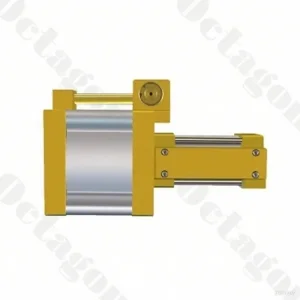
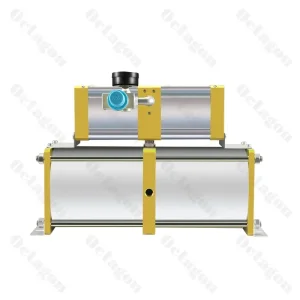
SWP-7.5 High-Performance Air Booster Pump for Factory Pressure Expansion
Explore Specifications
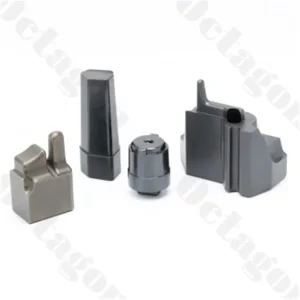
OEM Precision Die Casting Tooling Inserts and Sliding Component Processing
Explore Specifications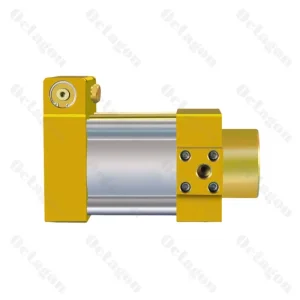
OEM SWB-100S Gas-Liquid Booster Intensifier Pump for Automated Clamping
Explore Specifications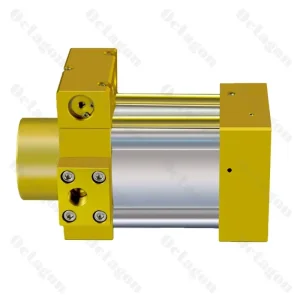
CE Certified SWB-80S Gas-Liquid Intensifier Pump Systems for Plant Hydraulics
Explore Specifications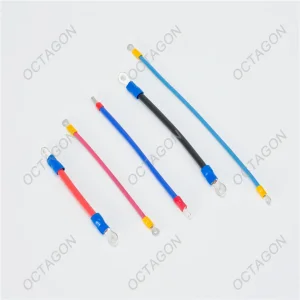
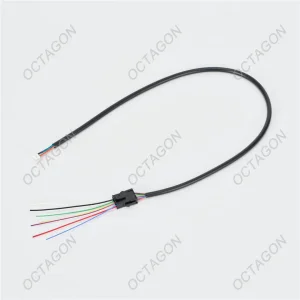
High-Integrity Energy Storage Collection Lines & Signal Monitoring Harnesses
Explore Specifications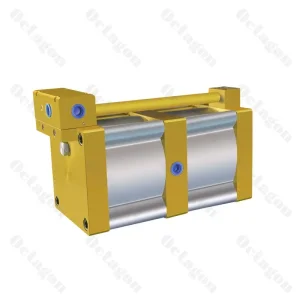
CE Certified SWP-02B Pneumatic Air Booster Pump for High Reliability Tooling
Explore Specifications
Enterprise Procurement Blueprint
Modernizing Global Procurement in Two-Shot Injection Molding
Moving beyond basic overmolding: Understanding how Tier-1 multi-national procurement teams evaluate high-volume 2K/multi-shot manufacturing assets to de-risk component lifecycles.
Interfacial Bonding Chemistry
Two-shot molding eliminates secondary bonding labor by creating thermodynamic chemical adhesion between disparate polymers (e.g., PC/ABS substrates paired with medical TPE/TPU). Proper barrel temperature sequencing and molecular diffusion windows ensure structural peel strength exceeds 45 N/cm without adhesive primings.
Elimination of Assembly Defect Modes
Secondary manual assembly introduces systemic risks: human placement errors, inconsistent glue dispenses, particulate intrusion, and electrostatic discharge. 2K tooling combines rigid structural substrates and soft-touch seals into an unbroken single-cycle envelope, reducing factory PPM indices to near zero.
Rotary Indexing vs. Transfer Automation
Advanced procurement mandates evaluation of rotating platen tools, core-back technology, or indexing center-blocks. Octagon’s tooling infrastructure accommodates servo-driven rotary plates running under 0.8-second rotation cycles to maintain thermal uniformity across both injection stages.
Tooling & Engineering Roadmap
Micron-Grade Tooling Architecture: Tolerance to ±0.002 mm
From Taoyuan engineering centers to advanced fabrication floors, our process architecture integrates high-speed CNC, mirror wire-cut EDM, and pneumatic-hydraulic intensification.
Sub-Micron Steel Fabrication
Utilizing premium tool steels including ASSAB Stavax ESR, S136, and H13 heat-treated to 52-54 HRC. Core and cavity components are finished to mirror specifications (Ra 0.05–0.2 μm), preventing micro-flash on low-viscosity elastomer second shots.
In-Mold Degating & Hydraulic Boost
Integrated with Octagon’s proprietary in-mold cutting automation and SWP/SWB pneumatic booster systems (delivering 1,000 to 7,000 kgf cutting force), second-shot gates are cut inside the closed die, mitigating cosmetic vestige.
Conformal Cooling Geometries
Dual-material molds exhibit distinct thermal shrinkage gradients. Through vacuum-brazed inserts and 3D direct-metal laser sintered (DMLS) conformal cooling passages, cycle times are reduced by 22-38% while warpage is eliminated.
Industrial Operations at Scale
Operating Metrics That De-Risk Global Programs
Cross-border logistics, rigorous statistical quality control, and robust IP protection mechanisms proven across 60+ sovereign export markets.
±0.002mm
Machining Tolerance
45+
Patented Technologies
60+
Export Destinations
20,000+
Global Industrial Clients
Assurance & Certification
Global Regulatory Adherence & Supply Chain Compliance
Engineered to conform with strict cross-market testing regimes, environmental mandates, and electronic safety directives.
Material Traceability (RoHS / REACH)
Every virgin polymer resin, masterbatch, and mold steel block ships with verified mill certificates and material lot reports. Comprehensive spectrometry ensures 100% compliance with EU RoHS 3 and REACH SVHC declarations.
CE & Electrical Safety Directives
Electrical wire harness assemblies, control cabinets, and pneumatic-hydraulic intensifiers comply with the Low Voltage Directive 2014/35/EU and Machinery Directive 2006/42/EC, complete with Declaration of Conformity dossiers.
Taiwan Engineering, Mainland Scaling
By coupling headquarters-based design oversight in Taoyuan City, Taiwan with large-scale production facilities in mainland China, overseas purchasers capture cost efficiencies without compromising engineering oversight.
Technical & Sourcing FAQ
Frequently Asked Questions on 2K Injection Molding
Detailed answers to crucial tooling, resin compatibility, tolerance limits, and operational considerations.
What is the structural advantage of two-shot (2K) molding over conventional overmolding?
Two-shot injection molding utilizes a single machine with two independent injection units to mold two different resins in consecutive sequences within a single cycle. Because the substrate resin is still molten or within its thermal crystallization window when the second resin is injected under high pressure, a genuine intermolecular fusion zone is achieved. Conventional overmolding requires cooling, manual transfer, re-heating, and mold re-clamping, which can lead to oxidation, surface contamination, and reduced bonding strengths.
How does Octagon maintain tight tolerances (±0.002 mm) across multi-material parts?
Achieving ±0.002 mm requires precise thermal equilibrium management in the mold base, rigid tool steels (H13, ASSAB Stavax ESR), and micron-level optical inspection equipment. Octagon accounts for the distinct Volumetric Shrinkage Differential (VSD) between polymer pairs using Moldflow simulation prior to steel cutting. Additionally, our high-precision rotary plates and hydraulic positioning dowels maintain micron-level repeatability over hundreds of thousands of cycles.
Which polymer pairings provide the strongest chemical adhesion in 2K tooling?
Strong chemical bonds occur between chemically compatible resin families. Top performing combinations include PC + ABS, PC + TPU, ABS + TPE, and PA (Polyamide) + functionalized elastomer blends. For non-compatible polymers like PP + TPU, mechanical interlocks, dovetail channels, or modified coupling resins are integrated directly into the part geometry by our DFM engineers.
Can Octagon provide turnkey manufacturing including harnesses and booster cylinders?
Yes. Octagon provides unified manufacturing across tooling, specialized in-mold degating automation, SWP/SWB pneumatic booster systems, and custom industrial wiring harnesses. This broad engineering scope enables clients to source integrated sub-assemblies from a single, accountable manufacturing partner.
What documentation and quality reports accompany international mold shipments?
Shipments include full First Article Inspection Reports (FAIR), CMM dimensional verification, steel certification sheets with hardness logs, hot runner schematics, spare parts BOMs, and trial run (T1/T2) parameter setup cards with accompanying video logs.
Engineered Hardware Infrastructure
Specialized Booster Units & Precision Mold Components
Explore our complementary hardware lines: heavy-duty gas-liquid intensifiers, custom wire harnesses, and precision die stamping components.
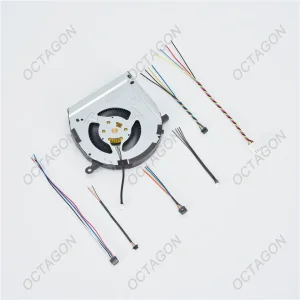
OEM High-Performance Cooling Fan Cable Harness for Automation Modules
Explore Specifications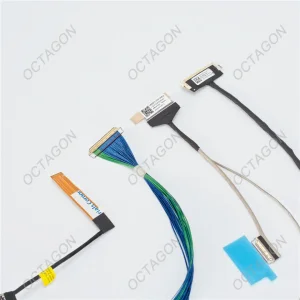
Custom Industrial Display & High-Definition Screen Interconnect Harness
Explore Specifications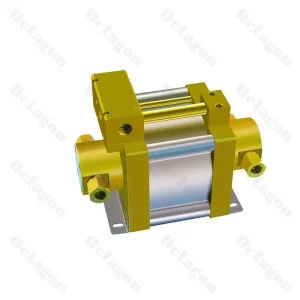
SWB-160D CE Certified High-Pressure Gas-Liquid Intensifier Booster Pump
Explore Specifications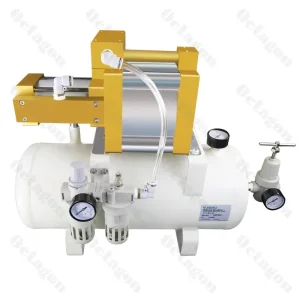
ODM SWP-7.5-G Air Booster Pump for High Ratio Industrial Pressure Amplification
Explore Specifications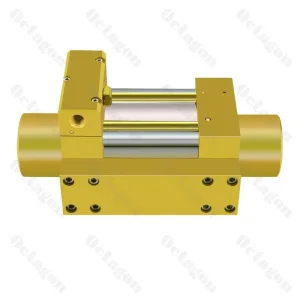
SWB-80D Industrial Gas-Liquid Booster Pump for Production Machinery
Explore Specifications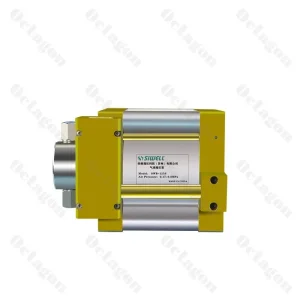
SWB-160S High Efficiency Fluid Gas Intensifier Pump for Automated Tooling
Explore Specifications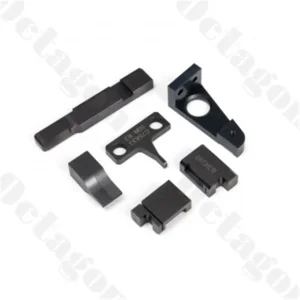
Custom Precision Stamping Die Components, Punches & Cavity Inserts
Explore Specifications