
Precision Engineered Systems
Featured Air Booster Equipment for Indonesian Manufacturing
Engineered for seamless integration into high-throughput stamping, testing, and blow-molding lines across Jababeka, MM2100, and Karawang industrial corridors.
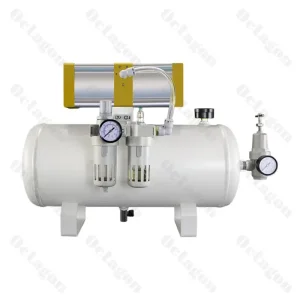
Custom Octagon SWP-7.5-G High-Ratio Booster Pump
View Specifications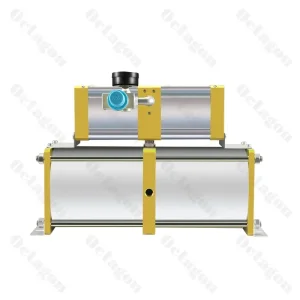
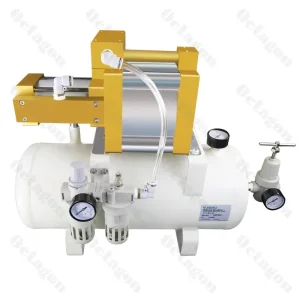
OEM SWP-02A-G-T Compact Pneumatic Booster Pump
View Specifications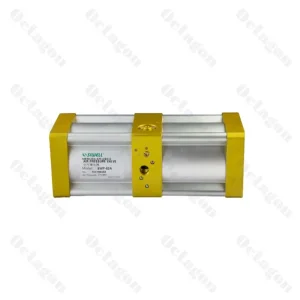
ODM OCTAGON SWP-02A Air Pressure Booster Pump
View Specifications
Regional Market Landscape
Air Pressurization Dynamics Across West Java & Jakarta
Evaluating pneumatic infrastructure challenges and pressure intensification engineering in Indonesia's primary manufacturing belt.
The manufacturing epicenters framing Greater Jakarta—notably Cikarang, Karawang International Industrial City (KIIC), MM2100, and Jababeka—form Indonesia’s core automotive, electronics, and fast-moving consumer goods (FMCG) axis. Operating in this equatorial manufacturing corridor presents unique thermodynamic and infrastructural realities. While centralized plant compressor networks reliably provide base distribution pressure between 5.5 and 6.5 bar, advanced automation fixtures frequently require amplified pressure regimes reaching 12 to 40 bar.
Elevating an entire centralized air ring-main from 6 bar to 16 bar is economically catastrophic from a kWh consumption standpoint and exacerbates plant-wide distribution leakages. Consequently, Jakarta’s engineering directors are transitioning aggressively toward localized pneumatic booster systems. By strategically situating compressed-air-driven booster pumps directly adjacent to end-use machinery—such as pneumatic clamping presses, leak-test rigs, high-pressure PET blow stations, and nitrogen gas generators—facilities preserve energy while eliminating operational bottlenecks.
Additionally, high relative humidity along the North Java coastline (averaging 75% to 88% throughout the year) introduces severe moisture condensation hazards within pneumatic air lines. Untreated condensate compromises conventional pump seals, inducing abrasive wear, stroke binding, and rapid valve degradation. Octagon’s high-pressure booster systems specifically mitigate these environmental strains via self-lubricating seal rings, nickel-plated hard-anodized aluminum barrels, and high-flow check valves designed to tolerate tropical micro-particulate loads.
As Indonesia accelerates its "Making Indonesia 4.0" master plan, manufacturing units are under strict mandates to audit facility energy profiles. Octagon delivers the precise instrumentation, engineering consulting, and turnkey air intensifier equipment required to pass strict industrial energy audits while enhancing pneumatic repeatability across multi-shift production schedules.
Global Technical Vector
Macro Trends Shaping Industrial Pneumatic Intensification
Global decarbonization standards, ISO 50001 energy compliance, and intelligent digital feedback loops driving modern air amplification architecture.
ISO 50001 Decarbonization Mandates
Plant operators worldwide are avoiding the massive carbon footprint of whole-factory pressure hikes. Air-driven boosters require no direct electrical connection, eliminating ATEX explosive risks while slashing baseline kilowatt draw by utilizing localized differential piston physics.
IoT-Linked Predictive Diagnostics
Modern booster systems feature non-intrusive reed sensor interfaces and solid-state pressure transducers that feed cycle frequency, seal wear rates, and flow drop data directly to line-side PLCs and cloud MES environments.
Continuous-Duty Composite Sealing
Engineering away from standard NBR or basic FKM seals, Octagon incorporates proprietary PTFE-carbon filled matrixes and ultra-high molecular weight (UHMW) polymers, maintaining volumetric efficiency exceeding 94% across millions of cycles without lubrication.
Octagon Pneumatic Intensification Engineering Roadmap
| Feature Set | Legacy Pneumatics (Generation 2) | Current Benchmark (Octagon Series 2026) | Future Horizon (Gen 4 Smart Matrix) |
|---|---|---|---|
| Drive Mechanism | Mechanical stroke reversal spool | Balanced pilot-operated bistable air valve | Integrated micro-pulse electro-pneumatic pilot |
| Pressure Stability | ±1.2 bar delta at outlet | ±0.15 bar high-resolution regulator control | Active dynamic closed-loop piezo control (<0.05 bar) |
| Maintenance Interval | Every 2.5 million cycles | Exceeding 8 million uninterrupted strokes | Self-compensating hydrodynamic magnetic wear seals |
| Acoustic Signature | 88–92 dB(A) open blast exhaust | <74 dB(A) heavy-duty multi-stage muffling | Whisper-flow acoustic cancellation ducting (<68 dB(A)) |
Field Application Engineering
High-Pressure Applications Serving Jakarta's Key Industries
Proven engineering blueprints deployed across stamping facilities, precision testing laboratories, and injection molding lines.
Automotive Body & Stamping Lines (Karawang & Cikarang)
Tier-1 automotive component producers utilize Octagon's SWP-7.5-G and SWP-02A pumps to drive pneumatic cylinder actuators for die punching, sheet metal forming, and multi-point robotic spot-welding clamps. Delivering rapid cycle times and maintaining consistent 12–25 bar clamping forces prevents micro-deflection during stamping, significantly cutting scrap rates on high-tensile steel pressings.
High-Pressure Leak Testing & Pressure Vessel Validation
In accordance with Indonesian national safety certifications (SNI) and international ASME standards, equipment manufacturers in Bekasi and Tangerang utilize Octagon gas-liquid intensifiers and air booster stations to hydrostatically test pipeline valves, fuel storage tanks, and refrigeration coils up to 200 bar, ensuring verifiable burst-test integrity prior to domestic market clearance.
Precision In-Mold Cutting & Plastic Injection Degating
Integrated within automated injection molding tools for electronic housings and medical supplies, Octagon high-pressure air booster systems power specialized gate-cutting cylinders inside the mold while the tool remains closed. This eliminates secondary degating labor, avoids gate vestige stress fractures, and ensures pristine cosmetic edges on ABS, PC, and POM moldings.
Fast-Cycle PET Bottle Stretch Blow Molding (Bogor & Serang)
Beverage bottling lines operating around-the-clock frequently experience plant pressure fluctuations that ruin bottle bottom symmetry. Octagon localized booster skids boost secondary line pressure up to 30–35 bar with receiver tank buffering, securing rock-solid preform stretching and crisp bottle petaloid forming without demanding capital investment in new high-pressure multi-stage compressors.
Turnkey Engineering Framework
Octagon High-Pressure Turnkey Modular Skids
Engineered to eliminate pressure drops, resist tropical degradation, and provide plug-and-play pneumatic integration.
1. Comprehensive Filtration & Dew Point Regulation
Every skid is fitted with pre-stage coalescing filters (0.01 micron) and automated drain bowls, intercepting aggressive Jakarta ambient humidity and residual compressor oil before air strikes the booster spool valve, thereby extending internal piston life by over 300%.
2. ASME & CE Certified Receiver Tanks
Equipped with high-capacity pressure buffer vessels fabricated from heavy-gauge carbon steel or 316 stainless steel. Buffer tanks dampen pulsation, store peak kinetic volume for cyclic burst operations, and reduce overall booster pump cycle duty cycles.
3. Zero-Energy Automatic Stall Control
The pump dynamically cycles when downstream pressure drops and instantly self-stalls once targeted set-point pressure is achieved. It maintains full static pressure indefinitely with absolute zero electricity consumption and zero heat generation.
Technical Authority & FAQ
Air Pressurized Pump Procurement & Maintenance in Jakarta
Direct technical answers addressing system sizing, operational costs, export logistics, and local service warranties.
What are the clear financial advantages of installing an air booster pump over purchasing an additional centralized high-pressure compressor?
Procuring a dedicated centralized 16 or 25-bar compressor entails heavy capital expenditure (often exceeding $40,000–$70,000 USD), complex new high-pressure distribution piping, and continuous electrical overhead. Conversely, an air pressurized booster pump taps right into your existing 5–7 bar plant air main, amplifying pressure only where it is strictly required at a specific machine cell. This cuts equipment acquisition costs by up to 70%, lowers line leakage overhead across the rest of the factory, and uses zero electricity when holding static pressure.
How does high ambient humidity in Jakarta industrial zones affect booster pump lifespan, and how does Octagon solve it?
High moisture levels in coastal Java induce corrosion, sludge accumulation, and accelerated seal hydrolytic degradation inside pneumatic cylinders. Octagon systems prevent moisture-related breakdown through our proprietary anodized aluminum alloys, corrosion-resistant stainless-steel high-pressure plungers, and PTFE composite wear rings. Additionally, our turnkey skid offerings incorporate high-efficiency water separators and micro-mist coalescing filters to ensure inlet air matches ISO 8573-1 Class 4 dryness levels or better.
What lead times and spare parts availability can manufacturing facilities in West Java anticipate?
Octagon maintains prioritized export lanes for Indonesia, operating through established air freight connections to Soekarno-Hatta International Airport (CGK) and ocean container routes into Tanjung Priok port. Critical seal overhaul kits, check valves, and pilot spool assemblies can be dispatched within 24 to 48 hours for plant-critical outages. Standard modular booster systems typically ship within 7 to 14 business days from order confirmation.
Can Octagon pneumatic boosters handle technical gases such as Nitrogen (N2), Helium, or Argon?
Yes. Octagon manufactures specialized gas-liquid intensifiers and gas booster variants (including our SWB-100 and SWB-160 series) built with fully isolated drive and compression stages. The compressed gas chamber is partitioned by dynamic seal packs and dual venting chambers, ensuring that standard shop drive air never cross-contaminates high-purity nitrogen or argon being boosted for laser cutting or gas-assisted injection molding.
How do plant maintenance teams calculate the required booster ratio and flow volume for an automated line?
The amplification ratio is determined by the formula: Target Output Pressure (bar) ÷ Inlet Supply Air Pressure (bar). For instance, generating 14 bar from a 7 bar plant air line calls for a minimum 2:1 ratio pump (e.g., SWP-02A). To determine flow capacity (NL/min), factor the cylinder volume multiplied by the cycle count per minute, plus a 25% safety reserve. Octagon’s technical sales team provides sizing software and direct engineering consultations to model your exact flow dynamics.
What regulatory and safety certifications accompany Octagon booster systems exported to Indonesia?
All Octagon booster equipment complies with European Machinery Directive 2006/42/EC and Pressure Equipment Directive (PED) 2014/68/EU standards, bearing CE certification. Buffer receiver tanks feature factory hydrostatic test certificates and ASME Section VIII design compliance. We supply complete bilingual technical manuals, maintenance schematics, and full certificates of origin (COO) to facilitate Indonesian customs clearance.
Complete Industrial Catalog
Industrial Booster Pumps & Gas Intensifiers for Indonesian Facilities
Fully customizable pneumatic pressure multipliers, tested to ±0.002 mm component tolerances to ensure uninterrupted performance in severe production environments.
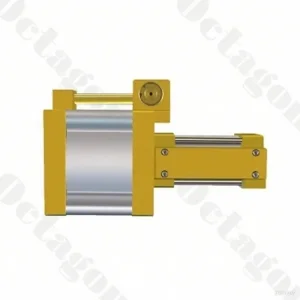
OEM Octagon SWP-7.5 High-Performance Air Booster Pump
View Specifications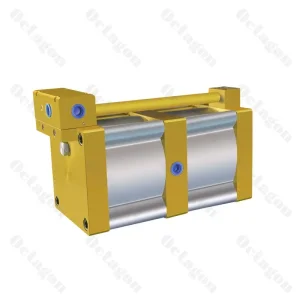
ODM OCTAGON Robust Air Booster Pump Supplier
View Specifications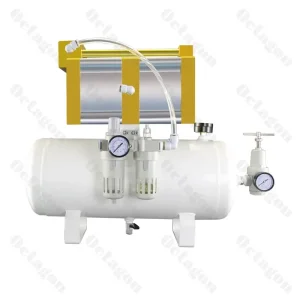
High-Quality Octagon SWP-02B-G Pneumatic Pump
View Specifications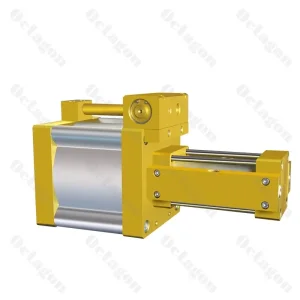
High-Quality SWP-05 Energy-Efficient Air Booster Pump
View Specifications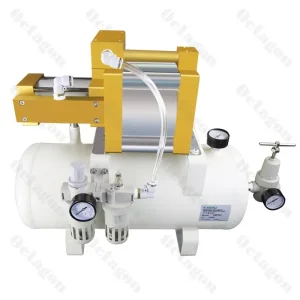
High-Quality SWP-05-G Heavy-Duty Air Booster Pump
View Specifications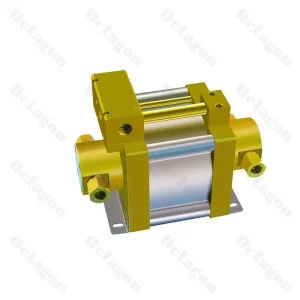
OEM Octagon Gas-Liquid Intensifier Pump SWB-160D
View Specifications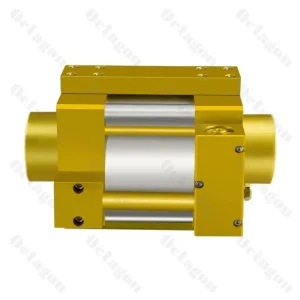
OEM Octagon SWB-100S & SWB-100D Gas Intensifiers
View Specifications