Precision Boost Systems & Interconnect Infrastructure
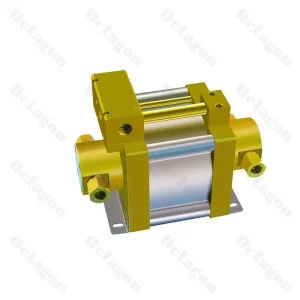
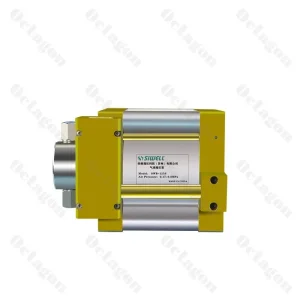
Factory-direct pneumatic amplification systems, gas-liquid intensifiers, and specialized harness assemblies designed to withstand high duty-cycle manufacturing environments.
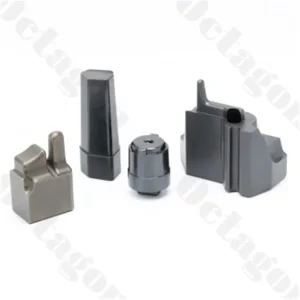
Global Industrial Procurement Demands for Customized Pressure Booster Pumps
Addressing the shifting operational parameters across Tier-1 automation, plastic conversion, and pressurized test engineering.
Pneumatic System Inefficiencies
Standard municipal and plant line air grids typically deliver baseline operational pressures between 0.6 MPa and 0.8 MPa. Advanced injection mold degating systems, gas-assist filling processes, and high-pressure clamping mechanisms require targeted spikes exceeding 1.6 MPa to 4.0 MPa. Sourcing decentralized, customized pressure booster pumps eliminates the massive capital expenditure and energy overhead of over-pressurizing an entire factory layout.
Explosion-Proof & Intrinsically Safe Operations
Modern petrochemical, hydrogen, and cleanroom aerospace facilities increasingly ban electromechanical motors within explosive vapor zones. Customized pneumatic and gas-liquid booster pumps operate entirely on mechanical fluid mechanics using air-driven pistons, minimizing thermal signatures, totally eliminating electrical sparking, and aligning effortlessly with ATEX and CE Machinery Directive demands.
Severe Media Compatibility & Corrosion
Standard off-the-shelf catalog pumps fall short when cycling specialized non-standard gases, deionized liquids, or refrigerants. Global engineering procurement requires tailor-made intensifiers machined from premium 316L stainless steel, titanium alloys, and hard-anodized aeronautical aluminum, coupled with high-grade dynamic seals rated for millions of cycles without degradation or fluid contamination.
Macro Industrial Solutions: Transforming Plant-Wide Pneumatic Reliability
How modular amplification cabinets and high-output booster systems bridge the gap between factory automation, tooling longevity, and cycle-time reduction.
In-Mold Degating & Trimming
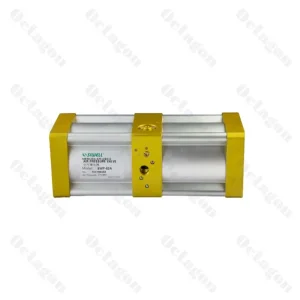
By coupling custom SWP series air booster pumps with specialized high-pressure timing cabinets, tooling engineers deliver instantaneous 1,000 to 7,000 kgf cutting forces directly inside closed injection molds. Gate shearing occurs prior to mold opening, drastically reducing cycle times and eliminating post-mold trimming labor.
Hydrostatic Pressure Testing
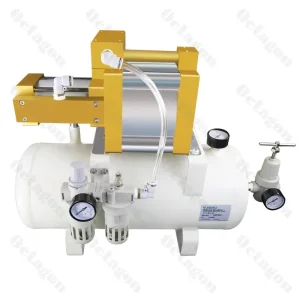
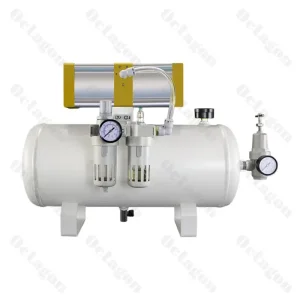
For valves, piping, industrial vessels, and aviation fuel line assemblies, gas-liquid intensifier pumps like the SWB-160D deliver controlled burst and proof testing. Automated stroke sensors and dual-gauge monitoring offer precision validation without the vibration or fluid shock typical of rotary hydraulic units.
Automotive Fixture Clamping
High-speed body-in-white (BIW) robotic welding fixtures require rigid, high-force pneumatic holding without maintaining noisy, centralized hydraulic loops. Decentralized customized air pressure boosters provide fast clamping force with internal holding reservoirs to prevent pressure loss during power interruptions.
Gas Assist & Nitrogen Supercharging
Laser cutting systems, chemical purging enclosures, and nitrogen accumulator charging require stable gas pressure. Our high-compression boost pumps supercharge bottle supplies from 3.0 MPa to over 30 MPa with zero volatile hydrocarbons or particulate contamination introduced into the process stream.
Precision Fluid Intensification Architecture: The Technology Roadmap
A technical overview of differential area principles, dynamic seal materials, and intelligent HMI integration for advanced booster manufacturing.
The Differential Area Operational Principle
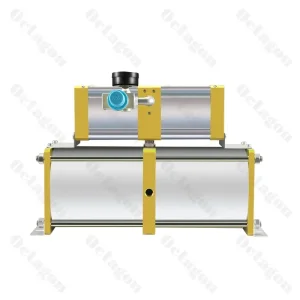
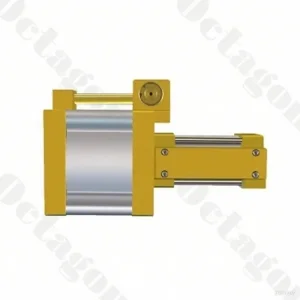
Customized air-driven pressure booster pumps operate on the classic hydraulic intensifier principle: a large-diameter pneumatic drive piston mechanically coupled via a central reciprocating shaft to a significantly smaller high-pressure piston or plunger. Plant air applied to the drive surface generates an identical mechanical thrust across the reduced surface area, multiplying line pressure proportionally to the ratio of piston surfaces: P2 = P1 × (A1 / A2). Our continuous reciprocating shuttle valves automatically alternate air inlet ports using pilot-actuated directional spool assemblies, delivering a continuous pressurized output with zero external electrical inputs.
Phase I: Material Tribology
Piston shafts are micro-machined to tolerances of ±0.002 mm, followed by multi-stage induction hardening and hard-chrome finishing to reach Ra 0.05–0.2 μm mirror smoothness. This finish minimizes boundary friction against advanced dynamic PTFE seals infused with carbon-graphite and bronze fillers, ensuring non-stick low-friction performance even under prolonged holding states.
Phase II: Digital Feedback Control
Transitioning from mechanical shut-off valves to integrated piezo-resistive digital transducers. The system pairs modular cabinets with PLC/HMI touchscreen controllers, allowing process managers to program stepped pressure curves, continuous logging, and dual-zone timing sequences for complex mold gating systems.
Phase III: Sustainable Energy Recovery
Future development pathways feature closed-loop exhaust energy capturing. By venting the low-pressure return chamber into secondary pre-charge stages, next-generation booster units cut total compressed air consumption by up to 28%, significantly lowering the carbon footprint of factory pneumatic infrastructures.
CE Certification, International Standards & Quality Rigor
Export compliance built on comprehensive engineering validation, full traceability, and formal third-party equipment certification.
EU CE Machinery Compliance (2006/42/EC)
Every booster pump and pressurized automation cabinet is designed, stress-tested, and certified in accordance with the European Machinery Directive. This covers mechanical risk mitigation, fail-safe emergency depressurization ports, and pressure vessel design conforming to Pressure Equipment Directive (PED) 2014/68/EU standards.
End-to-End Quality Traceability (ISO Protocol)
From initial spectral alloy verification of raw bar stock to Coordinate Measuring Machine (CMM) dimensional checks of valve bodies and final pneumatic hold-testing for 48 continuous hours, our manufacturing centers maintain complete digital lot tracking for every serial number leaving the plant.
Cross-Border Engineering Delivery
Headquartered in Taoyuan, Taiwan, with manufacturing facilities in mainland China, Octagon combines Taiwanese process management with scalable production. We provide comprehensive export documentation, custom CAD/STEP drawings within 24 hours, and custom pinouts or ports configured for fast on-site commissioning.
Frequently Asked Questions on Customized Booster Sourcing
Clear, practical answers addressing common technical and purchasing questions for plant managers, system integrators, and procurement teams.
What parameters are required to specify a customized pressure booster pump?
Does your CE Certification cover the complete booster system or only component parts?
How do air-driven boosters compare against electric high-pressure compressors?
Can customized booster systems integrate directly with injection molding PLCs?
What typical lead time is expected for OEM/ODM prototypes and full tooling runs?
High-Performance Factory Products & Components
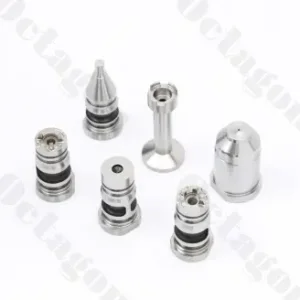
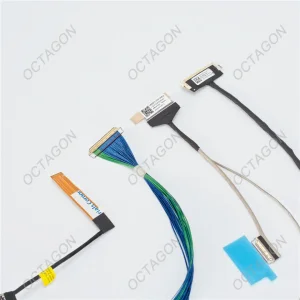
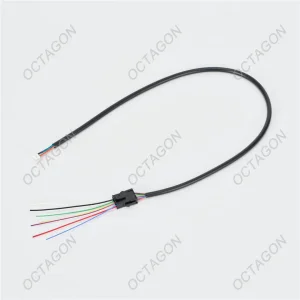
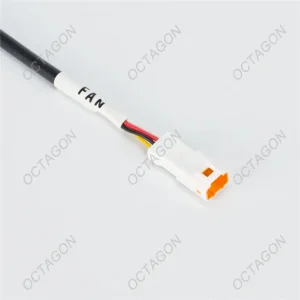
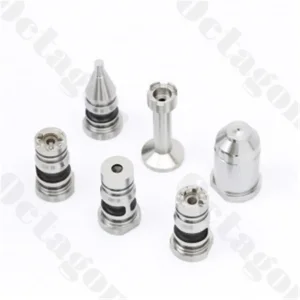
Explore our complete lineup of gas-liquid intensifier pumps, custom wire harnesses, and precision mold components manufactured to ±0.002 mm tolerances.