
Engineering Hardware & Custom Cable Assemblies
Verified solutions ranging from high-current battery cabinet harnesses to precision-engineered pneumatic boost modules, fabricated to international tolerances.
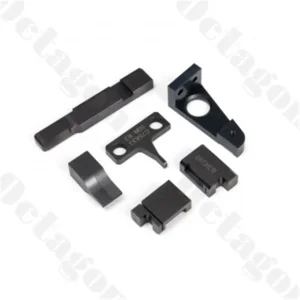
CE Certification Precision Stamping Die Components
View Specifications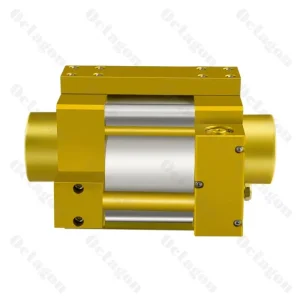
Custom Octagon SWB - 125D High-Performance Pump
View Specifications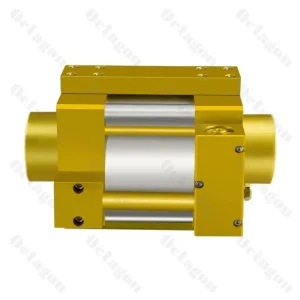
Custom Octagon SWB-100S & SWB-100D Series Pumps
View Specifications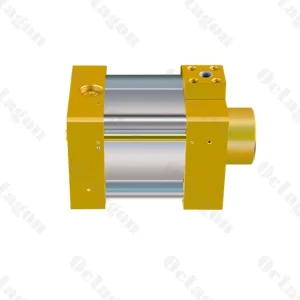
Custom SWB-125S Single-Drive Gas-Liquid Booster Pump
View Specifications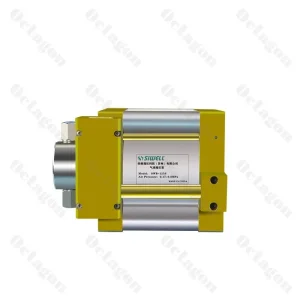
High-Efficiency SWB-160S Series Gas-Liquid Booster
View Specifications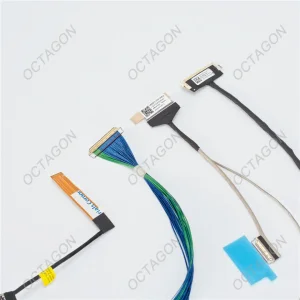
High-Definition Screen Connection Cable Harness
View Specifications
Precision Stamping Die Components for Industrial Use
View Specifications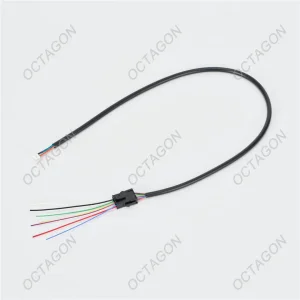
CE High-Performance Cabinet Wiring Harness
View SpecificationsEnergy Storage Cabling Paradigm Shift: 1500V DC Architecture
Analyzing key structural vectors dominating the BESS (Battery Energy Storage System) engineering landscape, from liquid cooling integration to extreme ampacity control.
1500V DC High-Voltage Migration
Utility-scale projects have transitioned rapidly from 1000V to 1500V DC platforms to reduce system-level BOS costs and minimize I²R transmission losses. This shift demands enhanced dielectric strength, superior insulation materials (cross-linked polyolefin/XLPO), and optimized conductor stranding to eliminate partial discharge vulnerabilities.
- UL 4128 & UL 9540A compliant design
- Corona-resistant sheath formulation
- Enhanced flashover isolation safety
Liquid Cooling & Thermal Endurance
With high-density C&I and utility racks adopting liquid cooling, inter-pack cabling must endure localized hot spots, condensation, and chemical contact with ethylene glycol solutions. Conductor geometries are engineered with Class 5/6 flexible copper strands to resist continuous vibrational fatigue inside compact battery modules.
- Continuous rating: -40°C to +125°C
- Immersion resistance against coolants
- Low smoke zero halogen (LSZH) jacketing
BMS Signal & Power Convergence
Modern Battery Management Systems integrate power distribution with dense sensor networks monitoring millivolt cell deviations and pack-level PT1000 sensors. Our integrated harnesses minimize EMI/RFI noise using 360° braided tinned copper shielding to guarantee zero bit-error transmission across high-noise inverter environments.
- CANbus, RS485 & Daisy-Chain harness
- >85% optical coverage shielding
- Integrated strain relief & click-latch
Global Enterprise Sourcing Demands & Application Matrices
Comprehensive alignment with procurement managers, EPC contractors, and system integrators seeking resilient OEM/ODM partnerships.
Grid-Scale Container BESS
Standardized 20ft/40ft containerized systems demand heavy-gauge inter-rack jumper cables (up to 300mm² / 600 kcmil) able to handle short-circuit faults up to 65kA without thermal runaway propagation.
Commercial & Industrial (C&I)
Microgrid and peak-shaving installations focus on compact footprints, requiring tight bend radiuses (3D-4D), modular push-pull quick connectors, and integrated fire-retardant outer jackets.
Severe Environmental Ops
Offshore wind farms, desert photovoltaic sites, and arctic arrays require cables tested against salt-spray corrosion, UV exposure, broad thermal fluctuations, and ozone-induced degradation.
Healthcare & Mission Critical
Hospitals and hyper-scale data centers rely on dual-redundant UPS cable harnesses built with ultra-low resistance tinned terminals to prevent micro-arcing and power blips during utility cutovers.
Material Science & Conductor Engineering Baseline
A transparent comparative breakdown of Octagon's energy storage cabling standards versus conventional generic industrial wiring.
| Performance Dimension | Standard Industrial Cabling | Octagon Custom BESS Harness | Operational Engineering Benefit |
|---|---|---|---|
| Rated Voltage (U0/U) | 600V - 1000V AC/DC | 1500V - 2000V DC | Eliminates insulation stress and supports high-voltage cluster architecture. |
| Conductor Stranding | Class 2 Rigid / Semi-Flexible | Class 5 & Class 6 Fine Tinned Copper | Guarantees flexibility in tight bends, resisting terminal loosening under thermal cycling. |
| Insulation Formulation | Standard PVC / XLPE | Cross-linked LSZH Polyolefin (125°C) | Zero corrosive halogen release during combustion; withstands prolonged overload temperatures. |
| Terminal Termination | Standard Crimping Dies | Ultrasonic Welding / Precision Hex-Crimp | Micro-resistance (<5μΩ), preventing hot-spot crystallization at battery poles. |
| Mold & Strain Relief Tolerance | ±0.1 mm | ±0.002 mm (Precision In-House Mold Tooling) | Perfect IP67/IP68 hermetic ingress protection against moisture and coolant leakage. |
Global Certification, Localization & Traceability
Cross-regional engineering governance safeguarding high-capital clean energy infrastructure projects.
Tier-1 Regulatory Compliance
Every cable assembly and custom connector meets relevant global standards, including UL 4128, UL 1973, IEC 62930, TÜV 2 PfG 2693, and RoHS/REACH environmental safety frameworks.
Taiwan R&D + Mainland Scale
Headquartered in Taoyuan, Taiwan, with dedicated ISO-certified production facilities in mainland China. We bridge deep mold-making heritage (±0.002 mm tolerance) with high-volume cabling export capacity.
Comprehensive Digital Traceability
From metallurgical batch testing of incoming copper cathode to final automated pull-force and micro-ohm resistance testing, every reel and harness bundle includes verifiable batch reports.
Engineering Roadmap: Towards Next-Gen Solid-State BESS
Pioneering interconnect technology to meet future requirements in solid-state energy storage, ultra-fast charging, and automated assembly.
Smart Sensorized Busbars
Embedding fiber-optic Bragg gratings and micro-thermocouples directly into cable sleeves to give cloud-based battery analytics real-time internal temperature mapping along continuous conductor runs.
Direct-to-Liquid Immersed Cabling
Developing synthetic fluoropolymer jacketing tested for long-term immersion in dielectric cooling oils, supporting high-rate fast-charge battery infrastructure without thermal degradation.
Robot-Ready Automated Assembly
Standardizing pre-formed 3D rigid-flex cable geometries with vision-alignment fiducials, enabling robotic workcells to terminate battery racks on automated production lines without human error.
Frequently Asked Questions: Technical & Sourcing
Direct answers covering materials, lead times, safety compliance, and custom design validation.
What cable materials are recommended for 1500V DC energy storage racks?
We recommend fine-stranded Class 5 or Class 6 tinned copper conductors insulated with radiation cross-linked polyolefin (XLPO). This combination provides superior thermal resistance up to 125°C, high current-carrying capacity, ozone resistance, and flame retardancy complying with UL 94 V-0 and VW-1.
Can you provide custom connector termination and overmolding?
Yes. Our in-house mold tooling facility achieves ±0.002 mm precision, allowing us to fabricate custom strain-relief boots, overmolded connectors, push-pull locking interfaces, and quick-disconnect terminals matched precisely to your battery terminal geometry.
How do you verify low-resistance contact for terminal lugs?
Every critical battery connection undergoes pneumatic hex-crimping or ultrasonic welding followed by automated micro-ohm testing. We verify contact resistance below 5 micro-ohms to prevent hot-spot formation under sustained high-current charge/discharge cycles.
What documentation and test certificates accompany export shipments?
Each delivery includes raw material mill test certificates (copper purity ≥99.95%), dielectric breakdown test logs, pull-force mechanical reports, dimensional verification data, and RoHS/REACH compliance declarations.
Precision Boost Pumps, Mold Parts & Specialized Harnesses
Explore our multi-category manufacturing capabilities, providing end-to-end support for Tier-1 industrial automation and energy systems.
ODM SWB-125D High-Performance Pump
View Specifications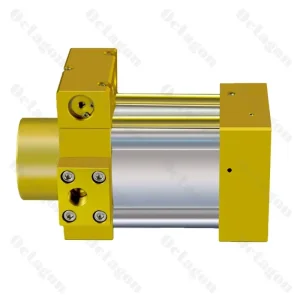
SWB-80S Series Gas-Liquid Booster Pump
View Specifications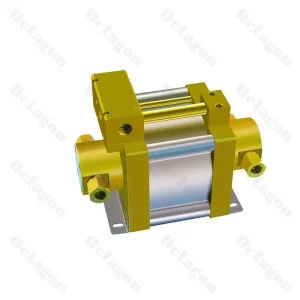
Custom SWB-160D Power Boost Intensifier Pump
View Specifications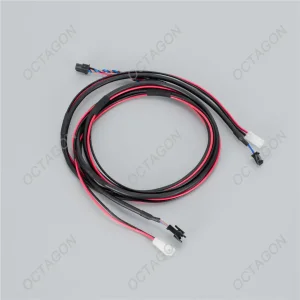
ODM Medical Device Wiring Harnesses Assembly
View Specifications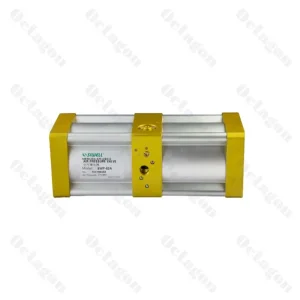
OEM SWP-02A Air Pressure Booster Pump
View Specifications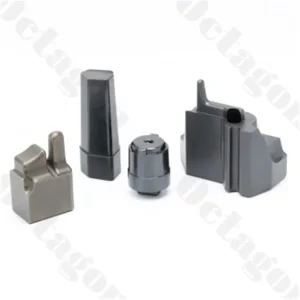
Die-Casting Mold Non-Standard Parts Processing
View Specifications
High-Efficiency SWB-100S/100D Gas Booster Pumps
View Specifications