
Precision Component Portfolio
Industrial Systems & High-Tolerance Molded Modules
Direct-from-factory high-performance pneumatic systems, energy storage wiring units, and precision tooling components designed for high-throughput automotive manufacturing lines.
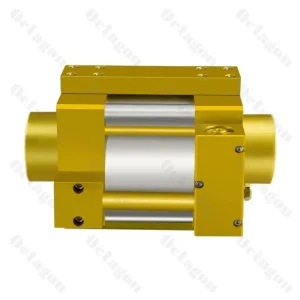
Octagon SWB-100S & SWB-100D Series High-Pressure Industrial Pumps
Explore Specs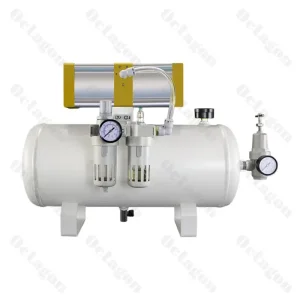
OEM Octagon SWP-02A-G Air Booster System for Precision Pneumatic Clamping
Explore Specs
Custom China Octagon SWB-100S & SWB-100D Series Pressure Amplification Pumps
Explore Specs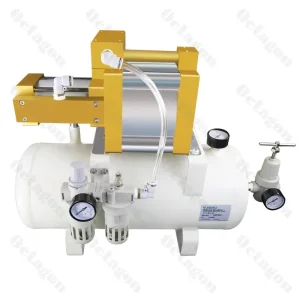
Custom Octagon SWP-7.5-G Heavy-Duty Ratio Air Booster Pump Supplier
Explore Specs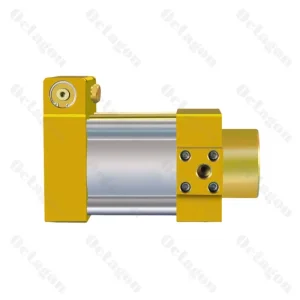
OEM SWB-100S Series Direct-Drive Hydraulic & Pneumatic Booster Unit
Explore Specs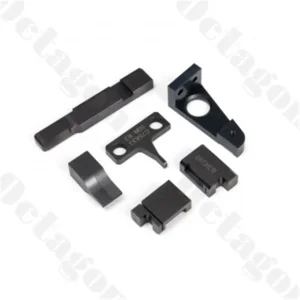
High-Quality Precision Stamping Die Components for Automotive Sheet Tooling
Explore Specs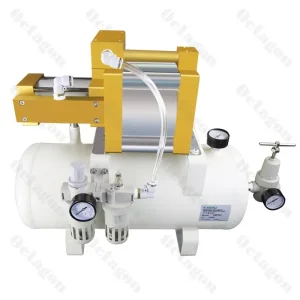
ODM SWP-05-G Air Booster Pump Solution for Compressed Air Tooling Networks
Explore Specs±0.002 mm
Tooling Machining Tolerance
Ra 0.05 μm
Optical Surface Mirror Polish
45+
Global Utility & Process Patents
60+
Export Nations Certified (IATF Compliant)
Industry 4.0 Transformation
Automotive Polymer Injection Molding: Macro Trends & Engineering Demands
Driven by vehicle lightweighting, powertrain electrification (EVs), and smart cabin integrations, custom plastic automotive component manufacturing requires radical precision shifts and structural integrity.
Lightweighting & Metal Substitution
Global decarbonization mandates require severe vehicle mass reduction. Modern programs replace structural cast aluminum with continuous glass/carbon-fiber reinforced thermoplastics (PA66, PPS, PEEK). Components must achieve 180 MPa+ tensile performance while maintaining dimension stability under thermal shocks (-40°C to +150°C).
High-Voltage Battery Enclosures & Busbars
800V EV architectures mandate UL94 V-0 flame-retardant polymers, high comparative tracking index (CTI > 600V), and integrated overmolding. Tooling requires tight cavity balancing to eliminate dielectric micro-voids, sink marks, and thermal dissipation failures across large battery trays and connectors.
Smart Cockpit Optical & Class-A Finishes
Touchscreen integration, ambient LED light pipes, and hidden-until-lit surfaces require Class-A optical-grade PMMA/PC molding with mold cavity mirror finishes reaching Ra 0.05 μm. Demolding systems must ensure zero stress marks, part warpage < 0.15 mm, and perfect tactile ergonomics.
Dual-Center Advantage
China Factory 4.0: Taiwan Engineering Rigor & Scalable Manufacturing Resilience
Founded in 2008 with technical headquarters in Taoyuan, Taiwan, and scaled production facilities in Mainland China, Octagon provides automotive Tier-1s with high supply chain security. By fusing Japanese/Taiwanese mold craftsmanship with automated high-tonnage multi-cavity injection centers, we insulate partners from cycle-time inflation and quality defects.
- Synchronized CAD/CAM tool paths with five-axis Makino & Sodick wire EDM.
- In-house Moldflow® rheology analysis preventing shear heating and weld-line weakness.
- Automated high-pressure in-mold trimming ensuring flash-free edge geometry.
- Complete APQP/PPAP Level 3 documentation with full CMM inspection reports.
Octagon Production Execution Metrics
Clamping Force Coverage
50T – 2,500T Hydraulic/Electric
Core Cavity Machining Precision
±0.002 mm (2 Microns)
In-Mold Degating Pressure Output
1,000 – 7,000 kgf Instantaneous
Tooling Life Guarantee (H13/S136)
1,000,000+ Shots Validated
PPAP Phase 3 Lead Time
T1 Samples within 25 Days
Automotive Engineering Deployment
Specialized Applications in Powertrain, Chassis & Electronic Architecture
Explore how Octagon's tooling components, wiring harness configurations, and precision injection molds resolve critical mechanical bottlenecks across modern vehicles.
Under-the-Hood Fluidics
Thermal cooling module manifolds, pump impellers, and oil filter housings molded in PA66-GF30. Withstands long-term ethylene glycol hydrolysis at 130°C and cyclic hydrostatic pressures up to 3.5 bar without leakage.
ADAS Sensor Radomes & Brackets
Front-grille millimeter-wave radar covers, LiDAR bezels, and ultrasonic sensor mounts. Formulated with low-dielectric loss polymers (PBT/PC) to eliminate electromagnetic attenuation and signal distortion.
High-Voltage Battery BMS Harnesses
Integrated flexible busbars and cell collection wiring assemblies. Incorporates temperature sensing thermistors and overmolded voltage sampling clips, tested to withstand 1,000V DC isolation resistance.
Interior Kinematic Controls
Air vent louvers, seat adjuster gears, and center console latches. Molded using low-friction POM and lubricated PBT to guarantee quiet NVH operation (< 35 dBA) and endurance across 150,000 duty cycles.
Advanced Tooling & Interconnect Line
Precision Mold Inserts, Actuators & Cabling Hardware
Engineered for seamless integration into high-speed automation cells, stamping tooling, and vehicle communication harnesses.
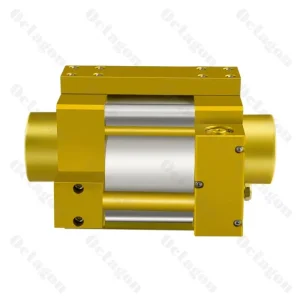
Custom China Octagon SWB-125D Pump: Gas-Liquid Booster for Tooling Circuits
Explore Specs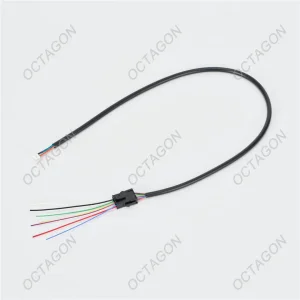
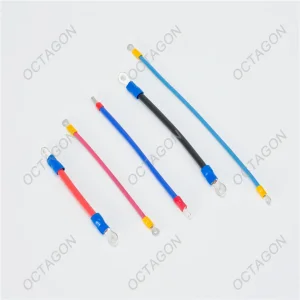
Equipment Cabinet Wiring Harness for Automotive Assembly Cells & Data Centers
Explore Specs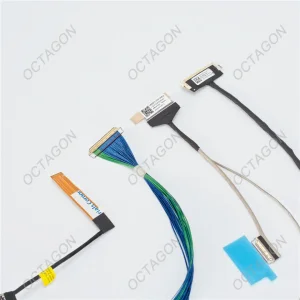
Custom High-Definition Screen Cable Harness for Digital Cockpits & Infotainment Displays
Explore Specs
CE Certified Precision Stamping Die Components for Automotive Sheet Processing
Explore Specs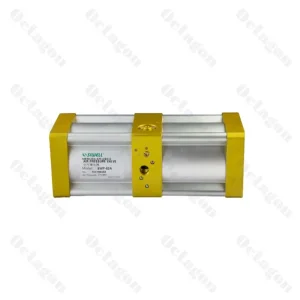
OEM China Octagon SWP-02A Air Booster Pump for Industrial Line Clamping
Explore Specs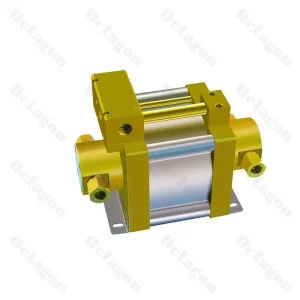
Octagon Gas-Liquid Intensifier Pump Factory SWB-160D: High-Force System
Explore Specs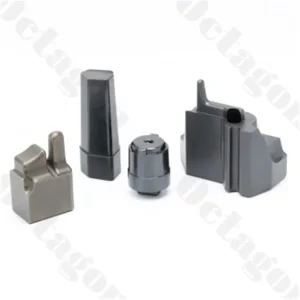
OEM China Die Casting Mold Parts Processing for Structural Vehicle Housings
Explore Specs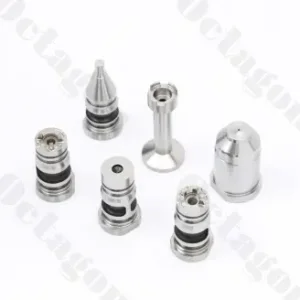
High-Quality China Mold Inserts: Core & Cavity Precision Injection Tooling
Explore Specs
Zero-Defect Quality Assurance
Metrology Protocol & Scientific Injection Molding Qualification
Automotive components demand absolute repeatability. Our metrology laboratory operates under climate-controlled conditions (20°C ± 0.5°C) to validate GD&T tolerances across every critical dimension.
Zeiss CMM 3D Coordinate Metrology
Multi-sensor scanning validates complex curvature profiles, true position tolerances, and hole concentricity down to sub-micron thresholds. Automated SPC data logging ensures complete lot traceability back to raw resin melt indices.
Thermal & Aging Environmental Chambers
Accelerated climatic aging testing (-50°C to +180°C), xenon arc UV photostability validation, and high-pressure salt spray corrosion testing protect against long-term embrittlement, warpage, and color degradation in field service.
Scientific Molding Cavity Pressure Profiling
Kistler piezoelectric in-cavity sensors monitor peak cavity pressure and gate-freeze timing in real time. The injection press automatically quarantines out-of-spec short shots or over-packed parts, ensuring zero-defect delivery.
Technical Sourcing FAQ
Frequently Asked Questions for Automotive Sourcing Directors
Clear, direct engineering answers to the primary qualification questions raised by global procurement and supplier development managers.
What tolerance limits can Octagon deliver for automotive interior and functional components?
We machine precision tooling inserts and steel cavity cores to a guaranteed tolerance of ±0.002 mm. For finished injection-molded automotive parts, critical dimensional tolerances typically conform to DIN 16742 TG3/TG4 standards (±0.03 mm to ±0.08 mm depending on resin shrink dynamics).
How does in-mold degating improve productivity in high-volume automotive production?
Our patented in-mold cutting systems utilize high-pressure hydraulic/pneumatic boosters (delivering up to 7,000 kgf instantaneous force) to shear the gate during the mold opening phase. This eliminates manual post-processing, removes stress witness marks, reduces total cycle time by 15-30%, and prevents gate vestige defects.
Do you support full PPAP Level 3 documentation for automotive programs?
Yes. We supply comprehensive Production Part Approval Process (PPAP) Level 3 documentation packages, including Design/Process FMEA, Control Plans, Process Flow Diagrams, Material Certifications (IMDS registration), Gage R&R studies, Capability Analyses (Cpk > 1.67), and full ballooned CMM dimensional inspection layouts.
How does Octagon assist with high-wear or abrasive engineering resins?
When running high glass-fiber formulations (e.g., PA66-GF50 or PPA), standard tool steels deteriorate rapidly. We employ premium hardened Swedish Assab Stavax ESR, ASSAB 88, or Boehler M390 steels heat-treated to HRC 54-58, augmented with specialized PVD TiAlN or DLC coatings to resist wash wear and abrasive pitting over 1,000,000 cycles.