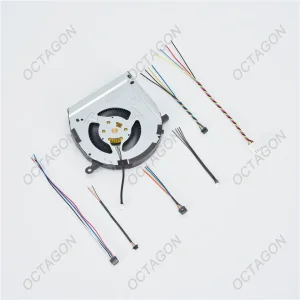
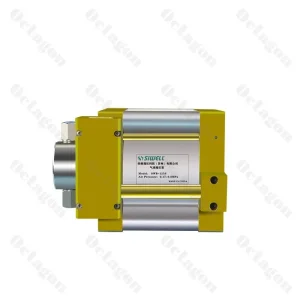
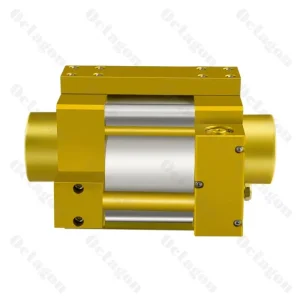
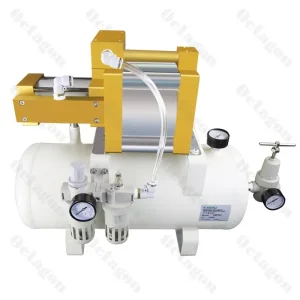
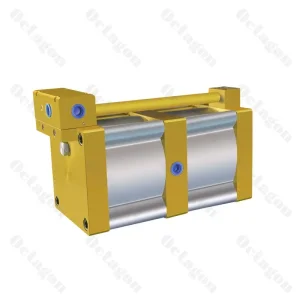
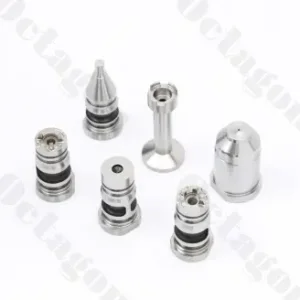
Featured Medical & Industrial Systems Primary Catalog
Deploying state-of-the-art in-mold automation, micro-tolerance stamping die parts, fluidics boost systems, and cleanroom grade electrical harness assemblies for high-integrity global manufacturing networks.
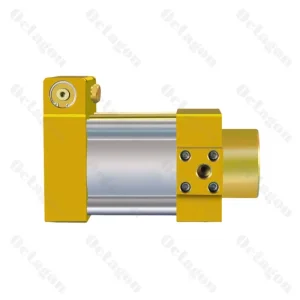
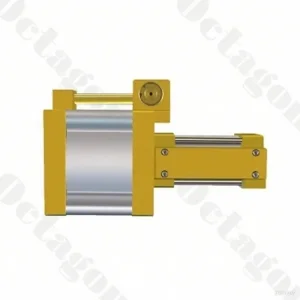
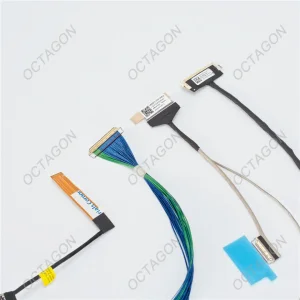
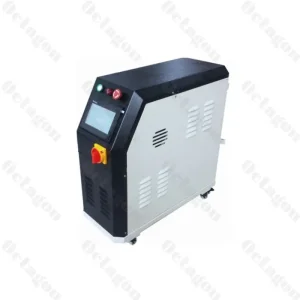
Global Medical Injection Mold Procurement Landscape
Critical vendor selection parameters, cleanroom manufacturing controls, and multi-cavity hot runner optimization protocols for tier-1 medical OEMs.
Stringent Biocompatibility & Polymer Science
Medical injection molding demands absolute mechanical, chemical, and physical inertness. Procurement executives require tooling capable of processing medical-grade engineering polymers including PEEK, Cyclic Olefin Copolymers (COC), Polycarbonate (PC), and LSR (Liquid Silicone Rubber) without polymer thermal degradation, particulate contamination, or plasticizer leaching.
Class 100,000 to Class 10,000 Cleanrooms
Global regulatory bodies (FDA 21 CFR Part 820, EU MDR 2017/745) stipulate closed-loop airborne particulate and bioburden monitoring during component molding. Tooling designs must incorporate self-lubricating guiding mechanisms, diamond-like carbon (DLC) coatings, and grease-free slide units to prevent airborne lubricant aerosolization during high-speed, multi-million cycle operation.
Ultra-Precision & Micro-Tolerance Stability
Microfluidic chips, dialysis membrane headers, and drug delivery auto-injectors require dimensional limits held within ±0.002 mm. Thermal management across 64-cavity or 128-cavity hot runner systems must achieve +/-0.5°C uniformity across all drops to eliminate volumetric fill discrepancies, differential shrinkage, and structural warpage.
Macro-Industry Solutions: Advanced Tooling Architectures
Comprehensive technical breakdown of engineering approaches solving high-speed injection challenges, cycle efficiency, and micro-flow hemodynamics.
| Engineering Domain | Technical Challenge | Advanced Tooling Architecture | Operational Yield Impact |
|---|---|---|---|
| In-Mold Cutting & Degating | Secondary trimming causes flash, particulate shedding, and costly handling. | High-pressure timing control cabinets (1,000–7,000 kgf) triggering pneumatic/hydraulic micro-actuators before mold parting. | Eliminates 100% of secondary deburring operations; achieves burr-free gate vestige (<0.03 mm). |
| Conformal Cooling Arrays | Uneven heat extraction in thick-walled needle hubs causes sinks and thermal distortion. | Direct Metal Laser Sintering (DMLS) 3D printed tool steel inserts with complex, flow-optimized cooling curves conforming to part geometry. | Reduces molding cycle times by 28% to 42%; guarantees uniform crystalline orientation. |
| Multi-Component Overmolding | Interfacial delamination between rigid polycarbonate housings and TPE/LSR sealing gaskets. | Servo-driven rotary platen and transfer-shuttle tooling with high-precision core-back valve positioning. | Achieves hermetic moisture and pressure seals compliant with IP68 waterproof ratings for medical devices. |
| Sub-Micron Surface Finishing | Hemolysis induced by surface roughness on blood-contacting diagnostic surfaces. | Robotic ultra-precision multi-axis high-speed milling and mirror EDM finishing reaching Ra 0.05–0.2 μm. | Minimizes platelet activation risk, protein fouling, and laminar drag within micro-fluidic diagnostic channels. |
Technology Roadmap: The Next Generation of Medical Tooling
How artificial intelligence, digital twins, and piezoelectric monitoring are driving medical injection molding into sub-micron autonomy.
Sensor-Fused Smart Tooling
Integration of cavity-surface piezoelectric quartz transducers and fiber-optic thermal probes providing real-time melt velocity, viscosity changes, and compression tracking directly into edge-computing processing units.
Digital Twin Simulation
Closed-loop synchronization between CAE rheological software and active injection presses. Predictive compensation dynamically tunes barrel pressure and clamping tonnage to negate ambient atmospheric and resin humidity shifts.
Micro-Optics & Nano-Fluidics
Direct laser ablation and chemical vapor micro-texturing directly onto mold cores to produce hydrophobic or anti-microbial patterned geometries at sub-micron scales without requiring additional chemical coatings.
Automated Self-Balancing Gates
Piezoelectric hot-runner valve needles capable of microsecond individual stroke adjustments, balancing 128 micro-cavities autonomously and eliminating balance discrepancies during variable-speed fills.
Regulatory Compliance & Localized Supply Assurance
Meeting rigorous global healthcare directives through full raw-material traceability, steel qualification certificates, and rigorous verification validation protocols.
IQ / OQ / PQ Validation Dossiers
Every medical mold supplied undergoes comprehensive Installation Qualification (IQ), Operational Qualification (OQ), and Performance Qualification (PQ). We deliver certified full dimensional CMM layout inspection records, gauge R&R statistical validation, and comprehensive tool maintenance SOP guidelines.
Global Dual-Track Engineering Support
Operating our engineering R&D and core precision design center in Taoyuan, Taiwan, paired with scalable advanced manufacturing facilities in mainland China, Octagon provides complete tooling lifecycle support across North America, Europe, and Asia-Pacific with seamless logistics handling and customs clearance compliance.
Tooling Steels Traceability
All cavity and core blocks are fabricated from certified European and Japanese ESR (Electroslag Remelted) tool steels such as Uddeholm Stavax ESR, Mirrax 40, or ASSAB 8407. Ultrasonic internal structure soundness testing reports and vacuum heat treatment vacuum records are archived for a mandatory minimum of 10 years.
Medical Injection Mold Engineering Expert Q&A
Direct answers to the most rigorous technical, quality control, and tooling procurement inquiries posed by global medical device design teams.
We utilize individual zone closed-loop PID thermal management combined with balanced manifold flow runners engineered through Moldflow simulation. Temperature variance across up to 128 drops is strictly confined to ≤ ±0.5°C, preventing cavity-to-cavity volumetric variation in thin-walled pipette tips and luer components.
We employ self-lubricating graphite-impregnated bronze bushings, ceramic-coated slide mechanisms, and physical PVD/DLC (Diamond-Like Carbon) coatings on all friction-bearing surfaces. This completely negates the requirement for fluid lubrication while sustaining continuous operation past 3 million dry cycles.
Our high-pressure timing control cabinets interface directly with the injection molding machine's EUROMAP 67 or SPI robotic interface. Hydraulic or pneumatic micro-actuators trim gates during the cooling phase precisely before the platen unclamps, delivering pristine, burr-free gate vestige without robotic handling.
We supply complete IQ/OQ dossiers containing: Certified Raw Material Mill Test Certificates (MTC), heat-treatment vacuum charts, 100% CMM dimensional layout verification reports, 2D/3D complete assembly CAD datasets, spare wear-parts lists, and cleanroom maintenance sanitation protocols.
Specialized Tooling Components & Fluidics Systems
Explore our secondary catalog of precision mold inserts, gas-liquid intensifiers, thermal harnesses, and automated process management systems.