Featured Components & Auxiliary Units
Precision Mold Assemblies & Industrial Systems
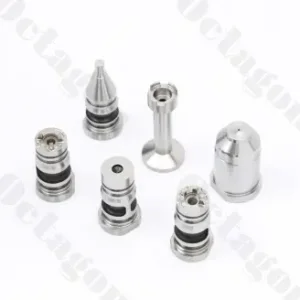
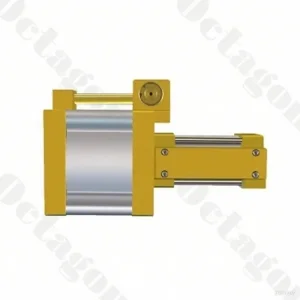
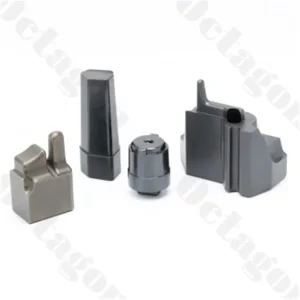
Explore high-performance gas-liquid intensifiers, custom cabling solutions, and structural mold components engineered for high-cadence automated production lines.
Engineering Perspective
Engineering Architecture of Pin Gate Injection Molding
A rigorous examination of fluid dynamics, thermal dissipation, and automatic gate separation in high-precision polymer production.
Hydraulic & Thermal Equilibrium
Pin gate injection molding (often integrated within three-plate tooling or hot-to-cold runner transitions) enables the melt stream to enter the cavity through a minuscule orifice (typically Ø 0.5 mm to Ø 1.5 mm). This induces localized shear heating, lowering resin viscosity instantly and ensuring uniform multi-cavity packing with minimal frozen-in stress.
Automatic Degating Dynamics
Unlike edge, fan, or tab gating requiring downstream manual trimming or CNC degating, pin gate systems mechanically sever during mold opening or through pneumatic/hydraulic in-mold cutting cylinders. The tensile rupture creates an almost imperceptible vestige (Ra < 0.2 μm, residual height < 0.05 mm), essential for class-A aesthetic surfaces.
In-Mold Degating Automation System
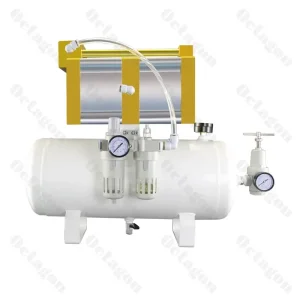
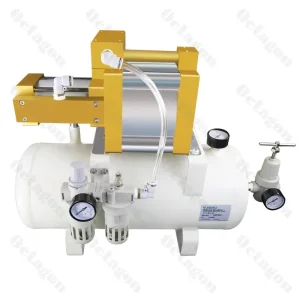
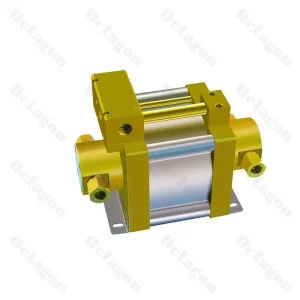
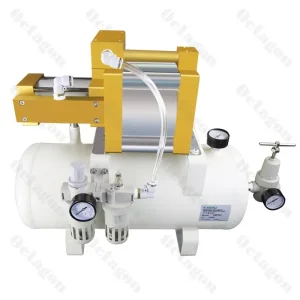
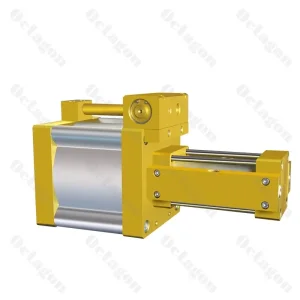
Octagon pairs precision pin gating tooling with proprietary in-mold cutting automation systems powered by high-pressure gas-liquid intensifier pumps. Generating between 1,000 to 7,000 kgf cutting force inside closed tooling, this setup cuts gates during mold dwell time, shaving 15% to 35% off the overall cycle time.
| Gating System Architecture | Gate Vestige Profile | Cycle Time Impact | Automation Compatibility | Mold Tooling Complexity |
|---|---|---|---|---|
| Custom Pin Gate (Octagon Standard) | Flush / Micro-dimple (< 0.05 mm) | Optimized (-20% to -35% with In-Mold Degating) | 100% Fully Automated Ejection | High (3-Plate or Valve-Gated Manifold) |
| Submarine / Tunnel Gate | Sub-surface shear scar | Moderate (dependent on ejection stroke) | Automatic separation on ejection | Medium (Angled machining) |
| Direct Sprue / Edge Gate | Protruding stub (requires manual cutting) | Slow (Adds secondary processing bottleneck) | Requires post-mold robotic trim station | Low to Medium (2-Plate) |
| Hydraulic Valve Gate (Hot Runner) | Nearly invisible flush shut-off | Fast (Zero runner scrap generation) | 100% Automated closed-loop control | Very High (Servo/Hydraulic actuator modules) |
Smart Manufacturing Ecosystem
China Industry 4.0: Supply Chain Agility & Scalability
Synthesizing Taiwanese micro-precision engineering discipline with the scale, raw material synergy, and rapid production velocity of mainland industrial clusters.
Digital Closed-Loop Tooling Fabrication
Octagon’s high-precision core and cavity inserts are shaped using high-speed 5-axis CNC machining, Makino mirror EDM, and Sodick wire-cutting. We maintain linear machining tolerances of ±0.002 mm and Ra 0.05 μm polish finishes, minimizing mold debugging cycles and optimizing thermal dissipation.
Integrated Auxiliary Systems Supply Chain
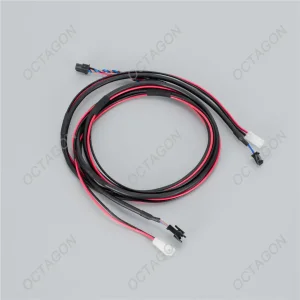
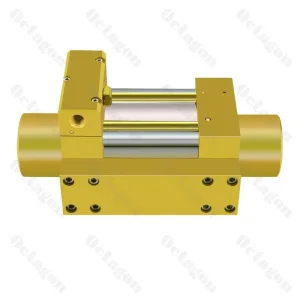
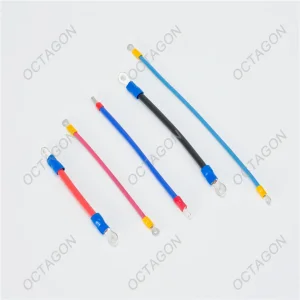
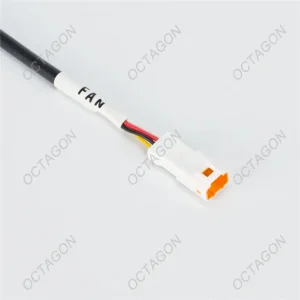
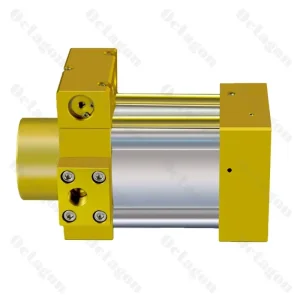
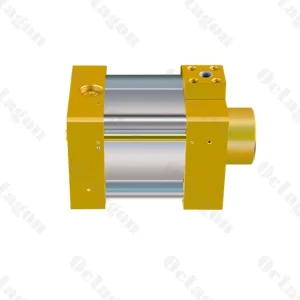
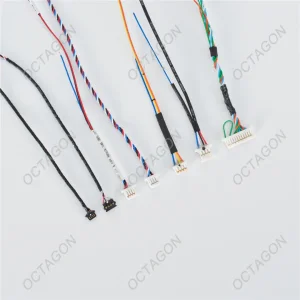
We do not merely supply bare mold steel. Octagon manufactures complete automation ecosystems: high-pressure gas-liquid booster pumps (SWB-125S, SWB-160D), pneumatic intensifiers (SWP-02/05/7.5), and specialized wiring harnesses (medical, energy storage, IP68 rated). Sourcing your tooling and actuation from a single origin guarantees plug-and-play assembly.
Supply Chain Redundancy & Quality Control
Operating under ISO-aligned quality protocols, every tooling insert, pump body, and harness assembly undergoes automated coordinate measuring machine (CMM) verification, non-destructive CT defect scanning, and multi-cycle endurance testing before leaving our export docks for any of our 60+ destination countries.
Procurement & Commercial Trends
Global Sourcing Demands & Industry Transformations
How Tier-1 automotive integrators, medical device OEMs, and industrial automation engineers evaluate custom pin gate tooling providers.
Legacy Procurement Challenges
- Excessive Post-Processing: Manual deburring and edge gate snipping lead to operator fatigue, uneven cosmetic marks, and high scrap rates.
- Cavity Imbalance: Inconsistent thermal dissipation in standard cold runners causes erratic shrinkage, sink marks, and dimensional drift across 16+ cavities.
- Vendor Fragmentation: Mold tooling, pneumatic boosters, and control cabinets sourced from disparate vendors cause commissioning delays and finger-pointing.
Octagon Value Proposition & Modern Trends
- Zero-Vestige Clean Separation: High-precision gate design paired with Octagon in-mold degating actuators eliminates secondary manual deburring completely.
- Moldflow-Optimized Balanced Feeds: Advanced rheological modeling balances runner layouts, reducing peak injection pressures by up to 25%.
- Single-Source System Architecture: Octagon delivers the mold tool, the high-pressure booster pump, and the wiring harnesses as a fully tested, unified turnkey bundle.
Application Engineering
Application Scenarios Across Critical Global Verticals
Delivering sub-micron dimensional precision and structural reliability where component failure is not an option.
Automotive Electronics & Sensors
Automotive radar housings, micro-actuators, and connector bodies require hermetic sealing and high dimensional repeatability. Pin gate injection tooling eliminates visible surface flaws, ensuring sensor clarity and IP67/IP68 environmental protection.
Medical Diagnostics & Microfluidics
Produced inside certified cleanrooms, disposable medical cassettes, lab-on-a-chip housings, and syringe components benefit from multi-pin balanced gating. This architecture eliminates particulate generation caused by post-mold mechanical shearing.
Consumer Smart Devices & Acoustic Audio
Acoustic speaker housings, earbuds, and camera bezels require flawless cosmetics. Octagon pin gate tooling positions gate entry points on internal sub-features or micro-recesses, leaving external touch points completely blemish-free.
Energy Storage Systems (BMS Modules)
High-voltage battery module isolators and terminal harnesses demand flame-retardant polymers (UL94 V-0). Our pin gate tooling controls weld lines and molecular orientation, preventing dielectric breakdown under high-stress operating environments.
Heavy Machinery Automation & Control Cabinets
Reinforced structural housings and cable guides running in industrial PLC environments require engineered polyamides (PA66-GF30). Pin gating optimizes glass fiber alignment, preventing differential shrinkage and part warping over extended thermal cycles.
Technical Due Diligence
Frequently Asked Questions by Sourcing & Tooling Engineers
Authoritative answers addressing engineering tolerances, runner architectures, lead times, and global export compliance.
Q: What is the difference between pin gate injection molding and edge gate systems?
Pin gates introduce polymer melt directly perpendicular to the mold parting plane via a tiny pinpoint entry, breaking automatically during tool opening or through in-mold cutting cylinders. Edge gates enter laterally along the part perimeter, leaving a prominent scar that demands secondary manual or robotic trimming stations.
Q: How does Octagon’s In-Mold Degating system accelerate cycle efficiency?
Our patented in-mold cutting timing cabinet drives dedicated cutting pins with 1,000–7,000 kgf hydraulic force while the mold remains clamped under dwell. Gates are severed cleanly before plastic freezing completes. This eliminates secondary trimming stations, cuts labor overhead, and shaves 15% to 35% off the overall cycle time.
Q: What tooling steel grades and machining tolerances do you support?
We machine premium imported tool steels (Assab S136, NAK80, H13, DC53, and 1.2344 ESR) with hardened core/cavity inserts treated to HRC 48–54. Using Makino CNC and Sodick EDM centers, we maintain dimensional tolerances of ±0.002 mm and achieve mirror surface finishes of Ra 0.05–0.2 μm.
Q: Can pin gate tooling process fiber-reinforced resins without gate freezing?
Yes. We use advanced Moldflow simulations to model shear heating, fiber alignment, and gate freeze-off timing. By combining beryllium-copper gate inserts with localized hot-tip nozzles, we process 30% to 50% glass-filled polyamides and PBT without nozzle clogging or gate drool.
Q: What documentation and quality protocols accompany international shipments?
Every tooling set or auxiliary assembly ships with full raw material mill certificates, heat-treatment hardness verification, full-dimension CMM inspection reports, 2D/3D final CAD schematics, and video documentation from pre-shipment mold trial runs (T0/T1).
Q: How does Octagon coordinate Taiwan engineering with mainland production?
Headquartered in Taoyuan, Taiwan, our senior engineering council directs all DFM reviews, rheological Moldflow analyses, and quality auditing. Production runs within our mainland smart facilities, providing global buyers with Taiwan-standard precision backed by the cost and capacity advantages of mainland manufacturing.
Product Catalog Continued
Integrated Automation & Cabling Hardware
Explore auxiliary gas-liquid boosters, high-voltage battery harness systems, and custom waterproof wiring assemblies engineered to optimize industrial production lines.