
Production Series Phase I
Featured Pneumatic, Actuation & Connection Assemblies
Standard and custom-engineered pneumatic components, high-pressure boosting units, and precision harness assemblies designed for uninterrupted manufacturing operations.
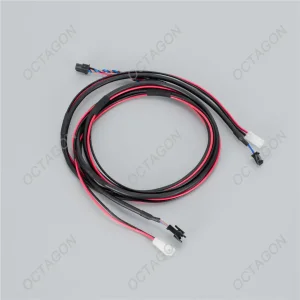
High-Quality China Octagon Speaker Wire Harness - High-Quality Audio Solutions from Reliable Suppliers and Factory Exporters, Service
View Product Specs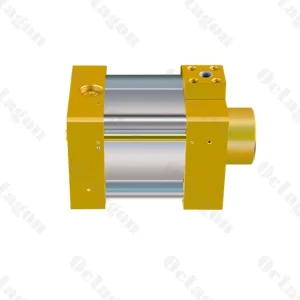
High-Quality SWB-125S Single-Drive Gas-Liquid Booster Pump | China Factory Suppliers for Efficient Pump Solutions Factories, Product
View Product Specs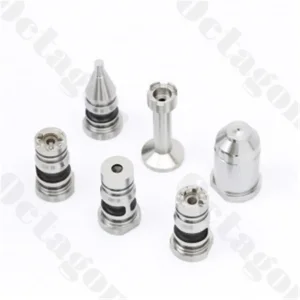
CE Certification China Sprue Bushing Suppliers: Essential Injection Mold Components from a Leading Factory Factory, Factories
View Product Specs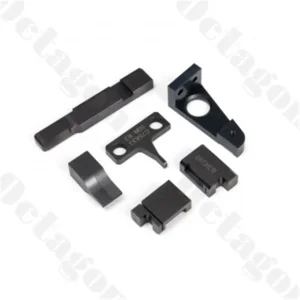
CE Certification Precision Stamping Die Components from China Suppliers: Essential Factory Tools for High-Quality Manufacturing Manufacturer, Factory
View Product Specs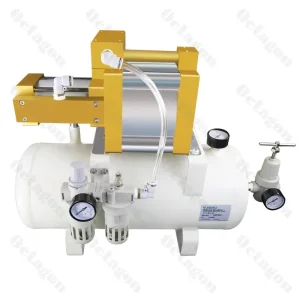
High-Quality China Octagon SWP-7.5-G Air Booster Pump - High Efficiency Pressure Enhancement from Trusted Suppliers & Factory Suppliers, Product
View Product Specs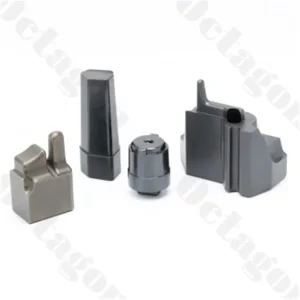
ODM China Die-Casting Mold Non-Standard Parts Processing | Trusted Suppliers & Factory Solutions Suppliers, Service
View Product Specs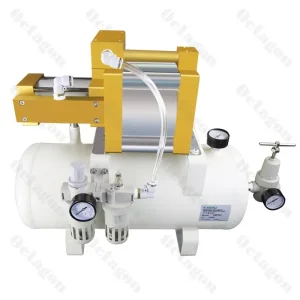
CE Certification SWP-05-G Air Booster Pump - High Efficiency Solution for Compressed Air Systems from China Suppliers and Factory Factory, Products
View Product Specs
Industry Evolution & Macro Strategy
The Technological Shift in Pneumatic Safety & Actuation Dynamics
How modern automation environments demand high-speed relief, predictive cavitation prevention, and integrated electromechanical-pneumatic closed loops.
Sub-Millisecond Transient Relief
Traditional pneumatic relief systems often suffer from hysteresis and pressure overshoot during sudden stall cycles. Modern factories require micro-honed poppets and calibrated disc geometries that exhaust overpressure within milliseconds, shielding expensive in-mold tooling from catastrophic hydraulic and pneumatic shockwaves.
- Zero-leakage soft-seat sealing interfaces
- Friction-optimized polymer guide rings
In-Mold Hydraulic-Pneumatic Fusion
High-speed injection molding lines demand that gate shearing and degating occur while the mold is clamped shut. Pneumatic safety valves integrated into booster circuits ensure precise clamping force regulation between 1,000 and 7,000 kgf without compromising tool alignment or causing flash defects.
- Synchronized dual-stage timing loops
- Eliminates secondary manual cutting phases
Predictive Flow & Cycle Analytics
Industrial IoT integration transforms passive mechanical safety valves into intelligent monitoring nodes. By sampling exhaust air pressure drops and cycle count metrics, factory engineers receive advance warning regarding spring fatigue, elastomer degradation, and upstream pressure anomalies before machine downtime strikes.
- Real-time pressure differential sensing
- Continuous cycle telemetry feedback
Global Procurement Specifications
What Tier-1 Procurement Teams Demand from Custom Safety Valve Factories
When selecting OEM/ODM manufacturing partners for pneumatic and tooling assemblies, multinational procurement directors focus on four non-negotiable vectors.
Material Integrity & Traceability
Full mill test certificates (EN 10204 3.1) verify chemical composition, heat treatment batches, and tensile parameters for brass, 304/316 stainless steels, and anodized aircraft alloys under continuous dynamic pressure.
Micro-Dimensional Tolerancing
Pneumatic seating components require CNC Swiss-turning and cylindrical grinding down to ±0.002 mm, paired with surface mirror finishes (Ra 0.05–0.2 μm) to prevent micro-air leakage and premature seal abrasion.
Multi-Jurisdiction Compliance
Cross-border validation requires simultaneous adherence to CE Machinery Directive (2006/42/EC), Pressure Equipment Directive (PED 2014/68/EU), RoHS, REACH, and UL94-V0 flammability ratings on associated electrical harnesses.
Hybrid Engineering Agility
Combining Taiwanese engineering governance and toolroom discipline with scalable manufacturing facilities across mainland China delivers competitive unit economics with uncompromised metallurgical reliability.
2008
Year Founded & Engineering Rooted
45+
Patents in Pneumatic & Mold Innovation
60+
Countries Actively Served Worldwide
20k+
Installed Industrial Partnerships
Technology Roadmap
Future-Proofing Pneumatic Safety: 2025–2030 Roadmap
Engineering pathways driving the integration of low-friction coatings, smart sensor hubs, and eco-friendly compressed gas consumption.
Phase 01 · Current Standard
Dynamic DLC Coatings
Diamond-like carbon (DLC) surface modification on valve spools and relief plungers, cutting frictional drag by 40% and allowing lube-free pneumatic operation in ultra-clean medical and optical molding plants.
Phase 02 · Integration
Wireless Valve Telemetry
Miniaturized piezoelectric pressure transmitters integrated directly into the valve manifold, broadcasting micro-vibration and exhaust curve profiles via IO-Link Wireless to central SCADA engines.
Phase 03 · Energy Optimization
Air Recuperation Logic
Regenerative back-pressure routing mechanisms that trap venting pneumatic energy during non-emergency relief cycles, returning compressed volumes back to secondary holding chambers to cut power usage.
Phase 04 · Autonomous Calibration
Self-Compensating Seats
Thermally adaptive memory-alloy internal cores that adjust spring pre-load dynamically as ambient ambient molding temperatures shift from 15°C to 85°C, ensuring crack-pressure accuracy across four seasons.
Compliance & Traceability
Localized Regulatory Assurance & Full-Spectrum Quality Protocol
How Octagon implements rigorous, end-to-end verification workflows to eliminate overseas supply chain liability.
100% Helium Mass Spectrometry
To safeguard critical medical and energy-storage pneumatic setups, every customized safety relief valve batch undergoes trace-gas helium leak detection testing down to 1×10⁻⁶ mbar·l/s, completely bypassing inadequate soapy water bath tests.
Complete DFM & 3D CMM Reports
Prior to metal removal, our senior design team executes comprehensive Moldflow and finite element stress analysis. Completed parts are systematically validated using Zeiss 3D coordinate measuring machines (CMM) and optical non-contact profile projectors.
Export-Ready Custom Logistics
From rust-inhibiting VCI vacuum encapsulation to certified IPPC ISPM-15 wooden packaging and seamless customs HS-code harmonization, our logistics division ensures smooth import processing throughout the EU, North America, and ASEAN economies.
Knowledge Base & Technical FAQ
Frequently Asked Technical & Sourcing Questions
Direct answers to common engineering questions concerning custom pneumatic safety relief valves, booster pumps, and mold automation.
What are the primary functional differences between custom pneumatic safety valves and standard relief valves?
Standard pneumatic relief valves are mass-produced with generic spring tensions designed for wide-band, non-critical pressure regulation. Custom pneumatic safety valves, on the other hand, are engineered to strict cracking tolerances (often ±2% or tighter), application-specific flow coefficients (Cv values), custom thread standards (NPT, BSPP, metric ports), and specific seal compositions (FKM, EPDM, PTFE) adapted to high-cycle automation, corrosive media, or high-pressure gas-liquid booster installations.
How does Octagon coordinate manufacturing between Taiwan headquarters and mainland China factories?
Octagon Precision Mold Co., Ltd. operates a dual-hub model. Corporate leadership, precision R&D, complex toolroom engineering, and core quality governance are led from our Taoyuan, Taiwan headquarters. High-volume manufacturing, wire harness assembly, die-casting, and stamping production lines are housed in scalable facilities in mainland China. This synergy allows global clients to benefit from high-precision engineering discipline alongside competitive production volumes.
What documentation is supplied with custom pneumatic components and mold assemblies?
Every production run is accompanied by a full quality documentation dossier. This includes raw material mill test certificates (spectrometric chemical breakdown and hardness), full 3D CMM inspection sheets verifying critical dimensions down to ±0.002 mm, surface roughness profilometer readouts, pressure hold and leak decay test logs, and Certificate of Conformance (CoC) documents signed by quality assurance managers.
Can Octagon support low-volume prototype builds before authorizing multi-cavity tooling?
Yes. We routinely support new product introduction (NPI) phases. Our internal toolroom can machine functional pilot units using CNC wire-EDM, Swiss screw machines, and rapid 5-axis machining centers. This enables clients to execute physical burst tests, flow rate validation, and in-mold trial runs prior to commissioning hard tooling for high-volume automated manufacturing.
How do in-mold automation systems interface with existing injection molding machines?
Octagon's high-pressure timing control cabinets interface directly with standard injection molding machines via standard Euromap or SPI signal interfaces. The cabinet receives injection signal triggers, manages dual-stage timing parameters on its touch HMI, and commands gas-liquid or pneumatic boosters to drive internal shear pins with 1,000 to 7,000 kgf precisely before mold opening.
Production Series Phase II
High-Pressure Boosters & Precision Pneumatic Systems
Field-tested booster assemblies, dual-stage pneumatic pumps, and robust industrial pressure equipment designed for high-cycle endurance.
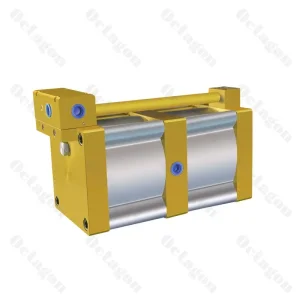
Custom OCTAGON SWP-02B Air Booster Pump: Quality and Reliable Performance from China Suppliers and Factory Manufacturer, Supplier
View Product Specs
OEM China SWB-125S Single-Drive Gas-Liquid Booster Pump - Reliable Suppliers & Factory for Efficient Performance Manufacturers, Service
View Product Specs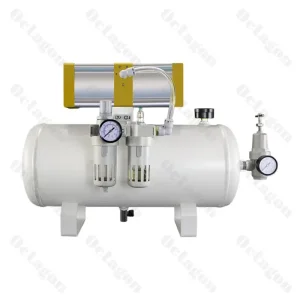
CE Certification Octagon SWP-02A-G Air Booster System - Premium Quality from China Suppliers and Factory for Industrial Applications Manufacturers, Product
View Product Specs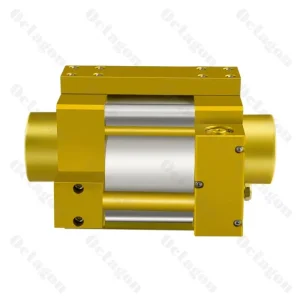
Custom China Octagon SWB - 125D Pump: High-Performance Gas-Liquid Booster from Trusted Suppliers and Factory Manufacturers, Product
View Product Specs
OEM Octagon SWP-02A-G Air Booster System: China Suppliers' Premium Factory Solution for High Precision Pneumatic Technology Product, Service
View Product Specs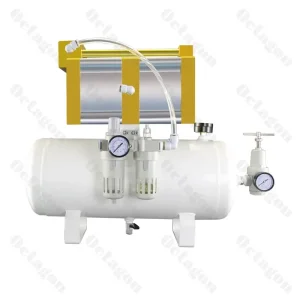
High-Quality Octagon SWP-02B-G Pneumatic Pump: High-Quality China Suppliers & Factory for Industrial Excellence Factory, Product
View Product Specs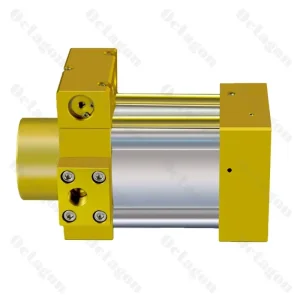
CE Certification China Octagon SWB-80S Series Gas-Liquid Booster Pump - Top Suppliers and Factory for Efficient Solutions Exporter, Service
View Product Specs