
Precision Injection Tooling & Fluid Boost Solutions
Explore high-cavitation core inserts, specialized cabling harnesses, and industrial booster units manufactured to rigorous geometric tolerances.
Global Landscape of Precision Injection Molding Core & Cavity Manufacturing
A macroeconomic and technical appraisal of high-cavitation tooling, multi-axis micro-machining, and global supply shifts.
Micro-Cavitation Demands
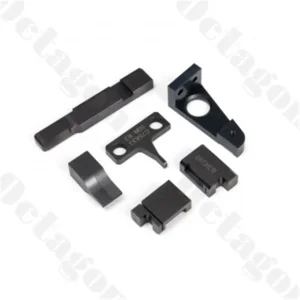
The contemporary polymer processing industry is experiencing rapid miniaturization across automotive electronics, life sciences, and consumer optics. Injection molding core and cavity components represent the actual mechanical interface where molten resin solidifies under extreme pressures (often exceeding 1,200 to 2,000 bar). Micro-cavity integrity dictates final part dimensional tolerances, volumetric shrink compensation, and gate shear rates.
Macroeconomic Pressures & TCO
Global original equipment manufacturers (OEMs) and Tier-1 toolmakers face intense cost headwinds. High-cavitation molds (ranging from 32 to 128 cavities) require total interchangeability of cores and cavities. In historical setups, replacement of a worn core required custom hand-fitting; modern advanced facilities produce interchangeable inserts via datum-aligned 5-axis machining, slashing downtime and reducing Total Cost of Ownership (TCO) by up to 38%.
Thermal Equilibrium Engineering
Thermal cycling inside the mold accounts for over 70% of the entire molding cycle time. Modern core and cavity fabrication has evolved beyond basic drilled water lines into multi-zone thermal management. Tool designers incorporate vacuum-brazed copper beryllium cores and DMLS additive conformal cooling paths, mitigating localized hot spots, preventing warp, and shaving 4 to 12 seconds per injection cycle.
Core & Cavity Metallurgy, Heat Treatment & Coatings
Selecting appropriate steel grades based on abrasive filler content, polymer corrosiveness, and expected tool life cycle.
| Steel Grade / Standard | Hardness (HRC) | Corrosion & Wear Resistance | Thermal Conductivity | Target Applications |
|---|---|---|---|---|
| Böhler M390 / S136 ESR Premium Martensitic Stainless |
52 – 58 HRC | Exceptional (High Cr content) | 16.5 W/(m·K) | Medical diagnostics, optical lenses, corrosive PVC/fluoropolymer resins |
| AISI H13 / 1.2344 ESR Hot-Work Chromium Steel |
48 – 54 HRC | High thermal fatigue resistance | 28.6 W/(m·K) | Large automotive bezels, structural under-hood parts, die-casting dies |
| NAK80 / P21 Modified Pre-hardened Precipitation Steel |
37 – 43 HRC | Moderate wear, mirror polishable | 41.3 W/(m·K) | Consumer electronic housings, display bezels, transparent acrylic components |
| C17200 Beryllium Copper High-Conductivity Alloy Core |
36 – 42 HRC | Lower wear, unmatched heat pull | 105 – 130 W/(m·K) | Hot runner gate bushings, deep core pins, rapid-cooling thread inserts |
| Titanium Nitride (TiN) / DLC Surface PVD Conversion Coating |
2,200 – 3,500 HV | Superlative wear, friction coef. <0.1 | Surface Barrier | Glass-filled polyamide (PA66-GF50), sliding shut-offs, complex core lifters |
Chinese Precision Tooling Ecosystem & Manufacturing Velocity
Combining Taiwanese process discipline with mainland China's comprehensive industrial supply chains for rapid lead times and high throughput.
Clustered Supply Synergies
In modern manufacturing centers like the Greater Bay Area and Eastern coastal regions, core and cavity production benefits from deep localized supply chains. Within a 30-minute radius, toolmakers source certified Bohler/Assab tool steels, world-class vacuum heat treatment plants, sub-contract multi-axis Sodick and Makino Wire EDM cutting, and specialized PVD nano-coating lines, condensing a traditional 8-week production schedule down to 14–18 days.
Continuous Digital Production (Lights-Out CNC)
Leading Chinese mold facilities utilize automated robotic pallet changers (e.g., Erowa, System 3R) operating 24/7 in temperature-controlled environments maintained at 20 ± 0.5°C. High-speed 5-axis milling spindles operating at 42,000 RPM run unattended overnight, achieving dimensional repeat accuracy of ±0.002 mm on complex 3D curved surfaces without secondary manual benchwork.
Strict Metrology & Quality Traceability
Process verification utilizes Zeiss and Hexagon Coordinate Measuring Machines (CMM), optical white-light interferometry, and high-resolution contour measuring systems. Every individual core pin, cavity plate, and slider block is engraved with 2D DataMatrix serial codes, pairing each part with steel mill certificates, heat-treatment vacuum charts, and 100% full-dimension FAIR inspection reports.
High-Precision Applications: From Automotive HUD to Life Sciences
Engineered core and cavity assemblies built to withstand demanding molding conditions across diverse end-use sectors.
Automotive Precision Lighting & HUD
Optical core and cavity inserts require diamond-turned sub-micron finishes (Ra 0.05 μm) for free-form reflection mirrors, HUD combiner units, and light guide pillars. The tooling must withstand aggressive, long-chain polymers like PMMA and Polycarbonate (PC) without surface degradation or microscopic micro-waviness that impairs luminous refraction.
Microfluidic & Medical Diagnostic Cartridges
Molding lab-on-a-chip assemblies and blood collection chambers demands channel geometry tolerances tighter than ±0.003 mm. Using vacuum-degassed S136 stainless steel inserts and zero-draft polishing, our cores prevent cellular shear damage and eliminate the need for chemical release agents, ensuring Class 100,000 cleanroom compliance.
High-Density Pin Pitch Electronic Connectors
Micro-pitch Board-to-Board (BTB) connectors with contact spacing as low as 0.35 mm require core pin blades made from hardened powdered metal (e.g., ASP23) capable of repeated thermal cycles without deflection. Mold inserts feature balanced venting margins of 0.008 mm to prevent burn marks while avoiding flash on liquid crystal polymer (LCP) resins.
Thin-Wall Packaging & High-Cavitation Caps
Multi-cavity beverage packaging caps require sustained cycle times under 3.5 seconds. Integrated core components utilize internal beryllium copper bubbler cores and balanced spiral conformal water cooling channels, partnered with automated in-mold degating valves to ensure maximum yield across 96-cavity platforms.
Emerging Tooling Trends: Conformal Channels, In-Mold Degating & Industry 4.0
How forward-looking mold engineering integrates additive direct metal printing, pneumatic automation, and cavity sensor arrays.
Additive Conformal Cooling (DMLS)
Direct Metal Laser Sintering (DMLS) using 1.2709 maraging steel enables the generation of complex cooling channels that curve around complex geometry at a uniform 1.5–2.0 mm distance from the molding surface. By eliminating thermal blind spots common in conventional cross-drilled channels, conformal inserts balance heat transfer across thick-and-thin ribs, eliminating sink marks and slashing cooling durations by up to 45%.
In-Mold Cutting & Degating Automation
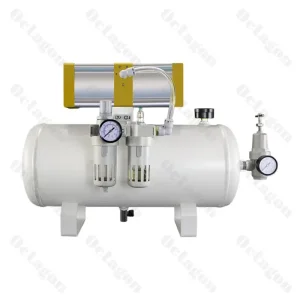
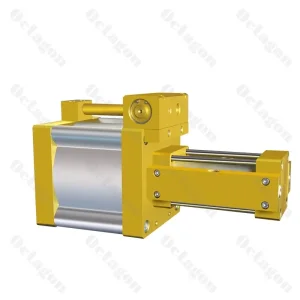
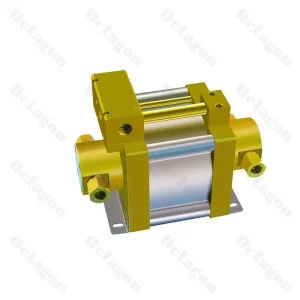
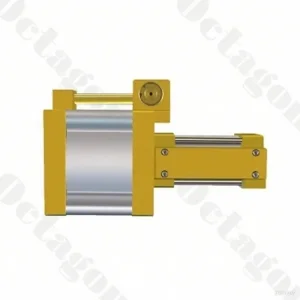
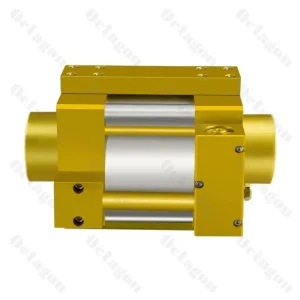
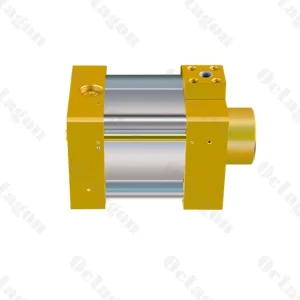
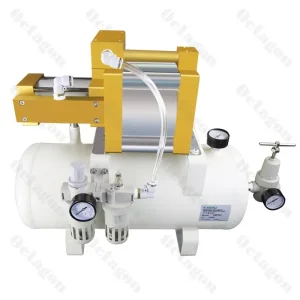
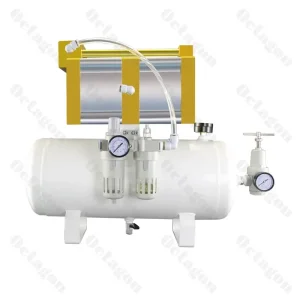
Manual gate trimming increases labor overhead, human variance, and aesthetic defects. By combining specialized core gate blades with pneumatic-hydraulic boost systems (such as the Octagon SWP-02A and SWP-7.5 series), the runner gate is sheared clean inside the mold cavity before clamp release. The severed plastic part drops into clean packaging chutes with zero vestige, eliminating secondary CNC trimming or human manipulation.
IoT Cavity Pressure & Temperature Telemetry
Modern injection tool sets integrate miniature piezoelectric quartz transducers embedded directly behind the cavity face or ejector pins. Real-time viscosity and pressure curves alert controllers to adjust packing pressure before short shots or flash occur. This microsecond-level feedback loop produces true zero-defect operational control in automotive sensor and implantable drug-delivery manufacturing.
Enterprise RFQ Blueprint for Core & Cavity Tooling Sourcing
A structured technical evaluation criteria to verify precision suppliers, mitigate overseas sourcing risks, and guarantee production longevity.
1. Material Authenticity & Spectroscopy
Verify that raw steel blocks include chemical composition verification via optical emission spectrometry. Ensure vacuum ESR (Electro-Slag Remelt) processing is documented to avoid non-metallic inclusions that create micro-pitting during high-polish Ra 0.05 μm processing.
2. Dimensional Datum & Datum Schemes
Specify unified datum references across core, cavity, and mold base plates. Ensure interchangeable core inserts adhere to a true position tolerance of ±0.0025 mm, allowing drop-in field replacements across tool sets without hand fitting.
3. Tooling Kinematics & Venting Margins
Audit runner and cavity venting strategies before cutting steel. For resins like PA66-GF30 or PEEK, verify gas vent depths of 0.010 mm to 0.015 mm to prevent die dieseling and combustion burn while completely avoiding flash.
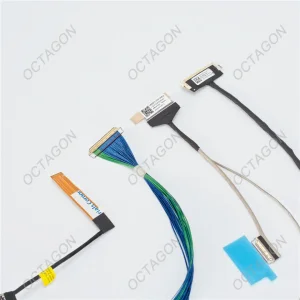
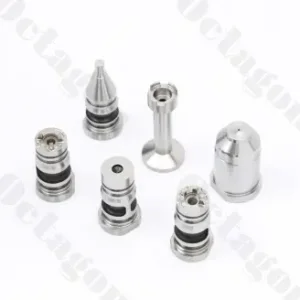
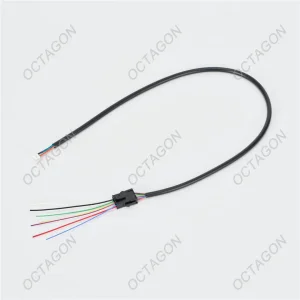
Specialized Tooling Components, Booster Pumps & Wire Harnesses
Direct manufacturing delivery on mold inserts, high-pressure intensifiers, and ruggedized equipment wiring systems.
Frequently Asked Questions on Core & Cavity Tooling
Comprehensive engineering insights into mold steel longevity, tolerance control, and pneumatic assist automation.