
Featured Engineering Booster Systems & Wire Solutions
Precision-engineered booster pumps, specialized cable assemblies, and automated pneumatic controllers manufactured for continuous duty in modern injection molding and die-casting facilities.
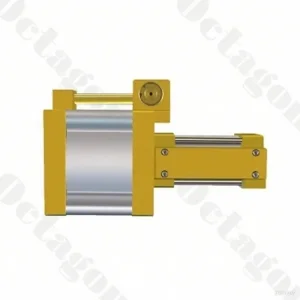
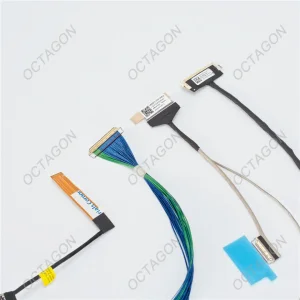
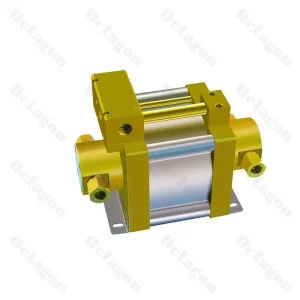
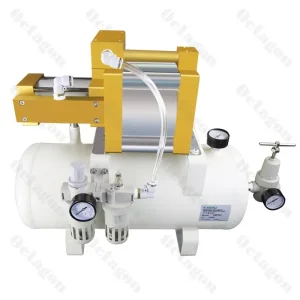
The Paradigm Shift in Global Injection Molding & Auxiliary Automation
Modern polymer processing has transitioned from commoditized volumetric injection to micron-level, closed-loop intelligent servo-hydraulic and all-electric ecosystems.
Dynamic Energy Optimization
Traditional fixed-displacement hydraulic pumps historically dissipated up to 45% of total input energy across throttling valves as excess heat. Contemporary high-grade injection molding machinery incorporates permanent-magnet synchronous servomotors coupled with internal gear pumps.
- Power consumption throttled to zero during dwell
- Oil reservoir thermal degradation minimized
- Cooling water requirements reduced by 60%
In-Mold Process Integration
Secondary degating operations create particulate contamination, surface blemishes, and substantial labor bottlenecks. Incorporating Octagon's in-mold cutting automation directly alongside injection molding machine controllers yields seamless degating prior to platen opening.
- Cycle time compression of 15% to 35%
- Flawless gate shearing at molten transition point
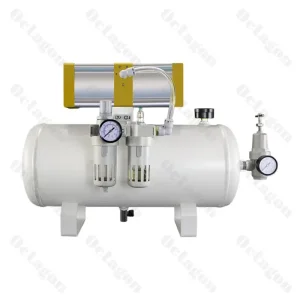
- Direct pneumatic boost integration via SWP units
Deterministic IoT Micro-Telemetry
Modern injection production mandates real-time cavity pressure profiling and platen parallelism feedback. Utilizing real-time industrial Ethernet (EtherCAT, Profinet, and OPC UA), machine sensors communicate millisecond-level melt viscosity shifts to auto-adjust injection profiles.
- Closed-loop backpressure regulation
- Dynamic screw position sensing down to 0.01 mm
- Predictive maintenance on hydraulic packings
"The actual value of an injection molding production line is no longer measured solely by raw clamping tonnage. It is determined by the harmonious synergy between platen rigidity, injection pressure repeatability, thermal control, and auxiliary automation systems such as high-ratio pressure boosters and in-mold degating units." — Octagon Precision Engineering Board
Technology Roadmap: Mechanical Architectures Compared
A granular, data-driven comparison of standard hydraulic, advanced servo-hydraulic, and all-electric injection molding machinery architectures across essential manufacturing criteria.
| Evaluation Parameter | Standard Hydraulic Machine | Servo-Hydraulic Machine | All-Electric Machine | Octagon Augmented Hybrid Setup |
|---|---|---|---|---|
| Energy Consumption Index | Baseline (0.55 - 0.85 kWh/kg) | -40% to -55% (0.32 - 0.45 kWh/kg) | -60% to -75% (0.22 - 0.35 kWh/kg) | Optimized Auxiliaries + Servo Base |
| Injection Velocity Precision | ±2.5 mm/s (Proportional Valve) | ±0.8 mm/s (Servo Closed-Loop) | ±0.1 mm/s (Direct Ball-Screw Drive) | Sub-millimeter closed loop via linear encoder |
| Clamping Force Range | 50T – 4,000T+ | 50T – 3,500T | 30T – 1,000T (Limited High-Tonnage) | Flexible pairing across all tonnages |
| In-Mold Cutting Capability | Requires complex external circuit | Standard core-pull circuit | Requires auxiliary pneumatic booster | Native High-Pressure Timing Cabinet |
| Cycle Repeatability (Weight) | > 0.4% variation | < 0.2% variation | < 0.08% variation | < 0.1% with continuous booster stabilization |
| Initial Capital Investment | Low baseline | Moderate (+20% to +35%) | High (+70% to +120%) | High ROI (Tier-1 value at competitive cost) |
Mission-Critical Localized Application Scenarios
Across global industrial manufacturing hubs, specific operating conditions demand distinct machinery specifications, pneumatic boost solutions, and ultra-durable cabling harnesses.
Automotive Precision Components
Automotive interiors, lighting lenses (PMMA/PC), and under-the-hood structural modules require zero warpage, low birefringence, and minimal stress concentration. Octagon's mold inserts and pressure boosters enable micro-metering during packing and instantaneous in-mold gate shearing for class-A exterior finishes.
- Deflection-free multi-cavity hot runners
- Engine-compartment heat-resistant PPA molding
- Zero-particulate in-mold cutting
Medical Diagnostics & Fluidics
Cleanroom environments (ISO Class 7 and Class 8) strictly forbid hydraulic fluid aerosol contamination. Medical syringe barrels, microfluidic cassettes, and dialyzer housings necessitate electric injection axes paired with stainless pneumatic booster systems such as Octagon's SWP-05-G and SWP-02 series.
- Food/medical-grade air intensification
- Traceable lot-level inspection standards
- Optical-grade cavity finishes down to Ra 0.05 μm
Electronics & Energy Storage (ESS)
Thin-wall smartphone frames, high-density backplane connectors, and energy storage battery module housings demand exceptionally fast fill rates (>500 mm/s) to prevent frozen skins. Our specialized wire harnesses and cabinet wiring support continuous signal integrity under high EMI conditions.
- Multi-pin insert overmolding resilience
- Shielded LVDS & high-definition display harnesses
- High dielectric withstand voltage properties
China Supply Chain Resilience, Engineering Depth & Scale
Combining Taiwanese precision engineering management with mainland China's comprehensive industrial supply chain clusters provides unparalleled lead-time compression and cost advantages.
Dense Upstream Ecosystem
Within a 50-kilometer radius of our manufacturing clusters, our facilities access certified forged alloy tie-bars, bimetallic nitrided barrels, high-grade spheroidal graphite iron platens, and Japanese/German CNC multi-axis milling infrastructure. This clustering eliminates inter-provincial delays.
Lead Time Compression
While European machinery OEMs average 16 to 28 weeks for engineered-to-order builds, our lean modular framework compresses standard builds to 4–6 weeks and customized multi-axis systems to 8–10 weeks, ensuring customers achieve aggressive time-to-market milestones.
End-to-End Quality Verifiability
Every critical component undergoes spectral chemical analysis, ultrasonic flaw detection, three-coordinate CMM dimensional checks, and a continuous 72-hour dry-cycle factory acceptance test (FAT) prior to crating and export customs clearance.
Compliance Engineering & Global Operational Assurance
Exporting heavy industrial machinery and auxiliary systems demands strict adherence to destination-market electrical, mechanical, and environmental statutory frameworks.
CE Machinery Directive (2006/42/EC)
Complete compliance with EN 201 safety requirements for injection molding machines. Dual-channel monitored safety gate interlocks, hydraulic safety drop valves, and fail-safe safety relays prevent clamping platen actuation while operator guards are breached.
North American Standards (UL 508A / ANSI)
Our control panels, wiring harness terminations, and electrical enclosures comply with ANSI/SPI B15.1 and NFPA 79 industrial electrical standards. Standard industrial enclosures feature short-circuit current ratings (SCCR) calibrated to client plant utility guidelines.
Localized Field Service Network
Supported by our headquarters in Taoyuan, Taiwan, and distribution channels across 60+ countries, technical clients receive 24/7 remote diagnostics, Augmented Reality (AR) field-servicing assistance, and rapid air-freight dispatch of replacement valves, seals, and wire harnesses.
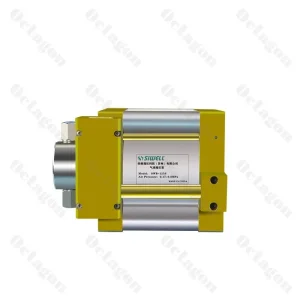
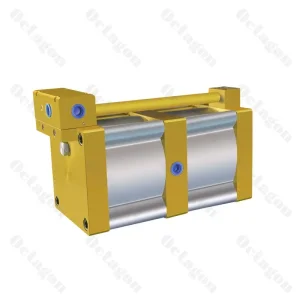
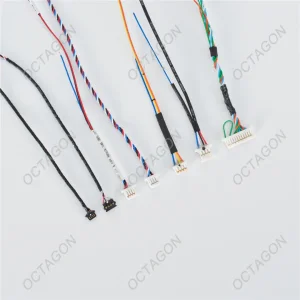
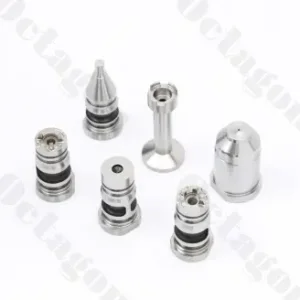
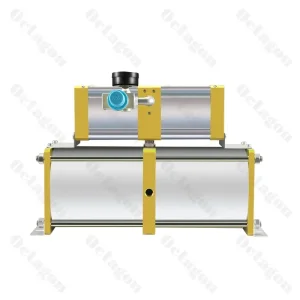
Industrial Booster Pumps, Mold Inserts & Custom Harnesses
Explore our complementary lineup of gas-liquid intensifiers, CE-certified air boosters, injection mold inserts, and custom industrial wiring assemblies built to extreme tolerances.
Frequently Asked Questions: Global Buyer Due Diligence
Clear, authoritative technical answers addressing clamping dynamics, screw geometry, in-mold cutting automation integration, export logistics, and OEM qualification.
Required clamping tonnage equals the total projected area of the molded part (including runners and gates) multiplied by the cavity pressure constant of the specific resin (ranging from 300 to 500 kg/cm² for polyolefins, up to 700 to 1,000 kg/cm² for engineering resins such as PC or PEEK), multiplied by an engineering safety margin of 1.15 to 1.20 to eliminate flash.
The in-mold cutting cabinet interfaces directly via standard Euromap 67 or Euromap 12 core-pull signals, or through dedicated digital input/output trigger relays. When the screw reaches the designated packing transition position, the controller initiates the high-pressure pneumatic stroke to cut gates cleanly before cooling solidifies the sprue.
Standard general-purpose screws feature a 20:1 to 22:1 L/D ratio with a 2.8:1 to 3.2:1 compression ratio. For flame-retardant or glass-filled engineering resins (e.g., PA66 + 30% GF), we deploy bimetallic barrier screws with tungsten carbide HVOF coatings and specialized mixing pins to prevent fiber shearing and thermal degradation.
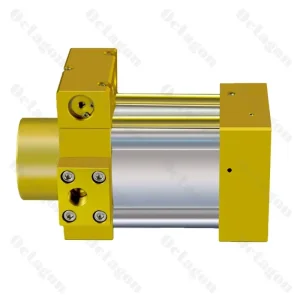
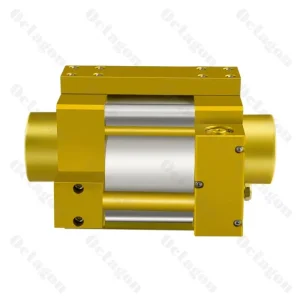
Many factories experience air pressure drops below 5.5 bar during peak shifts. The Octagon SWP series air booster pumps amplify plant air by ratios of 2:1 up to 10:1 entirely through pneumatic differential pistons—operating without electrical connections, eliminating fire hazards, and maintaining steady high-pressure output for pneumatic cylinders.
All export shipments are secured using heavy-duty anti-corrosion VCI barrier films, internal vacuum desiccant packaging, and fumigated timber crates compliant with ISPM 15. We furnish complete commercial invoices, packing lists with net/gross weights and CBM, Certificates of Origin (Form E/EUR.1 where eligible), and verified CE Declarations of Conformity.
Yes. Octagon's unique multi-disciplinary engineering structure allows turnkey sourcing: customers can order the core tool inserts machined to ±0.002 mm tolerances, along with internal equipment cabinet wiring harnesses, screen connection cables, and auxiliary gas-liquid boosters in a single unified procurement order.