
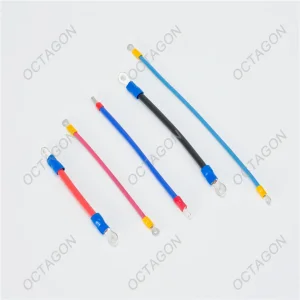
Core Portfolio Display: Batch 01
Precision Tooling Auxiliaries & Custom Moulding Systems
Engineered for extreme cyclical durability, our first selection of advanced mold components, pneumatic amplification cylinders, and smart automation modules deliver deterministic operational performance across global injection and die lines.
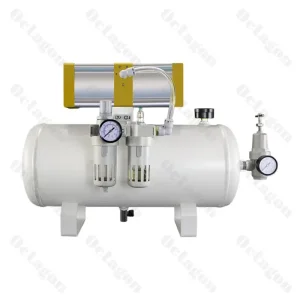
OEM Octagon SWP-02A-G Air Booster System: China Suppliers' Premium Factory Solution for High Precision Pneumatic Technology Product, Service
View Technical Specs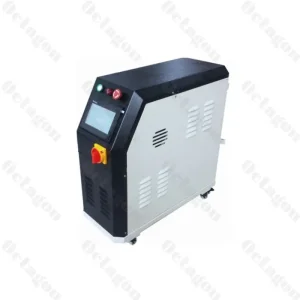
ODM Automation Solutions for Mold Manufacturing: China Suppliers and Factory Integration Manufacturer, Service
View Technical Specs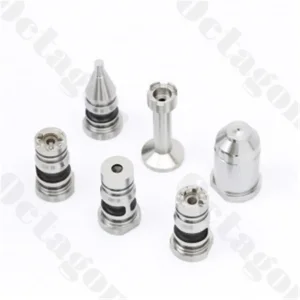
OEM High-Quality Sprue Bushing from China Supplies - Essential Component for Injection Molds from Reliable Factory Supplier, Suppliers
View Technical Specs
CE Certification China Sprue Bushing Suppliers: Essential Injection Mold Components from a Leading Factory Factory, Factories
View Technical Specs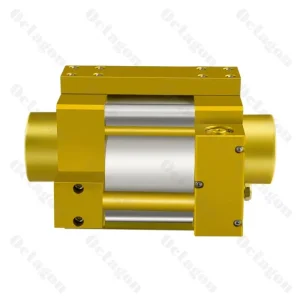
CE Certification High-Performance Gas-Liquid Booster Pump Octagon SWB - 125D from China Suppliers and Factory Factory, Exporter
View Technical Specs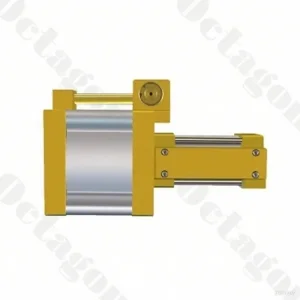
OEM Octagon SWP-7.5 Air Booster Pump: Revolutionizing Industrial Performance Factories, Exporter
View Technical Specs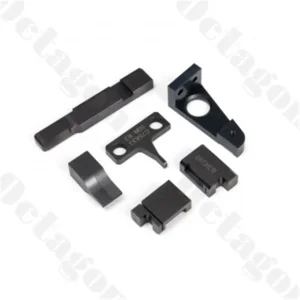
Custom Stamping Die Components: The Core Support of Precision Manufacturing Manufacturer, Exporters
View Technical SpecsMacro Dynamics & Engineering Paradigms
The Paradigm Shift in Plastic Moulding Components Engineering
Modern industrial manufacturing has progressed far beyond conventional standard injection toolmaking. Demands for micro-precision, thermo-dynamic equilibrium, and closed-loop process tracking now define competitive tier-1 supply chains.
In high-reliability manufacturing sectors—ranging from advanced electric vehicle (EV) battery architectures to cleanroom-grade medical microfluidics—the requirement for ODM Plastic Moulding Components has crossed a watershed. Historically, toolmakers operated as regional machine shops, producing tooling based on print-to-part tolerances governed by standard DIN or JIS classifications. Today, high-speed automated assembly equipment cannot tolerate standard deviations exceeding ±0.002 mm. Micro-deflections in core pins, non-uniform thermal dissipation through sprue bushings, or microscopic gate vestiges cause crippling downtime in multi-station production lines.
Consequently, the ODM paradigm has expanded. Original Design Manufacturers are no longer just metal cutters; they are thermodynamic systems integrators. The integration of in-mold automation solutions, such as high-pressure gas-liquid booster pumps and in-mold degating cutters, enables complete sprue separation while the tool remains closed under clamp force. This technology slashes cycle times by 18% to 35% and completely eliminates post-mold trimming labor. As part geometries grow increasingly intricate—requiring high-aspect-ratio ribs, micro-snap fits, and high-temperature polymer handling (PEEK, PPS, LCP)—the design of custom tooling components has become the critical determinant of overall equipment effectiveness (OEE).
±0.002mm
Micro-Machining Precision
Ra 0.05μm
Mirror Surface Lapping
7,000 kgf
Max In-Mold Cutting Force
1,000,000+
SPI Class 101 Cycle Life
| Evaluation Parameter | Conventional Commercial Tooling | Advanced ODM Sub-Micron Components (Octagon Standard) | Operational Impact on Injection Operations |
|---|---|---|---|
| Core/Cavity Tolerance | ±0.010 mm to ±0.025 mm | ±0.002 mm (via Sodick/Makino Wire-EDM & CNC) | Eliminates parting line flash and micro-mismatch across multi-cavity stacks. |
| Gate Severing Protocol | External manual/robotic secondary shear | In-Mold Cutting via Pneumatic-Hydraulic Boosters | Zero gate vestige; eliminates secondary labor; protects cosmetic critical faces. |
| Thermal Manifold Balancing | Standard drilled straight waterlines | Conformal Cooling Inserts + High-Purity Beryllium Copper | Reduces core heat concentration; homogenizes volumetric shrinkage; prevents warpage. |
| Tool Steel Metallurgy | P20 / standard 4140 pre-hardened | ESR Grade ASSAB S136, H13, DC53, SKD61 (52–60 HRC) | Resists abrasive glass-fiber erosion and corrosive flame-retardant outgassing. |
| Validation Level | Basic dimensional sign-off | Full CMM 3D Scanning + APQP/PPAP Level 3 Documentation | Guarantees direct plug-and-play interchangeability across transnational manufacturing plants. |
Procurement Intelligence & Risk Mitigation
Global Enterprise Procurement: Navigating Sourcing Risk & Total Cost of Ownership (TCO)
Tier-1 automotive, medical, and electronics purchasing departments have shifted from evaluating base purchase price to modeling total lifecycle reliability, change-order velocity, and production uptime security.
Rigorous Metallurgical Integrity
Global procurement teams now require certifiable steel tractability. Micro-voids or non-metallic inclusions inside tool cores induce fatigue cracking under 1,500 bar injection pressure. We specify high-cleanliness Electro-Slag Remelted (ESR) steels with verifiable chemical heat certs.
DFM & Rheological Simulation
Leading enterprise buyers disqualify suppliers who cut metal without comprehensive moldflow rheology. Our upfront engineering audit evaluates shear stress hotspots, volumetric sink, air entrapment locations, and knit-line structural compromise prior to toolpath generation.
Interchangeability & Standardization
For multinational corporations operating production cells in Mexico, Poland, and Vietnam, spare component interchangeability is critical. Octagon manufactures replacement inserts, ejector pins, and sprue bushings to strictly governed absolute dimensions, eliminating manual on-machine benching.
Embedded In-Mold Auxiliary Control
Modern injection presses depend on agile pressure boosters. Integrating pneumatic and gas-liquid booster systems (such as the Octagon SWB and SWP series) allows molding cells to generate localized ultra-high clamping and shearing forces without oversizing primary injection machinery.
Industrial Infrastructure & Ecosystem Superiority
China Factory 4.0: Tooling Ecosystem Agility, Supply Chain Density & Engineering Resilience
The enduring structural advantage of advanced Chinese precision manufacturing clusters lies not in cheap labor, but in an unmatched concentration of specialized supply chains, closed-loop automation cells, and deep engineering discipline.
The global precision tooling landscape has witnessed extensive restructuring. While peripheral low-complexity injection molding has moved to emerging low-cost markets, high-complexity tool design, sub-micron machining, and multi-action component engineering remain deeply anchored in China's advanced manufacturing corridor. The synergy between engineering headquarters in Taiwan and advanced automated fabrication facilities across the Greater Bay Area and Yangtze River Delta provides global buyers with an unmatched competitive moat.
Within a 50-kilometer radius of our production centers, the industrial density encompasses specialized vacuum heat-treatment furnaces with computer-controlled cryogenic quench cycles, physical vapor deposition (PVD) coating centers applying multi-layer TiAlN and DLC wear barriers, optical profile grinding suites, and accredited metallurgical laboratories. This spatial proximity compresses what used to take 6 weeks in Western machine shops down to 10 to 14 calendar days, including full first-article inspection (FAI) and CPK process capability indexing.
Automated Lights-Out Machining Cells
By connecting Makino high-speed machining centers with automated EROWA chucking systems and robotic workpiece changers, core cavities and electrode graphite patterns are milled continuously 24/7 under temperature-regulated ambient conditions (20°C ±0.5°C), ensuring absolute thermal stability.
Digital Twin & In-Process CMM Probing
Inspection does not happen solely at the end of the line. Machining centers feature in-spindle Renishaw optical probes that map component datum planes against 3D CAD step files in-situ. Any micro-deviation is immediately corrected via adaptive tool-offset adjustments.
Unified Taiwanese Process Governance
Octagon pairs Taiwanese managerial discipline—originating from our corporate headquarters in Taoyuan since 2008—with massive mainland production capacity. Every project passes through our 190-strong engineering division, where R&D leads carry over a decade of hands-on tool development experience.
Global Market Dynamics & Regional Realities
Geographic Macro Landscapes: Balancing Localized Molding with Specialized ODM Core Export
How regional manufacturing hubs worldwide structure their supply chains between domestic molding execution and offshore precision core tooling acquisition.
North America (US & Mexico Nearshoring)
While plastic injection presses are actively situated across the US Midwest and the Bajío automotive corridor in Mexico to minimize freight overhead, over 70% of high-cavitation, hardened complex tooling cores and custom sprue systems continue to be imported from specialized Asian ODM facilities due to severe domestic toolmaker capacity shortages.
European Union & Central Eastern Europe
Stringent decarbonization directives and energy costs have pressured EU molders to aggressively shave cycle times. European OEMs look to Octagon for advanced in-mold degating automation and high-efficiency air/gas booster pump equipment, allowing them to upgrade existing machinery to operate with higher clamp-pressure efficiency.
Southeast Asia (ASEAN Regional Hubs)
Electronics and consumer appliance final-assembly clusters expanding in Vietnam, Thailand, and Malaysia rely on high-durability tooling components that resist premature wear. Octagon provides localized export packaging, pre-machined spare kits, and rapid cross-border air logistics for mission-critical tooling replacements.
Sector-Specific Engineering Execution
Demanding Industrial Application Scenarios
Precision moulding components must be engineered according to the unique physical, thermal, and chemical stress profiles of the target end product.
New Energy & Battery Systems
High-voltage battery module collection lines, busbar carrier housings, and flame-retardant (UL94 V-0) connector components. Demands high-strength tool steels (such as DC53 or SKD61 treated to 58 HRC) to withstand abrasive glass-fiber-reinforced polyamides (PA66-GF30) without edge deterioration.
Medical Diagnostics & Microfluidics
Micro-titration plates, syringe nozzles, and surgical cartridge housings molded from cyclic olefin polymers (COP) and medical-grade PEEK. Requires optical-mirror cavity polishing (Ra 0.05 μm) and certified sub-micron core pin dimensional repeatability within Class 100,000 cleanroom environments.
Automotive Precision Electronics
Sensor packaging, advanced driver assistance system (ADAS) radar radomes, and electronic control unit (ECU) sealed connector frames. Demands complex multi-slide mechanical actions, precision sprue bushings, and balanced hot-runner integration for zero-leakage O-ring seal surfaces.
High-Density Consumer Optics & Audio
Acoustic driver bezels, display screen ribbon cables, and precision structural internal brackets. Demands non-marring ejection layouts, zero sink marks, and micro-degating automation to protect clean visual aesthetics and acoustical hermetic seals.
Core Portfolio Display: Batch 02
High-Pressure Fluid Dynamics, Mold Inserts & Precision Cable Systems
Explore our second selection of field-proven industrial solutions, including high-flow pneumatic-hydraulic booster pumps, customized injection mold inserts, and heavy-duty cabling harnesses engineered for 24/7 manufacturing environments.
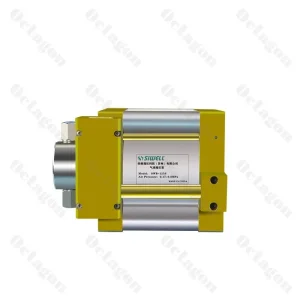
CE Certification High Efficiency SWB-160S Series Pump - Reliable Gas-Liquid Booster from China Suppliers and Factory Supplier, Factories
View Technical Specs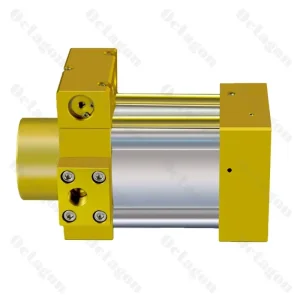
ODM Octagon SWB-80S Series Gas-Liquid Booster Pump - Efficient Solution from China Suppliers and Factory Manufacturer, Exporter
View Technical Specs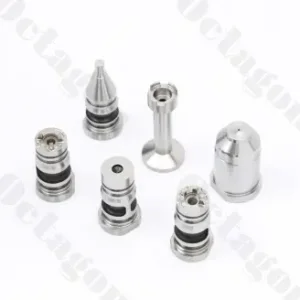
Custom China Mold Inserts: Essential Injection Molding Components from Leading Suppliers and Factory Product, Service
View Technical Specs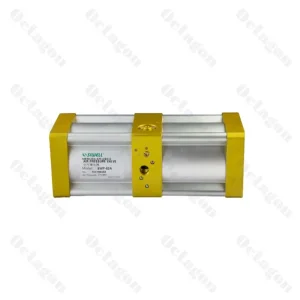
OEM OCTAGON SWP-02A Air Pressure Booster Pump - High-Quality China Suppliers and Factory Product Factory, Exporters
View Technical Specs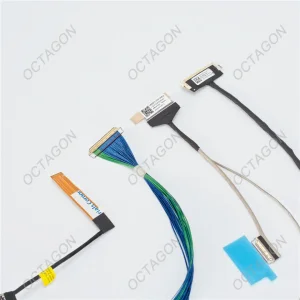
ODM High-Definition Screen Connection Cable Harness from China Suppliers - Reliable Factory Solutions for Monitors and TVs Factory, Factories
View Technical Specs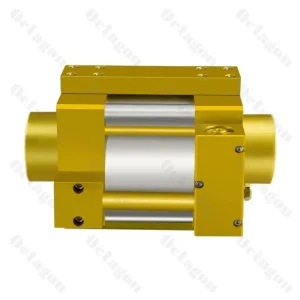
ODM China Octagon SWB-100S & SWB-100D Series Pumps - Reliable Gas and Gas-Liquid Booster Pump Suppliers from Factory Manufacturers, Exporter
View Technical Specs
High-Quality Octagon SWP-02A-G Air Booster Pump System - Leading China Suppliers and Factory for High Precision Pneumatic Solutions Supplier, Products
View Technical Specs
OEM China Suppliers Octagon SWP-7.5 Air Booster Pump: High-Performance Factory Solution for Industrial Pressure Boosting Supplier, Products
View Technical SpecsKnowledge Base & Sourcing FAQ
Technical & Commercial FAQ for Engineering Procurement Teams
Direct answers to the critical engineering, quality validation, and supply chain questions raised by global tooling directors before vendor onboarding.
How does Octagon achieve and guarantee the ±0.002 mm tolerance on custom mold inserts and cores?
Our machining protocol relies on climate-controlled (20°C ±0.5°C) high-speed CNC milling (Makino), nano-pulse wire EDM (Sodick), and precision profile oil-grinding machinery. Every toolpath accounts for thermal expansion coefficients and electrode spark gaps down to the sub-micron scale. Quality inspection is validated through Hexagon / Zeiss Coordinate Measuring Machines (CMM) and non-contact optical multi-sensor systems, accompanied by full CPK and dimensional FAI data sheets.
What are the distinct operational benefits of in-mold degating automation systems?
Traditional gate removal occurs outside the mold via manual clippers or robot end-of-arm tooling (EOAT), introducing cycle latency and human variation. Octagon's automation solution incorporates high-pressure timing controllers paired with air-driven booster pumps (such as the SWP-02A and SWP-7.5 series) to actuate micro-cutting blades directly inside the closed tool cavity right before cooling completion. This yields an impeccably flush gate vestige, slashes molding cycles by 2 to 8 seconds per shot, and protects parts against secondary micro-fractures.
How does your engineering team manage abrasive glass-filled resin erosion on custom components?
For high glass-content resins (e.g., PA66-GF30, PBT-GF50), standard pre-hardened steels fail rapidly through gate wash and core cavitation. We specify vacuum-degassed cold-work tool steels like DC53 or powder metallurgy grades like CPM 10V, heat-treated through multi-stage sub-zero cryogenic stabilization to 58–62 HRC. Furthermore, we apply multi-layer Physical Vapor Deposition (PVD) Diamond-Like Carbon (DLC) or TiAlN micro-coatings that reduce the coefficient of friction to <0.15 while drastically boosting surface hardness beyond 3,000 HV.
What documentation and compliance standards support your global export shipments?
All exported tooling components, pneumatic-hydraulic pumps, and wire harnesses comply with ISO 9001:2015 quality standards and CE directives. Tooling packages include mill test certifications for metallurgical tracking, vacuum heat-treatment hardness curves, RoHS/REACH declarations for polymer and connector materials, and full APQP / PPAP Level 3 documentation upon request. Components are vacuum-sealed in anti-corrosive VCI barrier film to safeguard mirror finishes across maritime export transit.
What lead times can overseas injection molders expect for custom core and cavity inserts?
Standard prototype or emergency breakdown replacement components are typically machined and heat-treated within 5 to 7 business days. High-volume multi-cavity tooling suites (e.g., 32-cavity or 64-cavity hot runner components, custom sprue bushings, and slides) generally complete within 14 to 21 business days. Fast-track air freight partnerships deliver landed orders to North American and European manufacturing plants within 3 to 4 transit days.