
High-Pressure Pressure Amplification & Tooling Components
Engineered for seamless in-mold gate shearing, high-integrity runner automation, and extreme-pressure cycling across tier-1 manufacturing facilities worldwide.
-
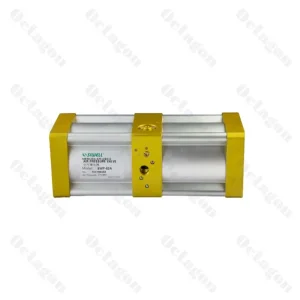 OCTAGON SWP-02A Air Pressure Booster Pump for Optimal Performance
-
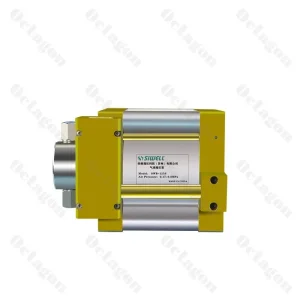 CE Certification SWB-160S Series Pump High Reliability
-
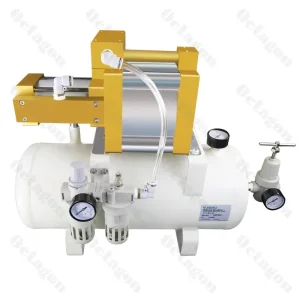 OEM High-Efficiency China Air Booster Pump SWP-7.5-G Boost 2-5 Times
-
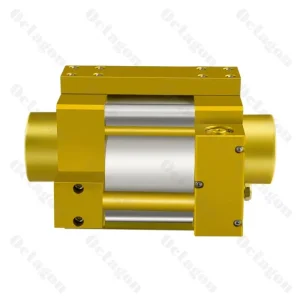 High-Performance Octagon SWB - 125D Gas-Liquid Booster Pump
-
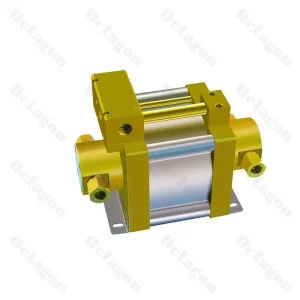 ODM China Octagon Gas-Liquid Intensifier Pump 160D High Pressure Boost
-
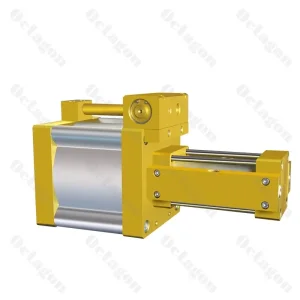 ODM China SWP-05 Air Booster Pump: User-Friendly Efficiency
-
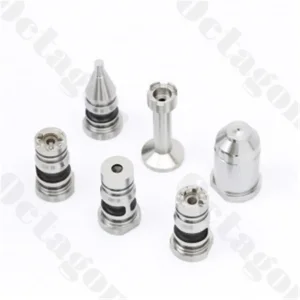 ODM China Sprue Bushing: Essential Injection Mold Precision Component
-
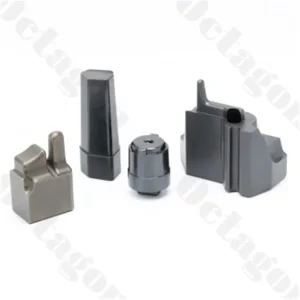 Custom China Die Casting Mold Parts Supplier Non-Standard Components
Physics of Subsurface Degating: Tunnel & Cashew Gate Kinematics
Submarine gating (tunnel gating) represents one of the foundational tooling geometries in high-volume, automated injection molding. By tunneling beneath the parting line, submarine gates allow the runner system to shear automatically from the molded part during the ejection stroke.
Subsurface Angle & Draft Geometry
The standard tunnel angle typically ranges between 30° and 45° relative to the parting surface. Steep angles increase shear resistance during mold ejection, risking premature gate breakage or gate remnant vestige. Conversely, too shallow an angle encroaches on cavity wall thickness and leads to localized heat concentration. Precision ODM toolmakers optimize the gate diameter between 0.6 mm and 1.8 mm depending on polymer rheology and filler volume.
Cashew (Banana) Curved Gating
When gating directly onto the bottom or internal cosmetic surface of a deep-draw housing, linear submarine gates cannot reach without colliding with parting locks. Curved banana gates sweep 90° to 120° beneath the cavity insert. Demolding demands high polymer elasticity (e.g., PP, PE, unfilled ABS) to flex around the curved insert track without fracturing or leaving tensile micro-cracks on cosmetic faceplates.
Shear Stress & Vestige Control
Vestige elevation directly impacts secondary assembly tolerances in automotive electrical connectors and optical sensors. By machining gate inserts using S136 powder metallurgy steel with Ra 0.05 µm mirror-polished discharge surfaces, ODM exporters guarantee clean, planar gate fractures that eliminate manual trimming, deburring, and abrasive post-processing.
| Gating System Type | Automatic Degating | Gate Vestige Height | Polymer Compatibility | Tooling Complexity | Cycle Time Impact |
|---|---|---|---|---|---|
| Standard Submarine Gate | 100% Automatic (Ejection Stroke) | 0.08 – 0.25 mm (Subsurface Recessed) | PC, ABS, PA66+GF, POM, PBT | Moderate (3-Plate/2-Plate Inserts) | Fastest (-15% to -25% vs Cold Edge) |
| Curved Cashew (Banana) Gate | 100% Automatic (Elastic Flex Demold) | 0.05 – 0.15 mm (Internal Surface) | PP, PE, TPE, Unfilled PC/ABS | High (EDM Contour Machining) | Moderate (Requires Slower Ejection) |
| Conventional Edge Gate | Manual / External Robot Trimming | 0.30 – 1.20 mm (Parting Surface) | Universal (All Thermoplastics) | Low (Basic 2-Plate Parting) | Adds Post-Mold Secondary Operations |
| Octagon In-Mold Cut Submarine | Automated Internal Hydraulic Shearing | Zero Flush (Ra < 0.2 µm Planar) | Universal (Engineered/Reinforced Resins) | Advanced (Octagon Booster Integration) | Optimized (Zero Cycle Time Overhead) |
Eliminating Gate Vestige via In-Mold Pneumatic & Hydraulic Shearing
While standard submarine gates rely on the kinetic stroke of mechanical ejector pins to tear the gate orifice, rigid glass-fiber reinforced polymers (e.g., PA66-GF30, PPS-GF40, PEEK) frequently crack or leave jagged protrusions. Octagon integrates precision in-mold cutting automation driven by ultra-high-pressure booster pumps.
High-Pressure Timing Control Cabinets
Octagon's proprietary timing control cabinets regulate pressure amplification from 1,000 to 7,000 kgf. Integrated micro-valves actuate hydraulic micro-cylinders while the injection mold remains clamped under full tonnage, severing the runner instantaneously at the packing-to-cooling transition before the plastic solidifies into a brittle state.
SWP & SWB Booster Pump Synergy
By connecting Octagon SWP-series air boosters and SWB-series gas-liquid booster pumps directly to the injection molding machine pneumatic line, plant air is stepped up 2 to 5 times. This ensures constant hydraulic force with zero pressure drop across multi-cavity tools (up to 64 cavities), eliminating defective parts caused by sluggish mechanical gate tears.
Class-100 Cleanroom Compatibility
Because gate severance occurs entirely within the sealed mold cavity before the mold opens, micro-dust particles and resin debris are contained. This delivers 100% particulate-free manufacturing for medical drug-delivery devices, microfluidic cartridges, and CMOS optical camera housings without contamination.
Global Sourcing Standards for Tier-1 Tooling Procurement
Evaluating an ODM supplier of submarine gate injection molds requires strict verification across metallography, hot/cold runner rheological balancing, thermal dissipation kinetics, and metrology reporting.
Mold Core & Cavity Metallurgy
Demanding injection environments demand certified tool steels. Octagon specifies vacuum-hardened Böhler M390, ASSAB S136 (52–54 HRC), and Japanese DC53 for wear-critical submarine gate inserts. For abrasive filled resins (e.g., 50% glass-fiber reinforced PPA), replaceable tungsten carbide gate inserts are deployed to prevent orifice wear beyond 0.005 mm across 1,000,000 continuous shots.
Moldflow CFD Rheological Simulation
Before steel is cut, Octagon’s engineering department conducts full Autodesk Moldflow simulations. We calculate shear rate thresholds to ensure velocity spikes at the submarine gate orifice do not exceed resin degradation limits (typically < 50,000 1/s). This avoids visual silver streaking, localized burning, gate blushing, and molecular chain degradation.
Metrological Traceability & PPAP Level 3
Global automotive and medical OEMs require strict validation protocols. Octagon pairs high-precision tooling with Zeiss CMM 3D coordinate scanning, Keyence optical non-contact profilometry, full dimensional layout reports, and complete Production Part Approval Process (PPAP Level 3) packages, including capability indices (Cpk > 1.67).
Turnkey Tooling Deployments Across Strategic Industries
Octagon’s engineering matrix addresses the complex thermal, structural, and cosmetic constraints of world-class manufacturers.
Automotive Electronics
Sensors, radar housings, and high-voltage EV battery harness clips require strict zero-vestige tolerances. Submarine tooling avoids flash at high clamp tonnages and withstands demanding automotive thermal cycling tests (-40°C to +125°C).
Medical & Diagnostic Devices
Molded in Class 100,000 cleanrooms using ISO 13485 compliant tooling. Submarine gating feeds pipette tips, dialyzer housings, and fluidic manifolds without leaving particulate residue that could compromise bio-reagent testing accuracy.
Consumer Smart Devices
Acoustic speaker bezels, earbud chassis, and micro-connectors demand flawless visual aesthetics. Curved cashew gating conceals gate entry on hidden internal walls, preserving high-gloss Piano Black finishes and eliminating weld lines.
High-Density Interconnects
Micro wire harness headers, pin carriers, and fiber-optic junction frames require tight terminal seating. Submarine gating ensures balanced multi-cavity packing with runner volumetric variances under 0.8%.
Taiwanese Precision Engineering Combined with Mainland Manufacturing Scale
Headquartered in Taoyuan City, Taiwan with scalable advanced tooling production facilities in mainland China, Octagon Precision Mold Co., Ltd. (established in 2008) bridges world-class engineering discipline with rapid delivery and cost structures.
Strict Raw Material Certification
Every mold plate, insert, and sprue bushing is accompanied by mill test certificates (MTC) certifying steel chemistry, ultrasonic defect testing, and verified hardness after heat treatment. Genuine steels like ASSAB, Daido, and Schmolz+Bickenbach eliminate risks of mold cracking under sustained dynamic injection cycles.
Export Compliance & CE Certification
All Octagon booster pump systems and automated in-mold cutting control cabinets carry authentic CE conformity markings. Packaging conforms to ISPM 15 wooden crate fumigation mandates for seamless customs clearance across European, North American, and East Asian deep-water container ports.
190 Specialized Engineers & Direct R&D
With an engineering and technical team averaging over a decade of mold design experience, customer CAD data (STEP, IGES, Parasolid) receives a comprehensive Design for Manufacturability (DFM) review within 24 hours, evaluating parting line locations, gating shear angles, and ejector stroke balances.
Technological Horizons: Smart In-Mold Submarine Systems
As automated factories shift toward lights-out operation, submarine gate tooling is advancing beyond passive mechanical shearing into intelligent, sensor-monitored mechatronic sub-assemblies.
Phase 1: Dynamic Conformal Cooling Inserts
Direct Metal Laser Sintering (DMLS) 3D printed tool steel inserts position sub-surface conformal cooling passages within 1.5 mm of the submarine gate orifice. By controlling localized cooling rates, cycle times decrease by 18% while preventing thermal sink marks above subsurface runners.
Phase 2: Closed-Loop In-Cavity Pressure Telemetry
Miniature piezo-electric pressure sensors embedded adjacent to submarine gate orifices measure instantaneous melt fronts. Data communicates with the injection machine hydraulic controller, adjusting pack-and-hold pressures to prevent gate freeze-off variation.
Phase 3: AI-Driven Degating Actuation
Combining Octagon SWP/SWB pressure boosters with edge-computing servo valves enables variable shearing force profiles. The system trims fragile biodegradable resins (e.g., PLA, PHA) gently at lower velocities while applying rapid 7,000 kgf impacts for high-strength PEEK.
Frequently Answered Tooling & Sourcing Questions
Definitive technical guidance for tooling engineers, sourcing directors, and injection mold plant operators.
A standard submarine (tunnel) gate uses a straight conical runner path machined at an angle (typically 30° to 45°) relative to the parting line, terminating on the vertical or sub-surface wall of the part. A cashew (banana) gate features a curved 90° to 120° hook geometry that tunnels underneath the cavity to gate on the interior underside or cosmetic-hidden surface. Cashew gates require ductile polymers (such as PP, PE, or unfilled ABS) to flex out of the curved channel during ejection without snapping off in the mold.
Octagon utilizes specialized hardened gate inserts (ASSAB S136 or tungsten carbide) machined via micro-WEDM and mirror-polished to Ra 0.05 µm. Furthermore, we design a reverse draft undercut pocket or "vestige well" on the part geometry that offsets the gate fracture point 0.2 mm beneath the finished mating surface, guaranteeing that any residual gate tear remains below the cosmetic plane.
Standard plant pneumatic pressure (typically 0.5 to 0.7 MPa) is often insufficient to cleanly shear large gates on tough engineering plastics like PA66+GF30 or PPS. Octagon SWP air booster pumps and SWB gas-liquid intensifiers multiply line pressure 2 to 5 times, driving in-mold cutting cylinders with up to 7,000 kgf of force while the mold is clamped. This completely avoids secondary degating labor, eliminates gate stress cracks, and reduces total cycle time by 15% to 25%.
Octagon maintains machining tolerances down to ±0.002 mm (2 microns) utilizing high-speed Yasda CNC centers, Makino wire-cut EDM, and AgieCharmilles die-sinking machines. Mirror cavity finishes are hand-lapped and ultrasonic-polished to Ra 0.05 – 0.2 µm, ensuring optimal optical transparency, minimal release friction, and defect-free demolding across millions of production shots.
Yes, but they require critical design modifications. Highly filled resins (e.g., 30% to 50% glass fiber) have very low elongation at break, meaning they fracture cleanly but cause rapid abrasive wear at the gate orifice. Octagon uses replaceable sub-gate inserts made of ASP-23 powder metallurgy steel or sub-micron grade tungsten carbide coated with diamond-like carbon (DLC), combined with a shortened land length (0.5 mm) to minimize shear heating and prevent fiber burnout.
Every export mold is shipped with a comprehensive engineering dossier: 2D assembly drawings, 3D CAD models (STEP/Parasolid), full steel certification certificates, heat treatment hardness test logs, Moldflow analysis reports, initial sample inspection reports (ISIR/FAI) verifying Cpk/Ppk metrics, mold trial video footage, recommended machine processing parameters, and a complimentary spare wear-parts kit (ejector pins, gate inserts, O-rings, and springs).
High-Pressure Pumps, Custom Mold Inserts & Industrial Harnesses
Completing the industrial ecosystem: High-efficiency pneumatic-hydraulic intensifiers, precision-ground tooling inserts, and OEM cable harness assemblies for rugged manufacturing environments.
-
Custom Octagon SWB - 125D: High - Performance Pump Suppliers
-
CE Certification Octagon Gas-Liquid Intensifier Pump SWB - 160D Solution
-
High-Quality High Efficiency SWB-160S Series Pump Gas-Liquid Booster
-
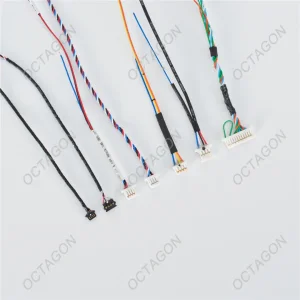 ODM Octagon Speaker Wire Harness - Premium Audio Solutions
-
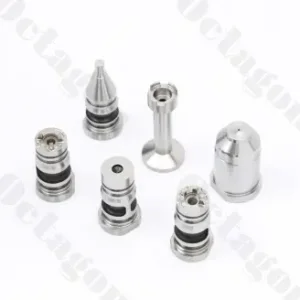 High-Quality China Suppliers for Mold Inserts Precision Components
-
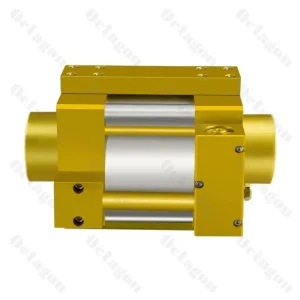 ODM Octagon SWB-100S & SWB-100D Series Gas & Liquid Booster Pumps
-
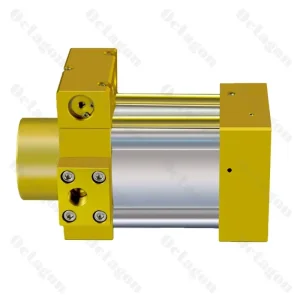 CE Certification Octagon SWB-80S Gas-Liquid Booster Pump Industrial
-
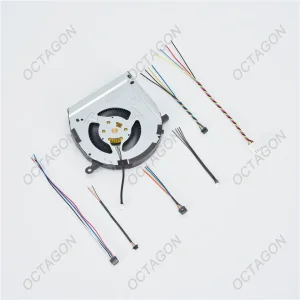 OEM High-Quality Cooling Fan Cable Harness for Diverse Applications
Accelerate Your Tooling Program with Octagon
Send 2D/3D component drawings (STEP/DWG) for an immediate Design for Manufacturability (DFM) analysis and detailed submarine gating quotation within 24 hours.