
Featured Injection Auxiliary & Booster Assemblies
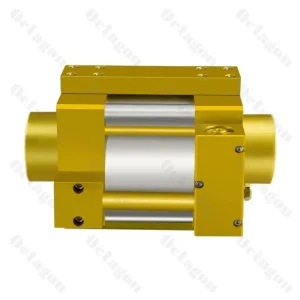
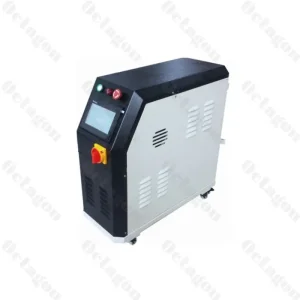
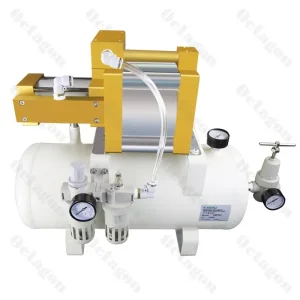
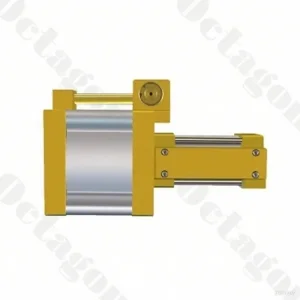
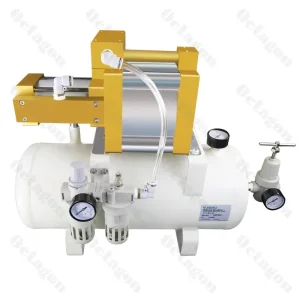
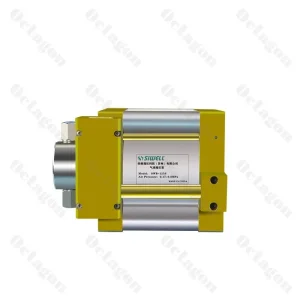
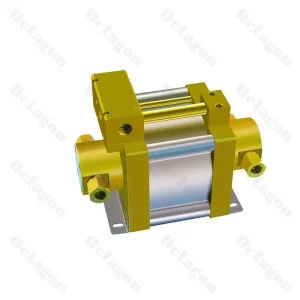
High-reliability air-driven fluid amplifiers, in-mold cutting boosters, and automated pressure feed stations engineered for injection molding cycle stability and continuous duty performance.
Global Landscape of Barrel Injection Molding & Tooling Automation
Evaluating macroeconomic pressures, polymer resin evolution, and mechanical resilience in modern thermoplastic processing environments.
The Macro-Industrial Transition: Tribology, Metallurgy, and High-Performance Polymers
In the modern manufacturing theater, the plasticizing unit—comprising the injection barrel, reciprocating screw, check ring, and end cap assembly—represents the critical thermodynamic nexus of injection molding machines (IMMs). Historically, standard nitrided steel (such as 38CrMoAlA or SACM645) sufficed for non-abrasive commodities like polypropylene (PP) and polyethylene (PE). However, the global manufacturing transition toward lightweighting in e-mobility, structural miniaturization in electronics, and biocompatible longevity in healthcare devices has driven pervasive adoption of engineering thermoplastics reinforced with up to 50–60% glass fiber, carbon fiber, ceramic beads, and organohalogen flame retardants.
These specialized compounds subject the internal bore of the injection barrel to severe adhesive, abrasive, and corrosive degradation mechanisms. As polymer melts are pressurized upwards of 1,500 to 2,800 bar at thermal plateaus reaching 350°C to 420°C (such as in PEEK, PPS, PEI, and LCP processing), traditional metallurgy exhibits rapid flaking, micro-pitting, and accelerated diametrical clearance expansion. Once the clearance between screw flight and barrel ID surpasses standard kinematic tolerances (typically 0.05 mm to 0.08 mm depending on screw diameter), the thermodynamic integrity collapses, causing molten resin backflow, erratic recovery times, localized melt degradation, and erratic shot-to-shot consistency.
Consequently, contemporary tier-one manufacturers demand centrifugally cast bimetallic barrels and powder-metallurgy HIP (Hot Isostatic Pressing) liners. These composite architectures fuse a tough alloy-steel outer backing with a wear-resistant, cobalt-, nickel-, or tungsten-carbide based inner matrix. Octagon Precision Mold integrates high-precision heat treatments, cryogenic stress stabilization, and sub-micron honing to provide the structural foundation that stabilizes high-speed molding platforms globally.
Bore inner liners cast with high-density nickel/tungsten alloys deliver macro-hardness exceeding 62-68 HRC, mitigating structural wear caused by intensive chopped fiber matrices.
Precision deep-hole gun drilling and vertical honing processes achieve L/D geometric linear alignment tolerances below 0.015 mm per meter, eliminating dynamic screw binding.
Multi-zone heater band optimization and ceramic thermal jacket couplings stabilize barrel wall gradient variance within ±1°C, preventing localized thermal shear spikes.
From chemical composition spectroscopy to ultrasonic volumetric non-destructive testing, every steel alloy blank is certified to international ASTM and ISO industrial standards.
Future Trends: Smart Connected Barrels & In-Mold Digital Integration
Next-generation Industry 4.0 paradigms are converging plasticizing units with real-time diagnostic intelligence and closed-loop hydraulic/pneumatic automation.
The Paradigm Shift Toward In-Mold Automation & Real-Time Viscosity Monitoring
The conventional boundary between the injection molding press, the plasticizing barrel, and the mold tool is dissolving. Historically, machine barrels operated as passive, isolated thermodynamic sleeves, while molds relied purely on mechanical springs or external gate cutters. Today, modern high-cavitation production calls for synchronized, high-speed interaction between fluid-intensification modules and mold cavities.
One primary frontier is the rise of in-mold degating and cutting systems powered by pneumatic-hydraulic booster pumps (such as the Octagon SWP and SWB series). Traditional post-mold degating requires manual labor, secondary trimming fixtures, or robotic shearing stations, all of which introduce risks of micro-cracking, cosmetic blemishes, and extended cycle periods. By coupling rapid-response high-pressure gas/liquid intensifiers directly with in-mold cutting blades, gates are severed cleanly within the cavity during the holding or cooling phase before mold parting. This synchronicity cuts cycle times by 15–30% while generating pristine, mirror-flat gate vestigials.
Concurrently, smart injection barrels equipped with ultrasonic sensors and embedded fiber-optic piezoelectric melt-pressure transducers are entering high-volume cleanroom environments. These sensors measure the exact melt front velocity, dynamic melt viscosity, and homogeneity directly at the nozzle tip, feeding real-time offsets to the servomotor screw drives to compensate for batch-to-batch regrind variations.
| Evaluation Parameter | Standard Nitrided Barrel Assembly | Octagon High-Density Bimetallic Series | Tungsten-Carbide Sintered HIP Liner |
|---|---|---|---|
| Base Hardness (Internal Bore) | HV 900 – 1000 (~65 HRC superficial) | HRC 58 – 64 (Uniform matrix) | HRC 64 – 70 (Solid dispersion) |
| Bore Diffusion Depth | 0.40 mm – 0.60 mm (Gradual decay) | 1.80 mm – 3.50 mm (Centrifugal layer) | 2.50 mm – 5.00 mm (Full alloy sleeve) |
| Max Operating Temperature | 300°C | 450°C | 550°C |
| Glass Fiber Fill Tolerance | Up to 15% fiber loading | Up to 45% fiber loading | Up to 65% mineral/carbon reinforced |
| Cycle Service Life Index | 1.0x (Baseline: ~180,000 cycles) | 3.5x to 5.0x lifespan | 7.0x to 10.0x extreme durability |
Tailored screw flight geomteries and barrel heat distribution profiles prevent rapid thermal degradation and volatile off-gassing when processing PLA, PHA, and post-consumer recycled (PCR) blends.
Pneumatic-hydraulic booster units deliver explosive instantaneous clamping force (1,000 to 7,000 kgf) within milliseconds, facilitating clean shearing of difficult engineering gates during active clamp pressure.
Direct-drive electric screw units paired with zero-backlash barrel adapters reduce energy consumption by up to 40% compared to traditional hydraulic accumulators while maintaining micrometer repeatability.
Localized Application Scenarios & Tailored Configurations
Real-world deployment paradigms where precise plasticizing control and structural durability prevent catastrophic equipment downtime.
Operating Challenges: Production of heavy-wall thick optical PMMA/PC headlight light-guides, high-voltage battery connectors (PA66+50% GF), and undertray functional cowls.
Engineering Solution: Mirror-polished bimetallic barrels (Ra < 0.1 μm) coupled with SWP series high-pressure booster systems for in-mold sprue shearing, eliminating internal residual stress, optical haze, and jetting.
Operating Challenges: High-cavitation (64–128 cavities) production of ISO 13485 syringe barrels, luer locks, blood filtration housings, and implantable PEEK components without lubricant contamination.
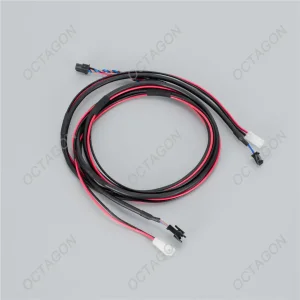
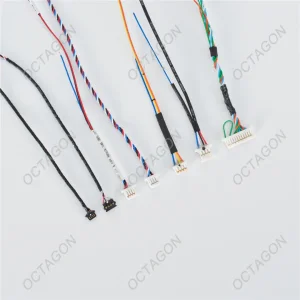
Engineering Solution: Frictionless, non-lubricated ceramic-coated barrels and stainless-alloy check valve tips paired with automated cleanroom-compatible wire harnessing and pneumatic intensification cabinets.
Operating Challenges: Ultra-thin-wall (0.18 mm) high-density pin headers, smartphone internal frame chassis, and 5G antenna switches molded from high-temperature LCP and halogen-free PA46.
Engineering Solution: Small-bore specialized screw-barrel assemblies (diameters 12 mm to 18 mm) providing rapid melt recovery, precise volumetric dosing, and sub-second shot control to mitigate thermal discoloration.
Macro-Level Solutions: From Metallurgical Design to Full Cell Commissioning
A comprehensive, end-to-end framework eliminating engineering handoff friction between barrel manufacturing, mold tooling, and automation logic.
Phase-Gated Quality Assurance & Technical Execution Roadmap
Procuring industrial plasticizing assemblies and precision tooling across continents requires strict adherence to documented standards. Octagon Precision Mold bridges advanced Taiwanese quality assurance with scalable production capacity to de-risk tier-one manufacturing programs:
Phase 1: Rheological Modeling & Tribological Material Selection: Every project starts with a detailed resin audit. Whether running fluoropolymers (PTFE/PFA) requiring corrosion-immune high-nickel alloys like Inconel 718, or 60% carbon-reinforced polyamides requiring cobalt-tungsten carbide claddings, barrel dimensions and screw geometries (compression ratio, L/D ratio, barrier flight depth) are mathematically verified via simulated shear-rate calculations.
Phase 2: Multi-Axis CNC Machining & Centrifugal Sintering: Heavy-wall structural outer shells undergo deep-hole drilling on custom-designed horizontal bore centers. Centrifugal casting machines spin the molten lining alloy at over 2,000 RPM inside an induction furnace, achieving seamless molecular fusion with zero gas porosity or slag inclusion. The bore is subsequently vertical-honed, nitrided, and polished to a Ra 0.05 mirror finish.
Phase 3: Automated In-Mold Cutting & Fluidics Integration: Injection performance is directly coupled with tool kinematics. Octagon's proprietary timing control cabinets and air-pressurized booster pumps (capable of generating 1,000 to 7,000 kgf hydraulic cutting forces) are pre-plumbed and matched with the mold's cold or hot runner manifolds, ensuring complete plug-and-play installation on client shop floors.
Phase 4: CMM Metrology & Non-Destructive Quality Verification: Before packing and export crating, each barrel and precision component undergoes coordinate measuring machine (CMM) verification, laser bore straightness scanning, and ultrasonic wall-thickness mapping. All batches are archived with metallurgical chemical certs and dimensional inspection dossiers.
Staffed by senior toolmakers, metallurgists, and pneumatic systems engineers averaging over 10 years of cross-disciplinary industrial experience.
Direct factory sourcing eliminates distributor markups, delivering premium bimetallic barrels and booster systems at highly competitive commercial price points.
Rapid CAD review and tooling lead times ensure custom replacement barrels and engineered prototypes are manufactured and expedited globally within compressed timelines.
Featured Injection Mold Tooling & Interconnect Solutions
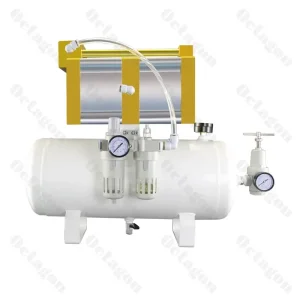
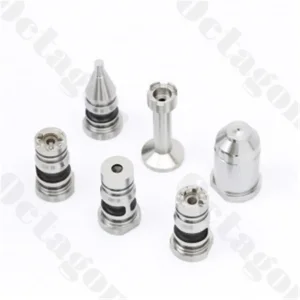
Engineered sprue bushings, heavy-duty pneumatic intensifiers, cabinet wiring harnesses, and medical-grade interconnects completing your production ecosystem.
Frequently Asked Questions: OEM Injection Barrels & Mold Systems
In-depth answers addressing metallurgy, machining limits, lead times, in-mold integration, and international quality verification.