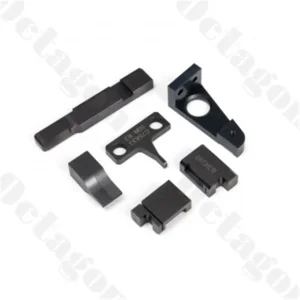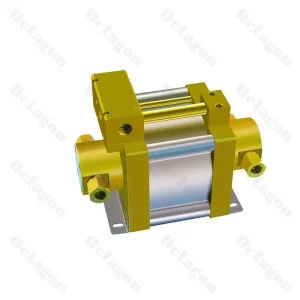
Top-Tier Industrial Hardware
Precision Boosting Systems & Modular Tooling Assemblies
Explore our core engineering modules: air and gas-liquid intensifier booster pumps, automated pressure regulators, and precision tooling auxiliaries deployed across high-cavitation production cells worldwide.
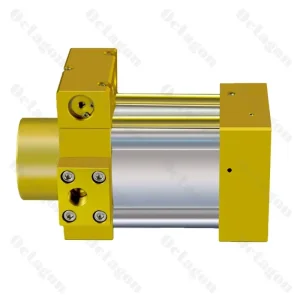
CE Certification China Octagon SWB-80S Series Gas-Liquid Booster Pump
View Specifications →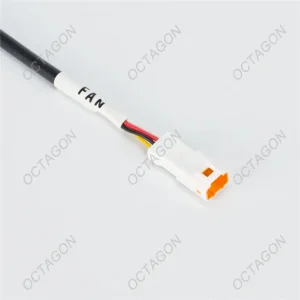
OEM Waterproof Series Harnesses (IP68 Rating) from China Suppliers
View Specifications →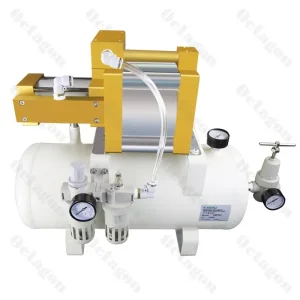
High-Quality China SWP-05-G Air Booster Pump - High Efficiency Solution
View Specifications →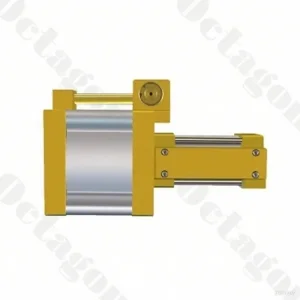
CE Certification China Octagon SWP-75 Air Booster Pump Suppliers
View Specifications →
OEM China Suppliers Octagon SWP-75 Air Booster Pump High-Performance
View Specifications →
High-Quality Waterproof Series Harnesses (IP68 Rating) Direct Product
View Specifications →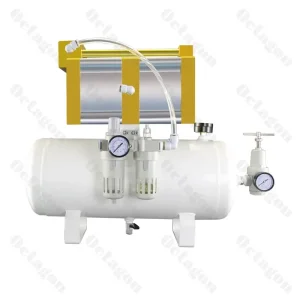
High-Quality Octagon SWP-02B-G Pneumatic Pump for Industrial Excellence
View Specifications →Market Economics & Production Scale
The Global Commercial Landscape of Multi-Cavity Tooling
Modern high-volume polymer conversion requires exceptional cavity-to-cavity consistency, minimized scrap margins, and hyper-optimized injection cycle durations. Global demand for OEM multi-cavity injection tooling (spanning 8, 16, 32, 64, up to 128 cavities) is experiencing rapid growth, driven by medical disposables, micro-fluidic diagnostics, automotive sensor harnesses, and sustainable thin-wall packaging. Sourcing qualified OEM tooling partners demands deep scrutiny of metallurgical specifications, rheological balancing, thermal stabilization, and integrated mechanical automation.
Cost Amortization vs. Tool Longevity
Multi-cavity production shifts upfront capital expenditures (CapEx) into drastically reduced operational expenses (OpEx). Transitioning from an 8-cavity to a 64-cavity high-precision tool yields exponential unit cost reductions, provided tool metallurgy (e.g., DIN 1.2344 / Premium H13 or Uddeholm Stavax ESR hardened to 52–54 HRC) withstands hundreds of millions of cycles under multi-ton clamping loads.
Rheological Flow & Shear Symmetry
Unbalanced melt flow across numerous cavities causes dimensional variation, flash, short shots, and divergent residual stresses. Elite OEM suppliers employ symmetric, naturally balanced hot runner manifold architecture combined with dynamically tuned valve gating. This setup neutralizes viscous shear heating and ensures identical volumetric fill rates across every gate coordinate.
Micro-Tolerance Machining (±0.002 mm)
Tool-stack tolerances in medical and micro-electronic molding must remain consistent across thermal operational cycles. Using sub-micron Wire EDM, CNC hard milling, and jig grinding, cavity inserts and core pins achieve absolute dimensional interchangeability. Damaged core pins can be swapped on-press without needing to re-machine matching parting surfaces.
Comprehensive Tooling Architecture
Multi-Cavity Engineering Solutions: Comparative Cavitation Matrix
Selecting the ideal mold cavitation architecture involves balancing annual unit volume requirements, available machine clamping tonnage, resin rheology, and operational maintenance intervals. The table below details key performance metrics across typical commercial tooling tiers.
| Cavitation Tier | Target Industries | Runner Architecture | Cooling Design | Target Cycle Time | Process Tolerance |
|---|---|---|---|---|---|
| 4 to 8 Cavities | Automotive Connectors, Precision Enclosures | Cold Runner / Sub-Gated or Single Hot Tip | Baffled Gun-Drilled Channels | 18.0s – 35.0s | ±0.005 mm |
| 16 to 32 Cavities | Medical Syringe Barrels, Fluidic Diagnostics | Balanced Hot Runner with Individual Valve Gates | Conformal 3D DMLS Inserts | 7.5s – 14.0s | ±0.003 mm |
| 48 to 64 Cavities | Cosmetics, Thin-Wall Food Packaging, Pipettes | Direct Valve Gate Manifold with Heated Nozzles | Hybrid Copper-Alloy Core Conformal Circuits | 4.5s – 8.0s | ±0.002 mm |
| 72 to 128+ Cavities | Closures, Micro-Caps, Pipette Tips, Test Vials | Full Hot Runner with Micro-Tip Valve Regulators | High-Velocity Conformal Chill Jackets | 2.8s – 5.5s | ±0.002 mm |
Conformal Cooling Integration
Traditional straight-line gun-drilled cooling circuits struggle to extract heat uniformly from high-cavitation core clusters. By manufacturing cavity cores with 3D metal additive manufacturing (Direct Metal Laser Sintering in Maraging Steel or 1.2709), conformal cooling channels curve precisely along the part geometry. This system drops mold surface thermal delta to within ±1.5°C, cutting overall cooling time by 20% to 45% and eliminating part warpage.
In-Mold Degating & Pneumatics
Manual secondary trimming creates quality defects and labor bottlenecks in high-volume production. Integrating internal pneumatic cylinders or gas-liquid intensifier booster systems directly within the mold plate enables automated degating before the tool opens. Gates are cleanly sheared under peak cavity pressure, yielding pristine cosmetic finishes and ready-for-pack parts straight off the conveyor.
Surface Metrology & Coatings
Extended production runs with abrasive engineered polymers (such as 30% glass-filled PBT, PEEK, or LCP) accelerate cavity wear. OEM multi-cavity tooling applies specialized Physical Vapor Deposition (PVD) treatments—including Titanium Aluminum Nitride (TiAlN), Diamond-Like Carbon (DLC), or Chromium Nitride (CrN)—achieving surface hardness above 3000 HV and mirror polish down to Ra 0.05 μm.
Pneumatic Amplification & Tool Automation
Auxiliary Driving Systems: Air & Gas-Liquid Booster Integration
A multi-cavity mold functions as a coordinated, high-speed automated production system. Reliable actuation of slide-cores, unscrewing cores, micro-ejector pins, and in-mold cutting units requires stable pneumatic amplification and dedicated high-voltage wiring harnesses that hold up to demanding plant environments.
High-Pressure In-Mold Cutting Stations
Driven by pneumatic-hydraulic gas-liquid booster pumps, in-mold degating assemblies deliver targeted cutting forces between 1,000 and 7,000 kgf. This high-force actuation cleanly shears gates inside the closed mold cavity, eliminating the micro-cracking and particulate dust associated with external robotic trimming.
IP68 Modular Control Harnessing
Multi-cavity hot runner systems require dozens of integrated thermocouple and heater circuits, alongside sensor arrays monitoring mold position, melt front pressure, and cavity temperature. Specialized IP68-rated waterproof harnesses resist heat degradation, hydraulic oil ingress, and continuous mechanical vibration across years of press cycles.
Pneumatic Line Pressure Stabilization
Factory air mains often suffer from transient pressure drops when neighboring machines cycle. Inline pneumatic air booster units (such as the SWP series) double or triple local pressure right at the injection machine, ensuring consistent pneumatic valve pin speeds and preventing gate drool or unseated valve pins.
Global Implementation Profiles
Localized Application Scenarios & Sector Requirements
Tooling requirements change dramatically depending on the operating environment. A class 100,000 medical cleanroom has vastly different compliance needs than an under-hood automotive molding plant. Here is how our OEM tooling architectures adapt to specific regional and industrial contexts:
Medical Diagnostics & Microfluidics
Deployment: Cleanroom environments across North America and Europe.
Tooling Challenge: Zero lubricant contamination and ultra-short flow lengths.
Engineering Solution: Fully stainless steel mold bases (Stavax ESR or 1.2083), diamond-coated DLC ejector components requiring zero grease, and 64-cavity balanced valve gate hot runners with electric servo actuation for sub-milligram shot-to-shot consistency.
Automotive Power & Sensor Harnesses
Deployment: Tier 1 automotive suppliers across Germany, Mexico, and East Asia.
Tooling Challenge: High thermal resistance and mechanical strength using abrasive glass-reinforced polymers.
Engineering Solution: 16-to-32 cavity molds equipped with tungsten-carbide gate inserts, vacuum venting systems to stop dieseling, and custom in-mold insert feeding automation for multi-pin lead frame overmolding.
High-Speed Consumer Packaging
Deployment: Fast-moving consumer goods (FMCG) packaging across Southeast Asia and the Americas.
Tooling Challenge: Sub-4 second cycle times across 72 to 128 cavities running 24/7/365.
Engineering Solution: Titanium-zirconium-molybdenum (TZM) alloy nozzle tips, dual-circuit high-pressure cooling manifolds, and integrated in-mold air blast ejection to guarantee parts clear the mold reliably at high press speeds.
Future Outlook & Predictive Technologies
Technology Roadmap: The Next Decade in High-Cavitation Tooling (2025–2035)
Injection tooling is evolving from passive mechanical assemblies into intelligent, cyber-physical manufacturing systems. Our engineering roadmap integrates dynamic thermal control, in-cavity sensory networks, and adaptive closed-loop process regulation.
Phase 01 · 2025–2027
Embedded Piezo-Sensor Arrays
Mounting miniaturized dynamic quartz pressure and infrared melt-temperature sensors directly inside every cavity. Real-time telemetry automatically adjusts machine screw position and individual hot runner zone temperatures to correct filling variations on the fly.
Phase 02 · 2027–2029
AI-Driven Predictive Maintenance
Vibration sensors, stroke counter microchips, and thermal gradient monitors track component wear. Predictive algorithms flag ejector pin friction, valve gate guide wear, or scale accumulation in conformal cooling passages well before tool failure occurs.
Phase 03 · 2029–2032
Multi-Material Additive Tooling
Diffusion bonding and multi-metal laser sintering fuse copper alloys (high thermal dissipation) directly with tool steels (wear-resistant cavity faces) without physical fasteners, yielding unprecedented cooling rates and thermal balance.
Phase 04 · 2032–2035
Self-Balancing Dynamic Gates
Electromechanically modulated micro-valves adjust gate orifice geometries in fractions of a millimeter during the injection phase. This compensates in real time for batch-to-batch polymer viscosity shifts, allowing recycled resins to run with the precision of virgin materials.
Procurement & Engineering Quality Audit
OEM Sourcing Qualification & DFM Verification Framework
To minimize production risk on multi-cavity tooling investments, engineering and procurement teams should verify these essential design-for-manufacturability (DFM) requirements before releasing final tool fabrication orders.
1. Steel Quality & Certification
Insist on verifiable mill test reports (MTR) with ultrasonic testing (EN 10228-3 class 4 or ASTM A388). Multi-cavity molds require electro-slag remelted (ESR) tool steels to prevent microscopic inclusions, which cause cavity cracking, pin galling, and uneven pitting during mirror polishing.
2. Moldflow Simulation Validation
Review comprehensive rheological simulation packages, checking for shear-induced volumetric filling variations, packing pressure distribution, volumetric shrinkage differentials, and cooling circuit Reynolds numbers (ensuring turbulent flow with Re > 4,000 for efficient heat transfer).
3. Interchangeability & Spares Protocol
Ensure spare cavities, core inserts, stripper rings, and ejector sleeves are machined on standardized pallets with zero-point clamping systems to true sub-micron tolerances. Maintenance technicians should be able to drop in spares without bench-fitting, grinding, or shimming.
Procurement & Technical FAQ
Frequently Asked Questions: Multi-Cavity Tooling & Systems
Clear, direct answers to common questions raised by procurement managers, tooling engineers, and quality directors during mold design, builder qualification, and commissioning.
What are the key engineering factors when scaling from an 8-cavity prototype mold to a 64-cavity production tool?
Scaling cavitation is far more complex than simply patterning CAD geometry. Key technical requirements include: (1) Clamping Force & Platen Deflection: Calculating projected surface area and cavity pressure to confirm the press platen will not bow under load, which causes center flash and edge short-shots; (2) Naturally Balanced Manifolds: Flow paths to every cavity must feature identical runner lengths, diameters, and turn angles to keep shear history and melt viscosity uniform; (3) Thermal Zoning: Dedicated closed-loop PID thermocouple regulation for every nozzle tip to eliminate cold-cavity fill issues; (4) Venting Systems: Balanced micro-venting (0.015 mm to 0.030 mm depending on resin viscosity) paired with vacuum-assist ports to prevent air entrapment at extreme fill speeds.
How does Octagon achieve and verify ±0.002 mm precision machining tolerances across all cavities?
Achieving ±0.002 mm tolerance requires strict environmental controls and state-of-the-art machinery. Our production facilities use temperature-regulated clean machining bays held at 20°C ±0.5°C. Machining workflows deploy high-precision Yasda jig millers, Makino oil-immersion Wire EDM, and sub-micron surface grinders. Critical core pins and inserts are checked using Carl Zeiss Coordinate Measuring Machines (CMM) and non-contact optical metrology systems. Every critical component ships with full dimensional inspection reports detailing actual versus nominal CAD dimensions.
Why is an in-mold cutting automation system superior to robotic post-mold degating?
In-mold degating mechanisms actuate hydraulic or pneumatic cutting blades while the mold remains closed and the plastic is still thermally compliant. This offers three major benefits: First, cutting warm plastic yields a clean, flush gate vestige without micro-stress fractures, whitened witness marks, or rough edges. Second, it reduces cycle times by 1.5 to 4.0 seconds by eliminating the external robot degating cycle. Third, it simplifies automation by allowing parts and degated sprues to drop into separated downstream chutes directly from the mold.
What role do air booster pumps play in precision multi-cavity injection molding?
Standard shop compressed air lines (typically 5 to 7 bar) often fluctuate when heavy equipment cycles elsewhere in the plant. Valve-gated multi-cavity tools rely on rapid, synchronized valve pin motion—often opening and closing in fractions of a second. Installing localized pneumatic boosters (such as the Octagon SWP-7.5-G) amplifies plant air to a steady 12 to 25 bar. This ensures valve pins snap open and closed instantaneously, preventing gate drool, rough gate vestiges, and cavity fill variations caused by sluggish valve motion.
What tool steels are recommended for molding abrasive engineering resins like PA66-GF30 or PEEK?
For glass-fiber-reinforced (GF) or mineral-filled abrasive resins, standard pre-hardened steels (like P20 or 718) will wash out near gates within tens of thousands of cycles. We recommend through-hardened powder-metallurgy tool steels such as CPM 10V, Vanadis 4 Extra, or Uddeholm Elmax, vacuum heat-treated to 56–60 HRC. For corrosive or outgassing resins like PVC or fluoropolymers, premium ESR stainless steels like Stavax ESR or Mirrax 40 are essential, combined with PVD multi-layer coatings (CrN or TiAlN) to prevent both abrasive gouging and chemical pitting.
How does conformal cooling reduce cycle time in high-cavitation packaging molds?
In high-cavitation molds, conventional straight-line cooling drills cannot reach deep core regions or cool part geometry evenly. Conformal cooling channels—manufactured via metal 3D printing (Direct Metal Laser Sintering)—maintain an equidistant offset (typically 1.5 to 3 mm) from the molded part surface, weaving smoothly around core pin assemblies. This delivers rapid, uniform heat extraction across all cavities, eliminating hot spots, reducing cooling time by up to 40%, and maintaining strict part roundness on circular closures.
Specialized Precision Tooling & Components
Mold Inserts, Sprue Bushings, Stamping Dies & Auxiliary Harnesses
Browse our high-wear injection mold inserts, calibrated sprue bushings, custom stamping die components, and specialized industrial harness assemblies built for demanding manufacturing cells.
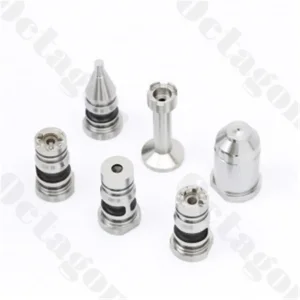
ODM Sprue Bushing: A Key Flow Component in Injection Molds Supplier
View Specifications →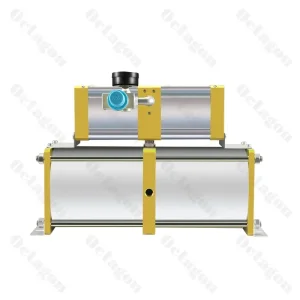
CE Certification China SWP-02A-G-T Air Booster Pump High-Pressure
View Specifications →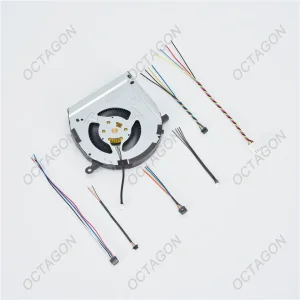
ODM Cooling Fan Cable Harness - Quality Solutions for Heat Dissipation
View Specifications →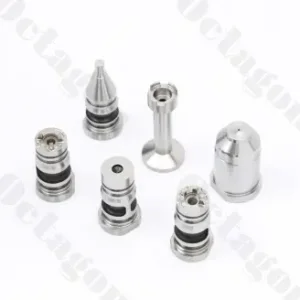
OEM Mold Inserts: The Essential Components of Injection Molding
View Specifications →
High-Quality China SWP-05-G Air Booster Pump Compressed Air Solution
View Specifications →
High-Quality China Mold Inserts: Key Components from Reliable Factory
View Specifications →
Custom China Suppliers - Octagon SWP-02B-G Pneumatic Pump Solutions
View Specifications →