Precision Wire Solder Harnesses & Industrial Systems
Engineered for high vibrational stability, hermetic moisture barriers, and continuous industrial cycling under extreme operating conditions.
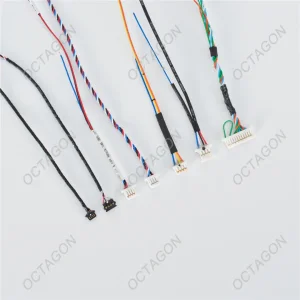
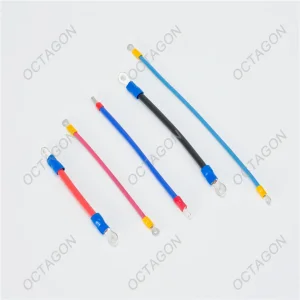
Engineering Fundamentals of Wire Solder Connectors
A rigorous examination of intermetallic alloy bonding, contact resistance minimization, and environmental hermeticity under IPC/WHMA-A-620 Class 3 specifications.
In modern industrial electronics, high-vibration automotive powertrains, and multi-megawatt energy storage architectures, electrical interconnect failure accounts for more than 38% of unscheduled field warranty claims. Traditional mechanical crimp terminals rely exclusively on radial compression forces to break surface copper oxides and create gas-tight cold welds. However, continuous thermal expansion-contraction cycles, coupled with ambient moisture and salt mist infiltration, lead to stress relaxation, copper creep, and micro-fretting corrosion. This inevitably escalates contact resistance (\(R_c\)), culminating in catastrophic thermal runaway.
Wire Solder Connectors—principally incorporating heat-shrinkable solder sleeve splices, flux-cored preform rings, and precision-soldered terminal blocks—solve this systemic vulnerability. By melting a predetermined volumetric ratio of low-temperature eutectic alloy (such as Sn42Bi58 at 138°C for heat-sensitive fluoropolymer wiring, or Sn96.5Ag3.0Cu0.5 SAC305 at 217°C for high-reliability automotive systems) concurrently with irradiated cross-linked polyolefin (XLPO) or PVDF outer jacketing, the connector forms a genuine metallurgic bond. The resulting intermetallic compound layer (typically \(Cu_6Sn_5\) \(\eta\)-phase and \(Cu_3Sn\) \(\epsilon\)-phase) achieves absolute molecular continuity, while dual thermoplastic hot-melt adhesive rings liquefy to encapsulate the joint in an IP68/IP69K hermetic seal.
| Evaluation Parameter | Standard Crimp Terminal (Cold Weld) | Standard Open-Dip Solder Joint | Engineered Solder Sleeve Connector (OEM China 4.0) |
|---|---|---|---|
| Initial Contact Resistance | 0.8 mΩ – 2.5 mΩ (Dependent on die wear) | 0.3 mΩ – 0.7 mΩ (High variability) | 0.15 mΩ – 0.35 mΩ (Ultra-consistent) |
| Tensile Pull-Out Strength | Complies with UL 486A (Mechanical crimp limit) | Solder joint vulnerable to peeling stress | Exceeds Wire Break Strength (120% UL requirement) |
| Ingress Protection (Water/Dust) | IP40 (Unsealed) / IP67 (Requires silicone grommet) | IP00 (Completely exposed to atmosphere) | True Hermetic IP68 & IP69K (Submersible >1.5m) |
| Dielectric Breakdown Voltage | 1,500 Vrms (Standard insulation sleeve) | Requires secondary heat shrink sleeve | > 2,500 Vrms (Dual-wall cross-linked PVDF/XLPO) |
| Thermal Cycling Endurance | Prone to micro-fretting after 500 cycles | Solder cracking after thermal fatigue | -55°C to +150°C (1,000+ Cycles without micro-fracture) |
Intermetallic Bonding Chemistry
Controlled thermal profiles ensure the formation of a uniform 1.0 μm to 2.5 μm intermetallic compound (IMC) boundary. This avoids excess brittle \(Cu_3Sn\) formation while maximizing shear strength and electron mobility across the conductor interface.
Dual-Ring Melt-Seal Integrity
Integrated low-density polyamide and fluoropolymer adhesive rings melt at precisely calibrated temperatures, flowing into stranded wire interstices to generate zero-void capillarization that resists sulfuric acid, engine oils, and jet fuels.
Automated Infrared Shrinking
Our OEM manufacturing lines employ focused 360-degree quartz infrared radiative arrays. Unlike turbulent hot air guns that cause uneven melt fillets and thermal scorch, closed-loop thermal sensors maintain ±2.5°C process control.
China Factory 4.0: Supply Chain Resilience & Production Depth
Combining Taiwanese precision mold engineering with mainland China’s ultra-dense industrial ecosystem to deliver unyielding quality, rapid scalability, and cost efficiency.
Tooling & Mold Machining
Equipped with Sodick slow-wire EDM and Makino high-speed machining centers, our tooling facilities produce precision stamping dies and multi-cavity injection molds with tolerances reaching ±0.002 mm and mirror surface finishes of Ra 0.05–0.2 μm.
Vertical Supply Integration
From electrolytic copper rod drawing and silver/tin electroplating to formulation compounding of radiation-crosslinked fluoropolymers, 94% of raw material processing is clustered within a 45-minute logistics radius, insulating overseas clients from global supply shocks.
Automated Vision QC
Every wire solder connector assembly undergoes high-speed automated optical inspection (AOI). Multi-angle CCD cameras verify solder sleeve ring positioning, concentric solder volume distribution, and jacket transparency at speeds up to 180 units/minute.
Traceable Digital MES
Integrated with our Manufacturing Execution System (MES), each production lot is laser-coded with a 2D DataMatrix code. Comprehensive test logs—including tensile pull force curves, insulation resistance values, and batch solder alloy spectroscopic analysis—are permanently indexed for 10 years.
Macro-Industry Interconnect Solutions
Deploying specialized wire solder connector technologies across harsh-environment industrial ecosystems.
Automotive & Electric Vehicles
High-voltage battery management systems (BMS), inverter harnesses, and wheel speed sensor assemblies require unwavering resistance against salt road sprays, engine bay oil splashes, and severe chassis vibrations (ISO 16750-3 Class IV). Our dual-wall heat-shrinkable wire solder connectors guarantee long-term IP68 sealing and zero-drift signal fidelity over a 300,000 km lifecycle.
Industrial Automation & Robotics
Continuous flex robotic drag chains and in-mold degating automation systems subject internal cabling to millions of torsional cycles. Our specialized low-profile solder butt splices eliminate the bulky stress concentration zones created by standard compression lugs, preventing premature copper strand fatigue and insulation chafing.
Energy Storage Collection Lines
Multi-megawatt lithium-iron-phosphate (LFP) containers operate under immense electrical currents and stringent fire safety standards. Octagon’s custom energy storage collection lines feature flame-retardant (VW-1) fluoropolymer wire solder connectors that eliminate micro-arcing and maintain thermal equilibrium under rapid charge-discharge profiles.
Medical Diagnostics & Surgical Devices
Patient-monitoring leads, endoscopy cables, and surgical power tools undergo frequent chemical autoclave sterilization (EtO and pressurized steam). Octagon manufactures biocompatible, non-toxic, and autoclave-tolerant wire solder assemblies with 100% electrical continuity and shielded noise suppression.
Marine, Offshore & Subsea Systems
Direct exposure to saline water, hydrostatic pressure, and broad galvanic corrosion requires total hermeticity. Our thick-wall PVDF solder sleeves withstand 500-hour ASTM B117 salt fog testing without corrosive pitting or conductive degradation.
High-Definition Display & Telecom
High-speed video transmission harnesses, commercial display panel feeds, and optical equipment cabinet wiring demand minimal insertion loss and tight impedance matching. Our precision solder assemblies guarantee ultra-clean low-inductance grounds for 4K/8K displays and 5G base transceivers.
Technology Roadmap: Next-Generation Wire Solder Connectors
Strategic engineering horizons guiding the evolution of electrical interconnects from 2025 through 2030.
Lead-Free Nanocomposite Solders
Integrating graphene and carbon nanotubes into SAC305 and Sn-Bi solder alloys to enhance electrical conductivity by 14% while mitigating the growth of brittle intermetallic Kirkendall voids under extreme thermal gradients.
Smart Connectors with RFID Telemetry
Embedding sub-millimeter passive RFID chips within the protective thermoplastic adhesive sleeve. This innovation enables automated digital traceability, wire harness continuity mapping, and non-destructive joint thermal health monitoring during periodic maintenance over the product’s operational life.
Ultrafast Inductive Reflow Systems
Transitioning from convection and IR heating to localized high-frequency electromagnetic induction reflow. This cuts cycle processing time from 15 seconds to under 2.8 seconds per connection while eliminating thermal stress on adjacent heat-sensitive wire sheaths.
Localized Support & International Compliance Assurance
De-risking offshore procurement with turnkey regulatory certifications, export-ready documentation, and regional technical liaisons.
RoHS & REACH Complete
Every batch of wire solder connectors is independently tested via ICP-OES spectroscopy. We certify zero SVHC (Substances of Very High Concern) compounds, full halogen-free conformity, and zero lead content in full alignment with EU Directives.
UL 486C & UL 94 V-0 Safety
Insulation sleeves are certified for non-flammability under UL 94 V-0 flame tests and rated for continuous 600V operation. Preforms and terminal splices meet or exceed UL 486C safety specifications for pressure cable connectors and splicing.
IPC/WHMA-A-620 Class 3
All wiring harness assemblies incorporating solder sleeves are inspected against the strictest aerospace and high-reliability industrial criteria: Class 3 Target Condition. We verify solder wetting angles under 90° and zero pinholes.
Turnkey Export Logistics
From DDP shipping directly to your assembly plant to provision of customized PPAP Level 3 documentation, Certificate of Analysis (CoA), and Mill Test Certificates (MTC), our export department manages all customs filings and bonded handling smoothly.
Global Enterprise RFQ & Design-in Protocol
A structured 5-stage engineering gate review that compresses time-to-market while eliminating redesign costs.
01. DFM Review
Senior engineers review client 2D/3D schematics, conductor AWG matrix, current loadings, and ambient exposure factors within 24 hours.
02. Prototyping
Rapid CNC tooling and semi-automated assembly lines deliver functional first-article prototypes in 5 to 7 business days.
03. Lab Validation
In-house thermal shock, dielectric withstand, helium leak detection, and microsection cross-sectioning verify zero joint porosity.
04. PPAP Approval
Comprehensive submission of Control Plans, FMEA, Gage R&R, and Capability Studies (Cpk > 1.67) for OEM series release.
05. Scaled Mass Run
High-volume automated execution backed by safety stock inventory buffering in our bonded warehouse facilities.
Frequently Asked Questions: Wire Solder Connectors & OEM Services
Authoritative technical guidance compiled by Octagon’s Senior Quality and Application Engineers.
How do heat shrink wire solder connectors compare to traditional ultrasonic wire splicing?
While ultrasonic welding produces a solid-state joint between copper conductors, it requires extremely expensive tooling, leaves the joint completely uninsulated, and cannot join mismatched conductor cross-sections or pre-tinned stranded wires without significant damage to the strands. Wire solder connectors (solder sleeves) combine soldering, environmental sealing, and dielectric insulation in a single thermal step. The melted solder flows around disparate wire gauges (e.g., splicing a 22 AWG sensor wire to an 18 AWG harness) with complete capillary fill, while the outer dual-wall sleeve provides immediate IP68 waterproofing and 2.5 kV dielectric protection without secondary overmolding or adhesive taping.
What soldering alloy choices are available for heat-sensitive harness components?
Octagon provides multiple solder alloy configurations customized to the thermal tolerance of the cable's primary dielectric:
- Low-Temperature Bismuth-Tin Alloy (Sn42Bi58): Liquidus temperature of 138°C. Ideal for PVC, low-density polyethylene (LDPE), and heat-sensitive sensor leads where primary wire insulation damage must be avoided.
- Eutectic Lead-Free Alloy (Sn96.5Ag3.0Cu0.5 / SAC305): Liquidus temperature of 217°C. Designed for cross-linked polyolefin (XLPO), silicone, and PTFE cables deployed in high-temperature automotive, aerospace, and power electronics applications.
- Lead-Bearing Option (Sn63Pb37): Liquidus temperature of 183°C. Fully qualified for defense, aerospace, and medical repair programs exempt from RoHS directives requiring zero-whisker risk.
What quality inspection procedures are deployed to ensure zero solder joint voids?
Our quality control regimen integrates 100% automated optical inspection (AOI) to confirm correct flux residue dissolution and solder wetting ring collapse. For batch validation, our metallurgy laboratory conducts destructive metallographic cross-sectioning (mounting, polishing, and chemical etching) to measure intermetallic compound (IMC) thickness under 1,000x digital microscopes. Pull-force test stands verify that the joint’s mechanical tensile strength exceeds the break strength of the original conductor, strictly adhering to IPC/WHMA-A-620 Class 3 standards.
Can Octagon engineer custom-colored transparent sleeves with company brand markings?
Yes. As a full-service OEM/ODM manufacturer, Octagon offers custom color-coded hot-melt adhesive rings (standard transparent, white, red, blue, and yellow according to AWG ranges from 26 AWG to 10 AWG), laser-etched lot traceability numbering, custom company logo printing on the transparent heat shrink sleeve, and tailored wire harness pre-assemblies delivered with customer-specified pinouts.
What are the minimum order quantities (MOQs) and standard production lead times?
For catalog wire solder connector preforms, standard MOQ starts at 5,000 units with immediate stock dispatch within 48 hours. For bespoke custom wire harness configurations, energy storage collection lines, or high-definition connection assemblies, initial pilot trial batches are supported from 500 to 1,000 units, with rapid turnaround of 2 to 3 weeks for full mass production.
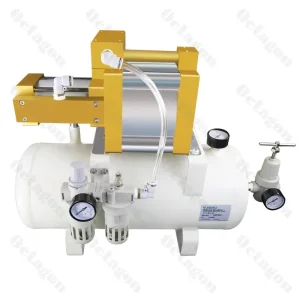
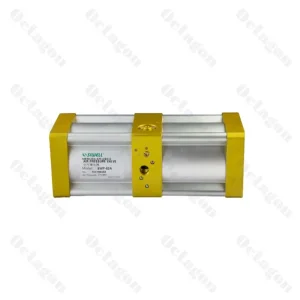
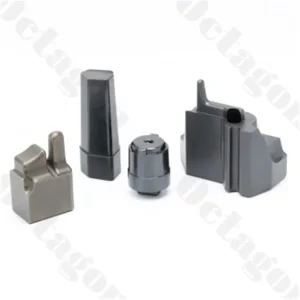
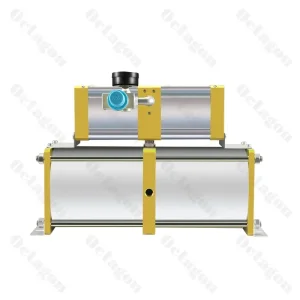
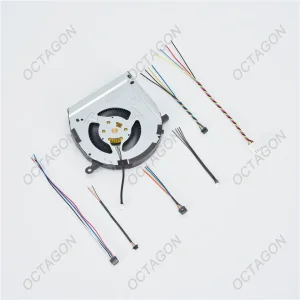
High-Efficiency Booster Pumps, Mold Tooling & Harness Assemblies
Comprehensive turnkey components engineered to elevate manufacturing throughput, mold longevity, and pneumatic reliability across factory automation.