
Precision Engineering Systems: Israeli Core Lineup
Immediate deployments engineered for dynamic pressure boosting, custom micro-cavity inserts, and high-duty mechanical tooling supporting regional manufacturers from Tel Aviv to Haifa.
Industrial Landscape: High-Pressure Tooling Demand in Israel
Evaluating the convergence of high-tech R&D, structural defense aviation, and high-efficiency automotive mobility across Israeli industrial parks.
Silicon Wadi Electronics Integration
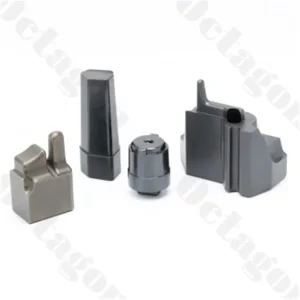
The acceleration of telecommunications, optical transceivers, and edge computing in the Herzliya and Petah Tikva tech zones demands thin-wall aluminum die casting with sub-millimeter tolerances. Mold inserts and ejector pins must operate at surface finishes below Ra 0.1 µm to avoid flow turbulence during shot execution.
Aerospace & Defense Structural Integrity
Israel’s advanced defense corridors centered in Haifa and southern manufacturing ecosystems utilize complex structural magnesium and aluminum matrices. Our non-standard die-casting mold assemblies are hardened through vacuum gas quenching to 48–52 HRC to resist cyclical thermal fatigue.
E-Mobility & Autonomous Sensor Enclosures
As Israeli venture ecosystems scale next-generation automotive radar, LiDAR housings, and EV powertrain battery trays, thermal conductivity within the tooling is paramount. Conformal cooling systems combined with high-pressure gas boosters reduce cycle times by up to 22%.
Macro Industry Solutions: Engineering Against Tool Wear
Overcoming soldering, thermal shock cracking, and erosion in high-pressure alloy molding via modern metallurgy and automation.
Thermal Fatigue Mitigation in Extreme Cycles
During the casting of A380, ADC12, or AlSi10Mg alloys, molten metal enters mold cavities at temperatures exceeding 650°C under injection velocities over 40 m/s. This generates severe cyclical thermal stresses on core pins, slides, and gate blocks. By employing certified premium grade DIN 1.2343 ESR / AISI H13 refined tool steels, we preserve crystalline purity and eliminate isotropic micro-inclusions.
Additionally, multi-layer PVD coatings (such as AlCrN and TiAlN) act as chemical and thermal barriers against molten aluminum dissolution, extending component lifespans through consecutive shifts without pitting.
CE-Compliant Pneumatic Intensification
In modern casting shops across Israel, secondary operations such as hydraulic core pulls, degating trim presses, and shot monitoring demand stable air systems. Fluctuating plant pressures lead to porous shrinkage defects.
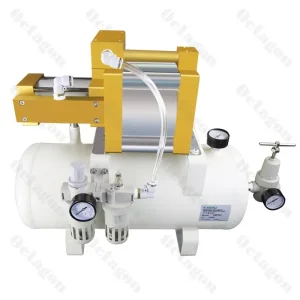
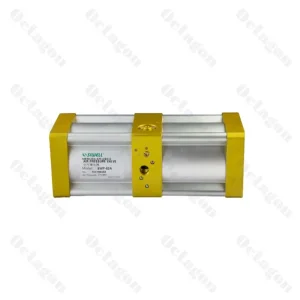
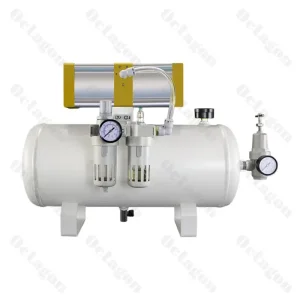
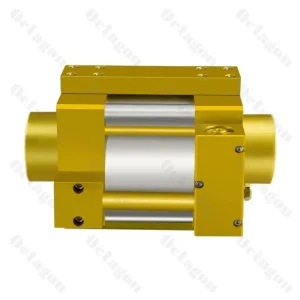
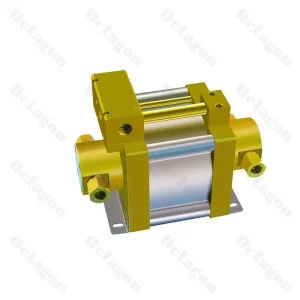
Our integrated Octagon SWP and SWB Booster Stations amplify standard shop line air up to five-fold without relying on electrical high-voltage wiring within the damp die-casting cell. Every booster platform complies strictly with the European Machinery Directive 2006/42/EC and Pressure Equipment Directive (PED) 2014/68/EU.
| Component Category | Material Substrate | Hardness / Treatment | Dimensional Tolerance | Applicable CE / ISO Standard |
|---|---|---|---|---|
| Precision Die Cavity Inserts | AISI H13 / Böhler W300 ESR | 50–52 HRC / Vacuum Quench | ±0.002 mm | EN ISO 12100:2010 |
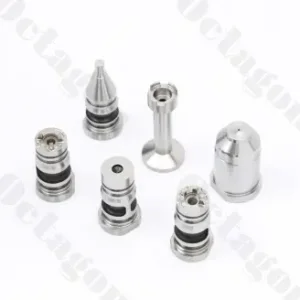
| Core Pins & Ejector Sleeves | SKD61 / DIN 1.2344 Nitrided | Surface > 950 HV | ±0.005 mm | ISO 6753-1 Dimensional Standard |
| Shot Sleeves & Plunger Tips | Beryllium Copper / H13 | 38–42 HRC Cryogenic Temper | H7/g6 Fitment | 2006/42/EC Machinery Safety |
| Air & Pneumatic Booster Pumps | Aviation Aluminum / SS316 | Anodized Hardcoat Class III | Pressure Max: 40 Bar | PED 2014/68/EU, CE Compliance |
Localized Logistics, SII Alignment & Regulatory Compliance
Frictionless supply chains bridging Asian high-volume manufacturing facilities with Israeli production facilities.
Standards Institution of Israel (SII) Conformance
While European CE mark documentation forms the baseline, industrial shipments arriving via the Ports of Ashdod or Haifa require direct cross-referencing with Standards Institution of Israel (SII) standards. All pneumatic manifolds and pressurized molds carry complete material certifications (EN 10204 3.1) and pressure certificates.
Expedited Tooling Replacements & Air Freight
Unscheduled downtime on a 1500-ton HPDC press costs thousands of dollars per hour. We maintain designated priority machining lines for Israeli clients, providing rapid-dispatch 5-axis CNC emergency tooling runs routed via direct cargo flights from Hong Kong or Taipei into Ben Gurion Airport (TLV).
Protective Packaging for Maritime Shipments
Maritime transport through the Mediterranean exposes raw steel tooling components to humidity and salinity. We utilize multi-layer vapor corrosion inhibitor (VCI) active shrink wrapping, desiccant saturation buffers, and hermetically sealed wooden crates constructed according to ISPM 15 standards.
Future Outlook: Die Casting Tooling Roadmap
Advancing micro-structural cooling, smart sensor cavities, and hybrid additive tooling for industrial casting nodes.
Direct Metal Laser Sintering
Integration of 3D-printed internal curved cooling galleries inside core pins, lowering cycle hot spots by 40%.
Wireless IoT Pressure Sensors
Micro-piezoelectric sensors embedded directly inside mold blocks to detect live liquid fronts and venting spikes.
Monolithic Large Blocks
Ultra-rigid, oversized mold blocks capable of withstanding clamping forces in excess of 6,000 to 9,000 metric tons.
Green Alloy Machining
Transition to 100% recycled alloy certification pathways and closed-loop coolant systems aligned with European ESG mandates.
Complete Component Architecture: Assemblies & Auxiliary Units
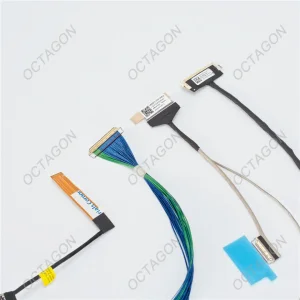
Explore our full line of OEM/ODM mold inserts, pneumatic boosters, cabling harnesses, and energy storage collection lines.
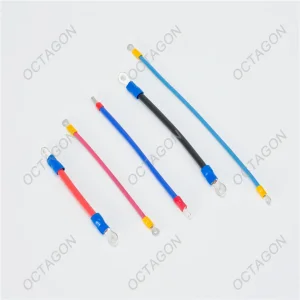
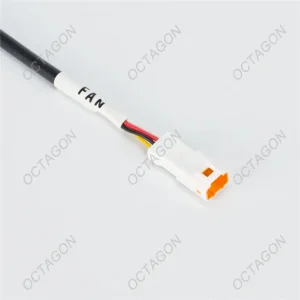
Technical & Sourcing FAQ: Israeli Procurement Teams
Clear answers to questions regarding export compliance, metallurgy checks, and delivery timelines.
How does CE certification affect die casting mold parts exported to Israel?
Under Israeli commercial guidelines and Ministry of Economy directives, mechanical devices, mold cooling timing modules, and pneumatic boost units that comply with the European CE Machinery Directive (2006/42/EC) and Pressure Equipment Directive (2014/68/EU) receive fast-track customs clearance. Our technical files contain risk assessments according to EN ISO 12100:2010 and declaration certificates verifying high-pressure structural integrity.
What tool steel grades do you recommend for high-cycle aluminum die casting?
For aggressive aluminum alloys (e.g., A380, ADC12), we rely on electro-slag remelted (ESR) AISI H13, DIN 1.2343 ESR, or Böhler W300/W360 tooling steels. These premium steels undergo multi-stage vacuum thermal treatment to 48–52 HRC, providing structural yield strength against heat checks, washouts, and micro-soldering during long production runs.
Can you manufacture custom non-standard mold cores based on 3D CAD files?
Yes. We regularly produce build-to-print tooling components from STEP, IGES, and Parasolid files, maintaining tolerances of ±0.002 mm. Our machine shop utilizes high-speed 5-axis CNC machining, Makino wire-EDM, and coordinate measuring machine (CMM) verification with full Zeiss inspection logs provided prior to dispatch.
What are the typical lead times for delivery to Haifa or Ashdod ports?
Standard express tooling inserts and emergency replacement core pins are dispatched via air freight within 5–7 working days directly into Ben Gurion Airport (TLV). Full containerized mold bases or high-volume series shipments to Haifa or Ashdod ports carry an ocean transit timeline of approximately 22–28 days, sealed with VCI anti-corrosion barrier packaging.
How does the SWP-05-G Booster Pump integrate into existing die-casting machinery?
The SWP-05-G air booster operates on a purely pneumatic intensification ratio, tapping into plant air supplies (typically 6–8 bar) and boosting them up to 30–40 bar without electrical motors or secondary wiring. This makes it ideal for operating localized cylinder core pulls, mold-degating trim actions, and high-pressure leak testing stations without ignition risks inside the foundry.
Connect With Our Tooling & Systems Engineering Division
Whether you are engineering a structural die-cast chassis in Yokneam, an aerospace micro-component in Haifa, or outfitting an automated plant in Kiryat Gat, our engineers provide complete DFM reviews within 24 hours.
Send Inquiry Now