
Featured Tooling Components, Booster Systems & Wire Assemblies
Explore our top-tier precision systems exported across 60+ countries, fully compliant with ISO and CE specifications.
Custom Injection Molding Die Materials: Metallurgical Science & Substrate Selection
Understanding the thermo-mechanical dynamics, carbide grain boundary cohesion, and polishing limits of pre-hardened and through-hardened tool steels is critical for multi-million shot mold longevity.
Electro-Slag Remelted (ESR) Stainless
High-cavitation optical and medical tooling demands ultra-pure steel structures. S136 ESR (DIN 1.2083) minimizes sulfur inclusions (≤0.003%) and non-metallic segregations, delivering defect-free mirror finishes to SPI A-1 (Ra 0.05 μm) with superior chemical resistance against corrosive off-gassing from PVC, POM, and halogen-free fire retardants.
Pre-Hardened Core & Cavity Alloys
Eliminate post-machining dimensional distortions with calibrated pre-hardened steels such as 1.2738 (P20+Ni) and NAK80. Hardened uniformly to 32–40 HRC via precipitation aging, these steels deliver optimal machinability, predictable EDM spark characteristics, and microstructural uniformity across massive automotive die plates exceeding 1,200 mm thickness.
High-Conductivity Rapid Thermal Alloys
Cycle time optimization relies on rapid heat dissipation in thick-wall sections and hot runner gates. Employing premium Beryllium Copper (C17200 / MoldMAX) or Ampcoloy alloys provides thermal conductivity up to 3 to 4 times higher than tool steels (105–130 W/m·K), reducing injection cooling times by 25% to 45% while preserving edge toughness up to 40 HRC.
| Steel Grade & Standard | Hardness Range | Tensile Strength (MPa) | Thermal Cond. (W/m·K) | Polishability Rating | Primary Resin & Application Scope |
|---|---|---|---|---|---|
| S136 ESR (AISI 420 Mod) | 48 – 54 HRC (Quenched) | 1,580 – 1,820 | 19.5 | SPI A-1 (Ra 0.05 μm) | Optical PC/PMMA lenses, medical syringe barrels, corrosive PVC/POM |
| DIN 1.2738 (P20 + Ni) | 30 – 36 HRC (Pre-hard) | 980 – 1,120 | 33.5 | SPI A-2 (Ra 0.10 μm) | Automotive bumpers, instrument panels, medium-to-large appliance housings |
| NAK80 (Precipitation) | 37 – 41 HRC (Pre-hard) | 1,250 – 1,380 | 41.3 | SPI A-1 (Ra 0.08 μm) | Precision consumer electronics, high-gloss transparent containers, micro-gears |
| Premium H13 (1.2344 ESR) | 46 – 52 HRC (Heat treated) | 1,650 – 1,950 | 28.6 | SPI A-2 (Ra 0.15 μm) | High-wear glass-filled nylon (PA66-GF50), PEEK, high-shot die casting inserts |
| DC53 (Cold-Work Tool) | 60 – 62 HRC (Air-cooled) | 2,100 – 2,450 | 24.0 | Technical Texture | High-impact slides, lifters, in-mold cutting blades, stripper plates |
| BeCu C17200 (Alloy 25) | 36 – 42 HRC (Age Hardened) | 1,150 – 1,310 | 115.0 – 130.0 | SPI A-2 (Ra 0.12 μm) | Gate inserts, core pins, rapid-cooling threads for thin-wall packaging caps |
China Factory Supply Chain Ecosystem: Cost-Efficiency, Scale & Fast-Track Delivery
Modern injection molding tool purchasing has moved beyond mere unit price negotiations. Global Tier-1 procurement teams leverage China's dense industrial integration to compress die fabrication timelines from months to weeks.
Vertical Upstream Smelting & ESR Access
Direct alignment with world-class steel mills enables custom melt heats with vacuum degassing and electro-slag refining. Raw steel block stock is verified with Ultrasonic Testing (UT Class SEP 1921 Group 3 Class D/d) prior to deep sawing, eliminating hidden porosity and carbon banding before rough machining commences.
Continuous 5-Axis CNC & EDM Clusters
Our dual manufacturing hub infrastructure integrates high-speed machining centers (Makino, Yasda, Roders) operating in climate-controlled ±0.5°C clean rooms. Sub-micron precision wire EDM with 0.05 mm brass wire enables draft angles under 0.5 degrees and deep cavity profiling without secondary manual touchups.
Global Multimodal Logistics & DDP Delivery
Seamless logistics pipelines from Shenzhen and Ningbo air/ocean terminals ensure prompt delivery to North America, Europe, and Southeast Asia. Turnkey customs handling, bonded warehousing, and anti-corrosion VCI sealed vacuum packaging protect polished cavities against saltwater oxidation during transit.
Mitigating Sourcing Friction: Compliance, Testing & Localized Engineering
Global procurement directors face three primary threats when importing injection mold materials: undocumented steel chemistry, catastrophic heat-treatment failure, and lack of localized warranty support.
EN 10204 3.1 Certified Traceability
Every batch of raw tool steel and pre-machined insert block is delivered with an authentic EN 10204 3.1 Material Test Report (MTR). Optical Emission Spectrometry (OES) verifies exact percentage ratios of Chromium, Nickel, Molybdenum, and Vanadium. Tensile tests, Charpy V-notch impact values, and Rockwell hardness maps accompany all paperwork.
Multi-Stage Stress Relieving & Cryogenics
Premature tooling cracking typically originates from untransformed retained austenite. Our proprietary heat-treatment process incorporates multi-stage vacuum quenching followed by deep sub-zero cryogenic treatment (-196°C). This stabilizes residual stresses, transforms austenite into fine-grained martensite, and guarantees dimensional stability below 0.003 mm over millions of injection cycles.
Dual-Shore Technical Engineering Support
With administrative engineering leadership based in Taoyuan, Taiwan, and precision production plants in mainland China, Octagon bridges cross-border communication barriers. Our bilingual mold design engineers provide full DFM (Design for Manufacturability), Moldflow rheology analysis, and local partner representation across Europe and North America.
Future Industry Trends: Smart Mold Metallurgy & Additive Conformal Cooling
The rapid transition to lightweight polymers, bio-based engineering plastics, and high-voltage EV components is redefining die material engineering standards worldwide.
Laser Powder Bed Conformal Inserts
Traditional gun-drilled straight cooling lines struggle to dissipate heat in intricate mold geometries. Leveraging additive manufacturing with 1.2709 maraging steel and gas-atomized Corrax stainless powder allows our factory to produce curved conformal cooling channels mirroring complex part geometry, eliminating hot spots and reducing warpage by up to 60%.
Advanced PVD / DLC Nano-Coatings
To combat sliding friction and abrasive wear caused by carbon fibers (PA66-CF40), die surfaces are fortified with physical vapor deposition (PVD). Coatings such as TiAlN (Titanium Aluminum Nitride) and Diamond-Like Carbon (DLC) provide extreme surface hardness up to 3,200 HV and friction coefficients below 0.1, eliminating the need for grease lubrication in cleanroom medical molding.
In-Mold Hydraulic & Pneumatic Boost Automation
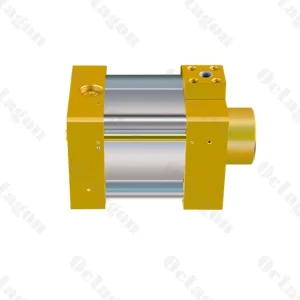
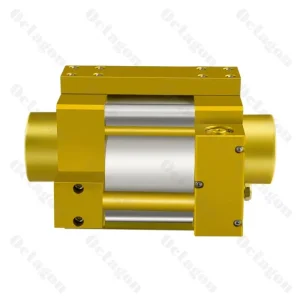
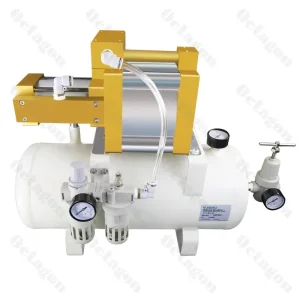
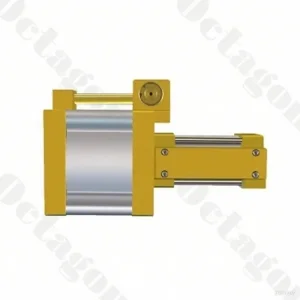
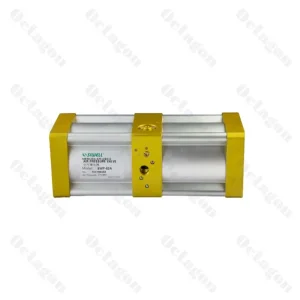
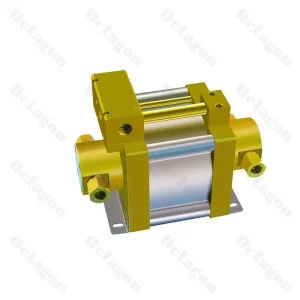
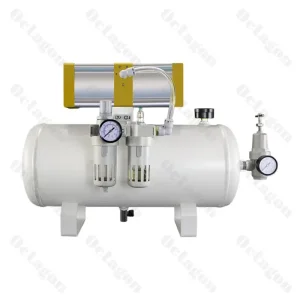
High-speed production cells are replacing manual post-molding gate trimming with synchronized in-mold cutting. Driven by our SWB-series gas-liquid booster pumps and precision control cabinets, in-mold cylinders deliver instantaneous shear forces from 1,000 to 7,000 kgf while the tool is closed, eliminating witness marks and reducing labor costs by 100%.
Field-Proven Industry Applications & Material Optimization
Selecting die materials requires tailoring metallurgy to polymer chemistry, injection pressures, and cosmetic requirements across critical industry sectors.
Automotive & EV Battery Enclosures
Battery pack structures and high-voltage connectors require flame-retardant polyamides with 30-50% glass fiber fill. To withstand this intense abrasive environment, our factory deploys through-hardened H13 (1.2344 ESR) and DC53 core inserts treated with salt-bath nitriding (surface hardness 65+ HRC), resisting gate washout across 1.5 million continuous cycles.
Medical Grade Class 100k Cleanroom Dies
Surgical fluid manifolds and microfluidic diagnostic cassettes demand absolute biocompatibility and zero grease lubricant contamination. S136 ESR stainless tool steel combined with multi-layer DLC coatings ensures dry friction operation, resistance to steam autoclaving, and micro-replication of channel features down to ±0.002 mm.
Precision High-Density Electronics
Ultra-fine pitch micro-connectors, smart meter housings, and optical lens arrays rely on NAK80 and STAVAX tool steels. Machined on high-speed spindles spinning at 40,000 RPM, the fine, uniform carbide distribution allows EDM mirror finishes without orange-peel defects, preserving tight pin tolerances of ±0.002 mm.
Frequently Asked Technical Questions: Die Materials & Global Export
Direct, engineering-backed answers addressing the most critical metallurgical, tolerance, and supply chain questions raised by global tool buyers.
What are the key differences between S136 ESR and conventional 420 stainless steel?
How does Octagon control machining tolerance to ±0.002 mm across multi-cavity dies?
Which die material is best for highly corrosive flame-retardant resins (e.g., PA66-GF30 with halogen-free FR)?
How does your dual-shore Taiwan & China production model benefit international buyers?
What export packaging and anti-rust procedures are applied for long ocean transit?
Can Octagon provide custom integrated in-mold cutting automation systems?
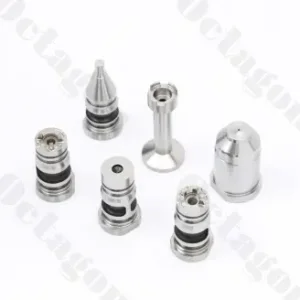
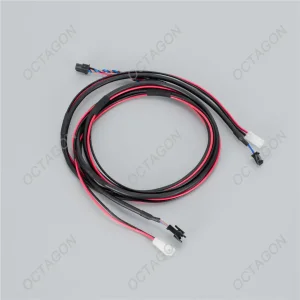
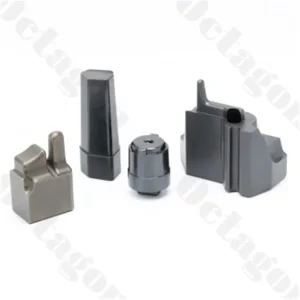
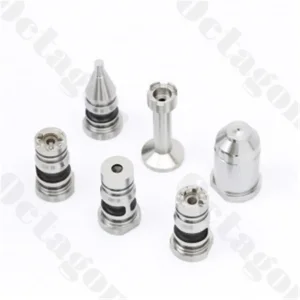
Precision Mold Inserts, Sprue Bushings & Automation Assemblies
Browse our extended product lines manufactured to rigid engineering drawings with certified dimensional and metallurgical test reports.
Accelerate Your Injection Mold Project with Certified Engineering
Share your CAD models (STEP, IGES, DXF) and target polymer specifications. Our senior tool engineers and metallurgists provide comprehensive DFM analysis, steel grade optimization, and formal quotation packages within 24 hours.
Rapid Sourcing Review Checklist
- • 3D Part Models (STEP / Parasolid / DWG)
- • Specified Resin & Filler % (GF, CF, Mineral)
- • Target Tool Life Expectancy (Shots • Class 101/102)
- • Optical Polishing (SPI Standards A1 to D3)
- • In-Mold Automation & Gate Shearing System Inquiries